




Is it time America shared its corporate profits with all workers?
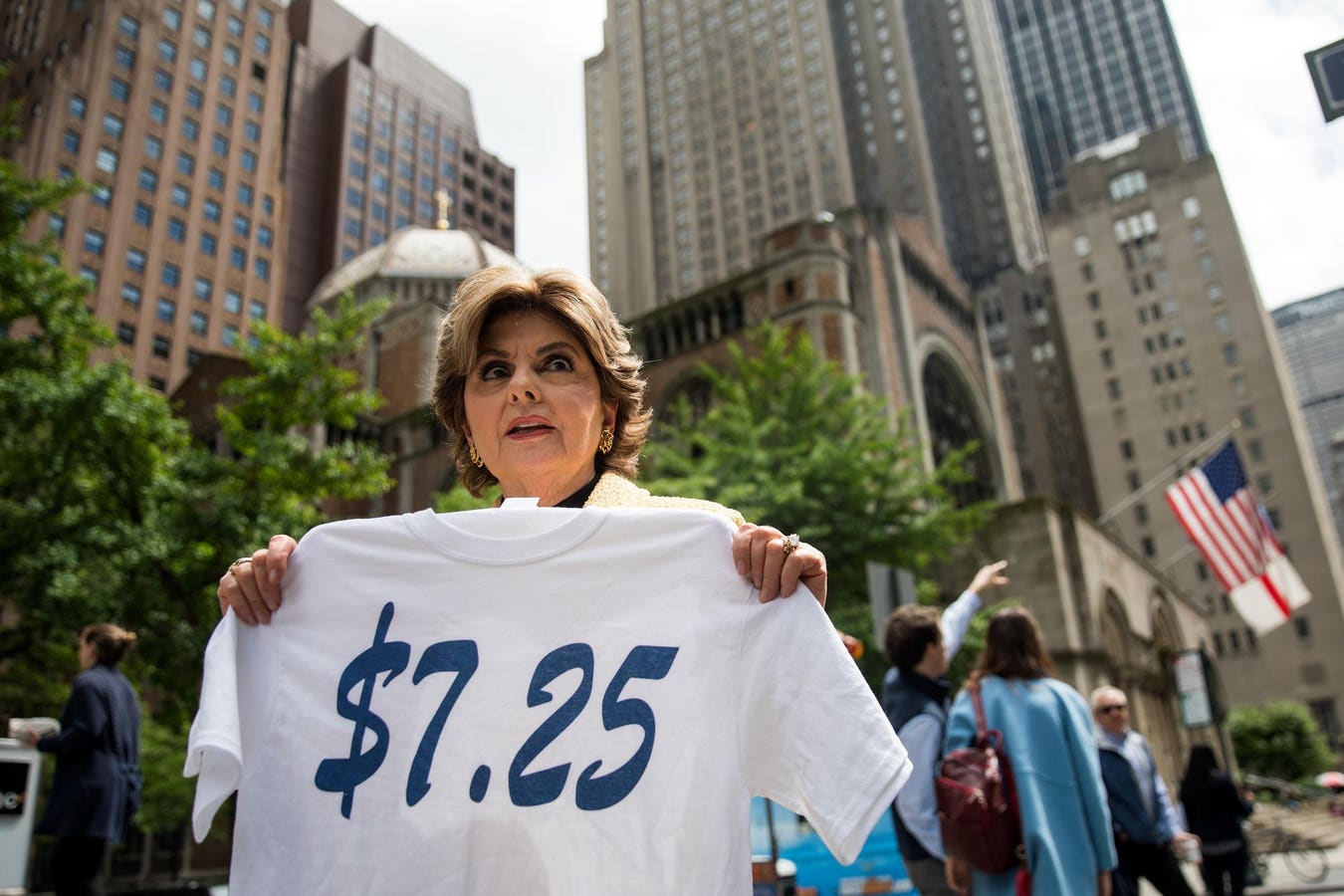
For millions of American workers, the federal minimum wage is unlivable. The current federal minimum wage of $7.25 per hour has remained unchanged since 2009, making it one of the longest stretches without an increase in the policy’s history.
But if the minimum wage had kept pace with inflation and worker productivity since its high point in 1968, it would likely be closer to $25 per hour today. And a new ‘Living Wage For All Act’ has now been brought up in Congress to address this.
While where you live depends on what wage you need to create a livable lifestyle, the gap between today’s minimum wage and reality tells a larger story about how the American economy has evolved—and about who has benefited from that growth.
The 1968 Benchmark
The late 1960s marked the historical high-water mark for the real value of the federal minimum wage. At $1.60 per hour, which, after adjusting for inflation, would equal roughly $14 to $15 per hour in today’s dollars.
But inflation alone doesn’t capture the full picture. During the decades following World War II, wages for lower-income workers rose alongside the productivity of the American economy. When businesses produced more value per worker, workers themselves tended to share in those gains.
Since the 1970s, however, that relationship has gradually weakened. While productivity – how much economic value workers produce per hour – has continued to grow dramatically, wages at the bottom of the income ladder have not kept pace. Today, workers’ compensation is at 51% of gross domestic income, while corporate profits climbed to a record 12.1%, and inflation-adjusted hourly wages have risen just 3% since 2019, compared to this 50% jump in profits.
In fact, the federal minimum wage is at its lowest real value in 77 years, and has lost 30% of its purchasing power since 2009. If the wage had kept up with inflation, it is estimated it would hover somewhere around $25 per hour.
The Reality Facing Workers Today
Beyond the federal level, $7.25 per hour is still the minimum wage across 18 states. This translates into a full-time worker employed for 40 hours per week for 52 weeks per year earns roughly $15,080 annually before taxes. Even when combined with state-level wage increases or multiple jobs, many workers earning near the federal minimum wage remain close to or below the poverty line. At the same time, the cost of basic needs – housing, healthcare, education, and food – has continued to rise causing workers to struggle to cover basic living expenses.
If the minimum wage instead reached $23 per hour, a full-time worker could earn more than $47,000 annually, a salary that more closely resembles a basic middle-class income rather than a poverty wage.
But not all minimum wage is created equally. Thirty-two states and countless cities have taken a leadership position on this topic and introduced higher local minimum wages—some approaching $15 per hour or more.
The Debate Over Raising It
The question of an increased federal minimum wage has become a polarizing economic debate in Washington.
Supporters argue that higher wages would reduce poverty, strengthen consumer spending, and help workers keep up with the rising cost of living.
Critics warn that dramatic increases could force small businesses to reduce hiring, automate more jobs, or raise prices.
Others argue that the minimum wage should vary by region, and not be set federally, reflecting the dramatically different costs of living between major cities and rural areas.
The minimum wage debate raises a fundamental question about the structure of the American economy: should workers share proportionally in the productivity gains they help create?
If the answer is yes, today’s minimum wage should be closer to $25 per hour. A figure that reflects inflation as well as the full value of American workers’ contributions to the modern economy.
Read the full article here