



The daughter of Hollywood royalty is biting that hand that feeds her in a blistering new essay — leaving Tinseltown reaching for the popcorn.
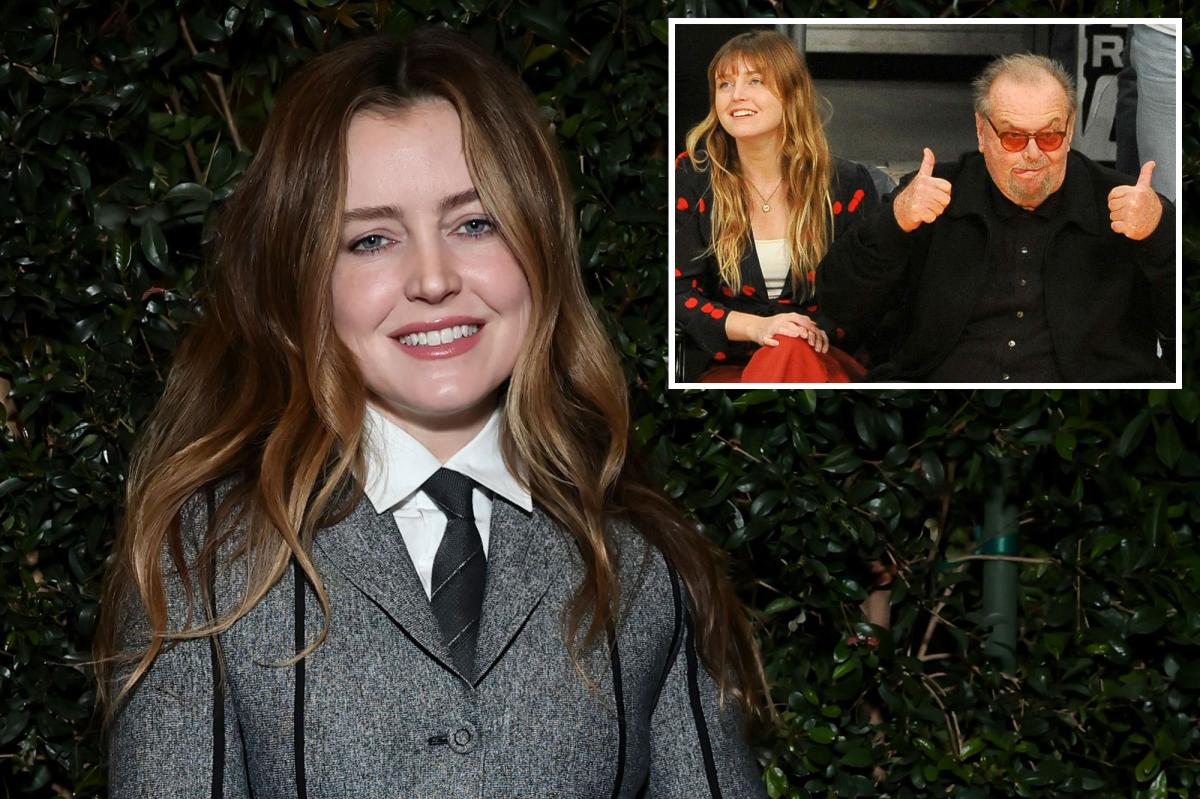
Lorraine Nicholson, the 36-year-old daughter of Oscar-winning legend Jack Nicholson, has ignited chatter and inspired more than a few eye-rolls in LA after penning a stunning takedown in W Magazine — where she skewers the anxieties of the elite and shines the proverbial klieg light on a kind of behind-the-scenes privilege that rarely makes it into public view.
The piece, published in the magazine’s most recent issue, is a glossy takedown of the hyper-elite circles Nicholson herself grew up in — complete with name-drops, luxury digs and a heavy dose of self-aware satire.
“L.A. has established itself as the status-anxiety capital of the world,” Nicholson writes, describing a culture where clout-chasing follows players of the game “to the grave.”
In the revealing and somewhat indulgent piece, Nicholson argues that in Hollywood, success isn’t just about money or fame — it’s about how you’re treated in a room: “It means that when you’re at a party, women won’t peer over your shoulder to see who else has arrived, and men won’t interrupt you in the middle of a story to get a drink.”
Nicholson paints a caricature of modern LA life that will feel all too familiar to anyone who has spent time in the city’s most rarefied zip codes.
In her telling, Angelenos obsess over sleep trackers, magnesium supplements and early bedtimes, turning rest into a competitive sport.
These days, even coffee runs are too pedestrian. The truly elite, she suggests, have assistants, personal chefs and luxury espresso machines waiting at home — ideally before hopping into an Escalade outfitted like a “mobile office.”
Fitness, too, has become a status symbol — but only behind closed doors. “Public” workouts are now the “domain of influencers” who “will exchange Instagram posts for free personal training and an unlimited supply of leggings.”
The real power players, Nicholson promises, train privately in exclusive gyms or homes tricked out with saunas, massage rooms and cold plunges.
“In Los Angeles, a social media following means reservations at Alba and free trips to Costa Rica — but it will not get you into Guy Oseary’s Oscars party,” the insider wrote.
Forget booking a facial like a regular person — the real A-listers, she claims, don’t leave the house. “Instead, you have the personal number of facialist Iván Pol, who, even on the day of the Golden Globes, will bring his proprietary face-snatching radio frequency technology to you.”
And of course, there’s Erewhon — the organic grocery chain that has become shorthand for LA excess —where smoothies and supplements double as social currency, even as the city has become “shrunken by GLP-1s” and longer cares about food, often preferring “legacy restaurants frequented by the somebodies of yesteryear, like the Polo Lounge.”
The essay also zeroes in on the social paranoia baked into Hollywood culture, where even a casual coffee run at hip local mini chain Maru can feel like a high-stakes networking event.
Nicholson describes a world where people avoid public interactions out of fear they’ll run into someone who “needs something,” or worse, someone more important.
Invite only dating apps like Raya are portrayed as hyper-competitive marketplaces, where men stack themselves up against Olympians and producers, and women are up against “Former Victoria’s Secret models.”
And the city’s most exclusive clubs, she argues, don’t actually deliver on their promises.
After shelling out thousands for access to places like the Bird Streets, the San Vicente Bungalows, and Living Room, Angelenos are left realizing “these places do not complete your life” — a revelation Nicholson frames as both sobering and strangely liberating.
“And that’s part of what makes L.A. so great,” Nicholson says. “This is a city where people who have tasted the upper echelons of status understand how little it means.”
Read the full article here