




Listen to this article
Estimated 4 minutes
The audio version of this article is generated by AI-based technology. Mispronunciations can occur. We are working with our partners to continually review and improve the results.
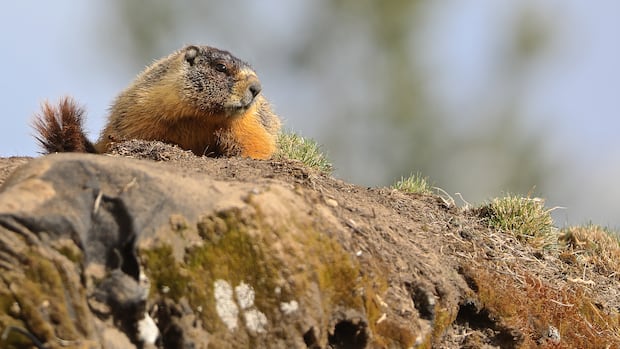
A yellow-bellied marmot, which typically lives in southern B.C., has somehow found its way to the University of Northern British Columbia’s campus in Prince George, marking the most northerly sighting of the species ever recorded.
The marmot is currently living on a hill and underneath the foundation of one of the campus buildings, in direct view of associate professor Jamie Gorrell’s office window, who just so happens to specialize in marmot behaviour and ecology.
“I spend a lot of time thinking about marmots and how they’re coping with changes to the climate and to the world around us,” said Gorrell.
“To see this species moving northward and outside of its range to me was pretty special, to have this right outside my window, but it’s another sign that animals are adapting to changes in the climate.”
Yellow-bellied marmots, known for their bright yellow chests, exist throughout the western United States and southern Canada, but are typically not found north of Williams Lake, about 200 kilometres south of Prince George as the crow flies.
Gorrell says he’s not sure how the marmot got to Prince George, but it may have hitchhiked on a truck in construction materials.
“Marmots tend to climb into trucks or into buses or hitchhike in people’s luggage or materials and then they kind of show up. It may be unlikely that it dispersed here naturally,” he said.
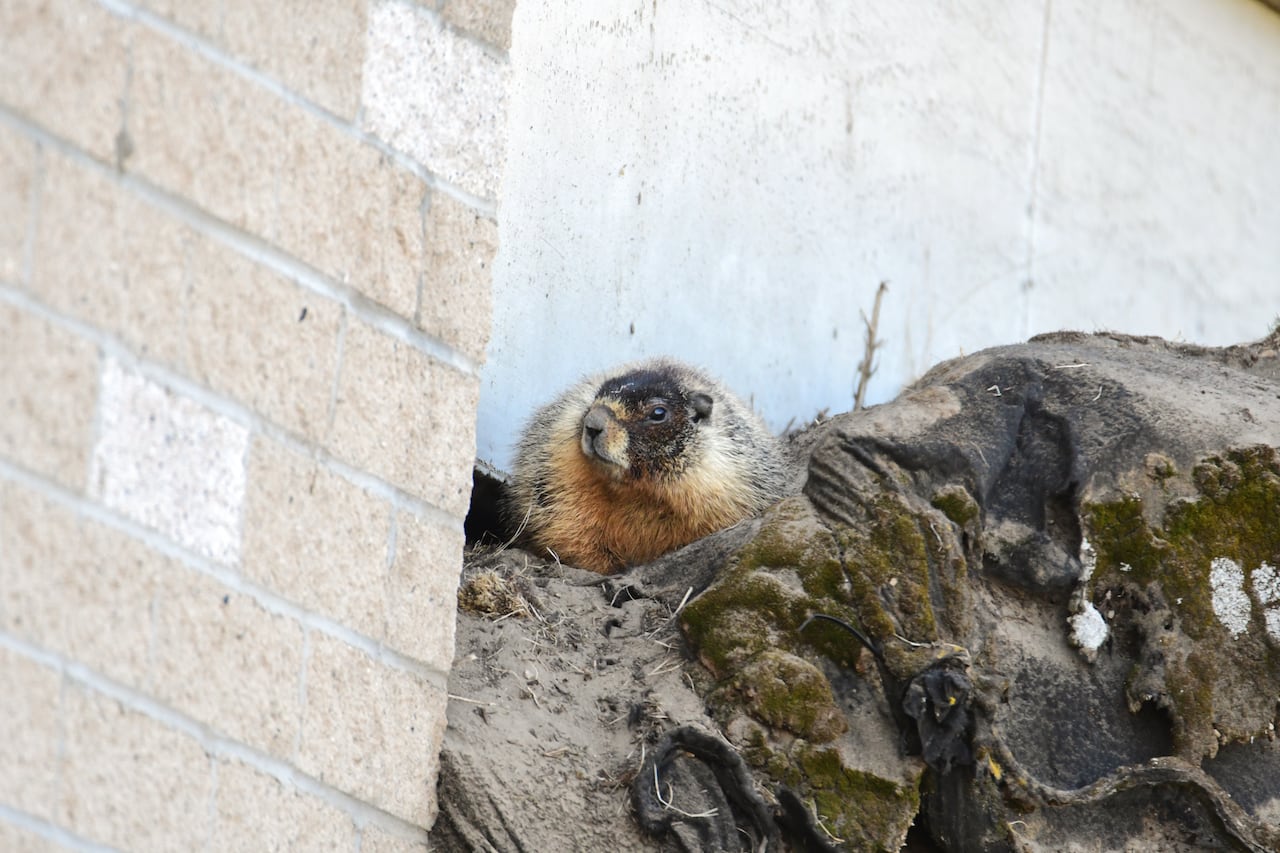
Gorrell was alerted to the presence of the marmot by a user on iNaturalist, a social network where people share biodiversity information.
He’s now taped off the hill where the marmot is living so it’s not disturbed. Gorrell is trying to find out how long the marmot has been established on campus and says he’s confirmed it was spotted by a student last August.
“It’s made its first winter, which is another remarkable feat. Not only did it move further north, but we know it can survive up here,” he said. “But at the same time, this potentially creates conflict now where this species will overlap with other species of marmots, groundhogs and hoary marmots that naturally live in this area.”

Yellow bellied-marmots hibernate underground for seven to eight months of the year and only wake up in May before going back into hibernation by September.
Gorrell says word about the marmot’s presence has spread around campus, and students keep coming by its burrow to take photos when it pops out in the mornings to munch on grass and sunbathe.
“My friends and I, we came out here, we found the marmot and we were watching it for about 10 minutes right before an exam. Kind of as a stress reliever,” said wildlife and fisheries student Erica Lepage. “It’s really exciting, like, we’ve never seen one here before.”
Gorrell is hoping to set up a live webcam so people will be able watch the marmot and see it foraging in the grass, looking around and then running back into its burrow again.
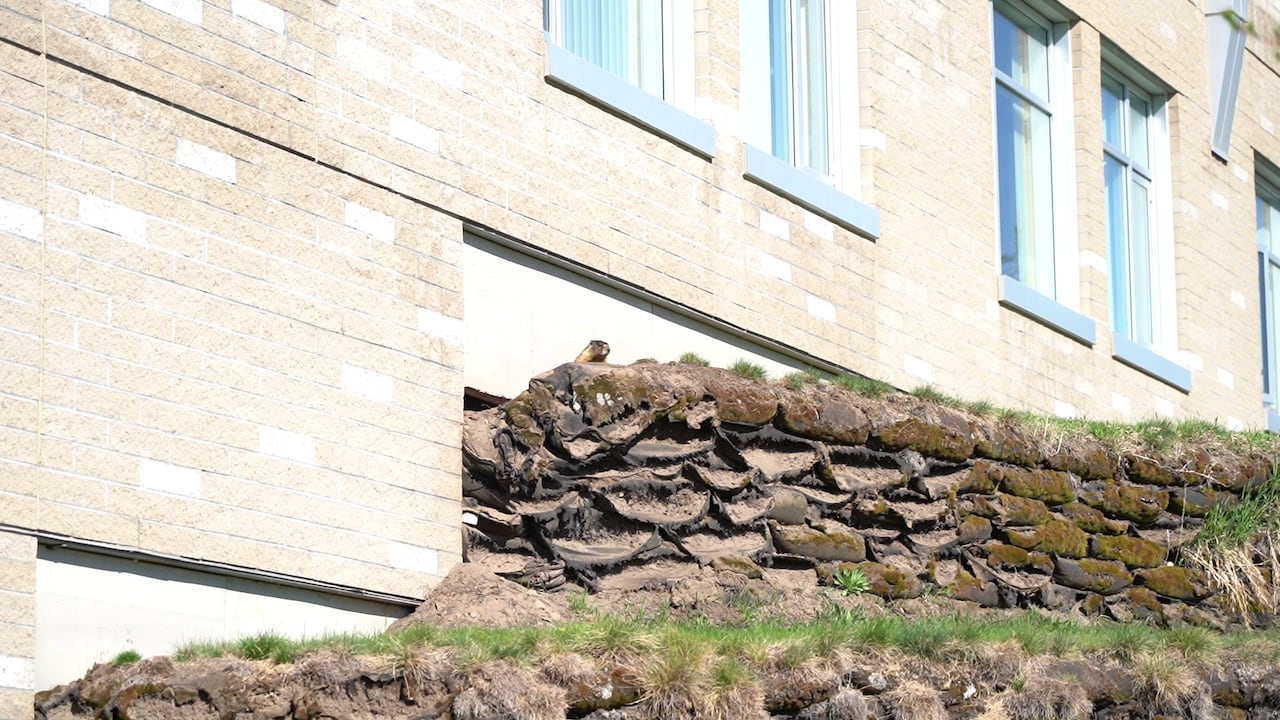
“We’ve affectionately named this marmot dutni, which is the Dakelh word for Marmot,” he said, noting its important to give the marmot its space and watch it from a distance so it can comfortably stay on campus as long as it wants.
“It’s fun for us but at the same time, it’s a bit troubling because it shows that as the planet gets warmer, species are expanding their distribution.”
Read the full article here