




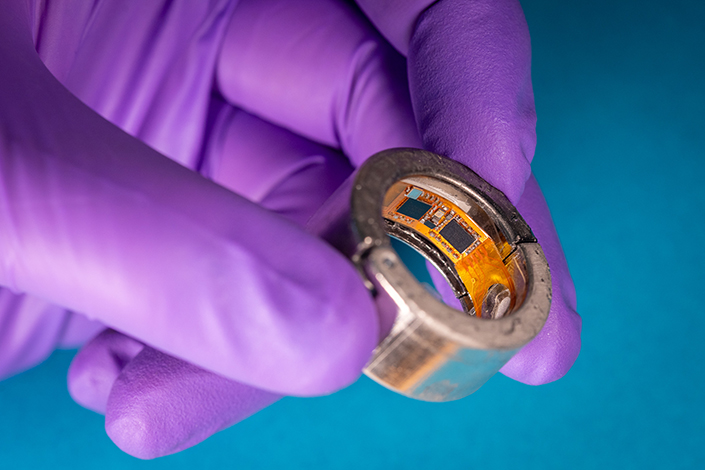
Today’s smart rings use tiny built-in sensors, such as photoplethysmography light sensors, to collect biophysical data, including your heart rate and blood oxygen levels. But engineers at the University of California, San Diego, believe they have created the first smart ring that uses finger sweat to track chemical biomarkers. The ring is only a prototype, but it shows the potential for future smart rings to continuously monitor the body on a molecular level instead of relying solely on biophysical data.
In a paper published in Nature Communications on July 23, the engineering team reports that the new smart ring uses sweat to continuously monitor up to four of the following biochemical measurements: glucose, ketones, vitamin C, uric acid, lactate and alcohol concentrations. Ketones are acids produced by the liver when it breaks down fat instead of glucose. Uric acid forms when your body breaks down chemicals called purines in food and drinks, such as red meat, seafood and beer. And lactate, also known as lactic acid, is created by the body when carbohydrates are broken down for energy.
How the ring works
Study authors say you don’t have to exercise or exert yourself in order to produce the sweat required for the ring to work. Instead, the study’s first author, Tamoghna Saha, a UCSD postdoctoral researcher, developed an osmotic hydrogel, which is a soft polymer that uses a pain-free pressure gradient to pull sweat from the skin. Electrochemical sensors in the smart ring then repeatedly analyze the sweat for calibration and to create concentration values. This data is wirelessly sent to a smartphone app.
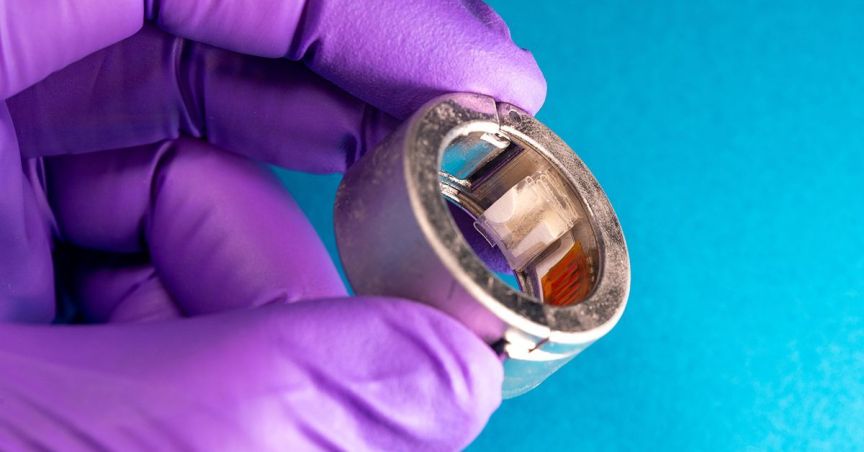
What’s inside the ring
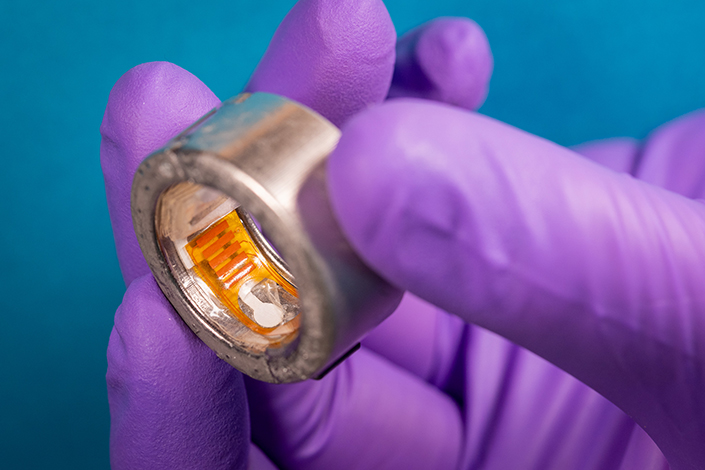
Inside the ring’s 3D‑printed polymer outer shell is an electronic board smaller than a US quarter. Its custom-built, flexible and rechargeable zinc-silver oxide battery delivers up to 12 hours of use between charges.
Considering that the Oura Ring 5 has an eight-day battery life and the Ultrahuman Ring Pro offers up to 15 days, battery life is an area where the researchers’ ring could be improved.
The intended audience
The team behind this smart ring says it would be a good fit for anyone who wants a broader, real-time picture of their health, but it could be especially helpful for those managing diabetes or anyone who wants to track their nutrition.
“For example, the ring’s ability to track both glucose and ketone continuously and simultaneously would greatly benefit optimal insulin dosing for the management of diabetes,” said Joseph Wang, professor in the Aiiso Yufeng Li Family Department of Chemical and Nano Engineering at the UCSD Jacobs School of Engineering, in a statement.
During testing with both healthy individuals and those with Type 1 diabetes, the smart ring’s glucose measurements closely matched the readings from commercial continuous glucose monitors. The same happened when ketone data was compared against commercial blood meters.
The future of smart rings
During a time when tech companies are scrambling to create smart rings that rely on the same sensors for the same biomarkers, it’s refreshing to see research aimed at finding new ways to measure and monitor what’s going on inside our bodies. In fact, there may be a future in which we have more health data than we know what to do with.

See full bio
Read the full article here