



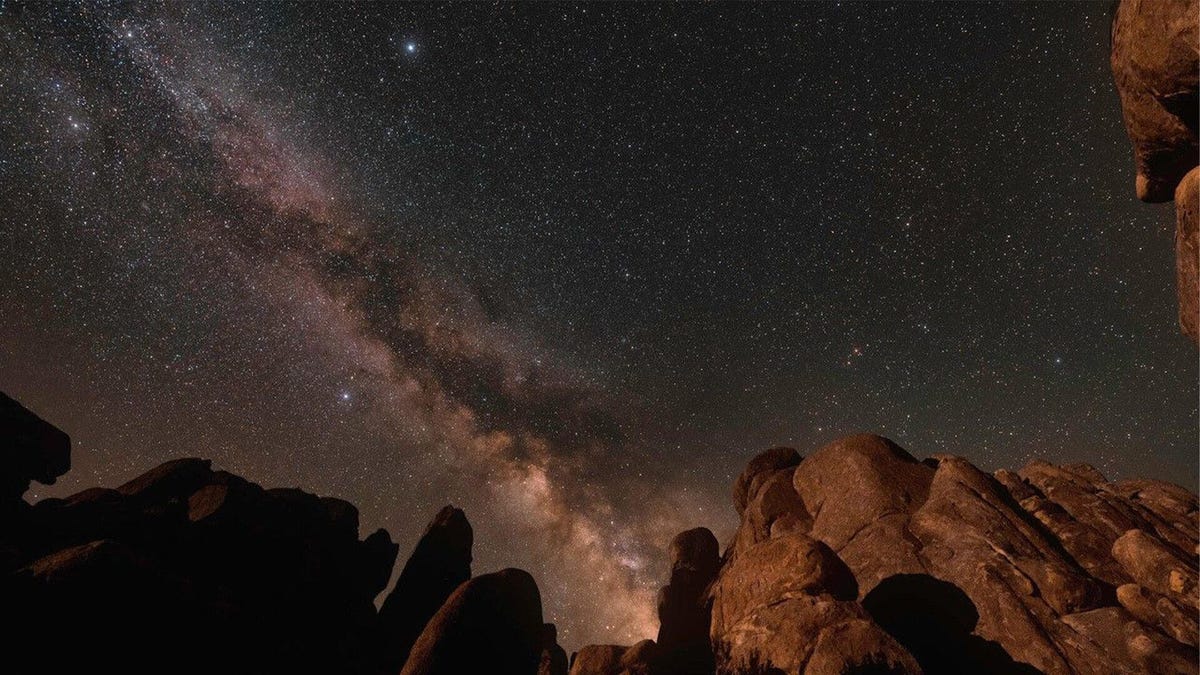
Sometimes the stars align in fascinating ways, making stargazing extra rewarding. One such example is the Spring Triangle, formed each spring by the stars Arcturus, Spica and Regulus. This bright triangle becomes visible in late March and lingers in the sky through spring and much of summer.
This all works out because of how constellations appear to move — or more accurately, because of how the Earth moves around the Sun, which changes the constellations visible in the night sky. Arcturus, Spica and Regulus are three of the brightest stars in the sky and belong to the constellations Boötes, Virgo and Leo, respectively. As the Earth continues its orbit, these three constellations come into view together in the night sky shortly after the the spring equinox, giving the Spring Triangle its name.
That should give skygazers plenty of time to check them out, especially if they’re already out looking at something else, such as April’s Pink Moon or the series of upcoming meteor showers in 2026.
The Spring Triangle is made up of Arcturus, Spica and Regulus. The trio forms a triangle in the night sky
How to find the Spring Triangle
To find the Spring Triangle in the Northern Hemisphere, you’ll want to wait until around 10 p.m. local time for the stars to rise over the eastern and southern horizon. The next step is to identify the stars, and then simply envision the imaginary lines that would form the triangle.
If you have trouble finding them, you can use an app such as Star Walk on Android and iOS, or a web-based map such as Stellarium.org or Time and Date’s Sky Map. Arcturus is arguably the easiest of the three to see since it’s the fourth brightest star in the night sky. Spica and Regulus are 16th and 21st, respectively.
The triangle will streak across the southern sky over the course of the night, so if you get out later, you’ll want to look more southward than eastward. Regulus sets on the western horizon just before dawn, so if you’re an early bird, you’ll want to look toward the southwestern or western skies to see it.
Another version of the Spring Triangle exists with Denebola instead of Regulus, which forms a more symmetrical triangle.
A second Spring Triangle
Spica, Regulus and Arcturus make up the most well-known Spring Triangle because they are all quite bright and relatively easy to find in the night sky. But there’s a second version of the Spring Triangle that uses the star Denebola instead of Regulus as the third point in the triangle.
This trio makes the triangle closer to an equilateral triangle, so fans of symmetry may prefer this version.
The only downside is that Denebola isn’t nearly as bright as Regulus and may be a bit more difficult to spot for amateur stargazers. Denebola is in the Leo constellation, so if you can find Leo, you can find both Regulus and Denebola.
The Teapot is another asterism that resembles a teapot. It’s visible during the summer in the Northern Hemisphere.
The Spring Triangle is what’s known in astronomy as an asterism. Asterisms are simply patterns in the stars that astronomers recognized and named to bring order to the giant sea of glowing balls in the sky. All constellations are asterisms, and per NASA, there are 88 asterisms in total.
Read the full article here