



The presidents of Nigeria and the United States have announced the killing of Abu-Bilal al-Minuki, described as the second-in-command of ISIL (ISIS).
Donald Trump first made the announcement in a social media post on Friday, without disclosing when or where the joint Nigerian-US military operation happened.
On Saturday, Nigerian President Bola Tinubu said in a statement that al-Minuki, also known as Abu-Mainok, was killed “along with several of his lieutenants” during a strike on his compound in the Lake Chad Basin.
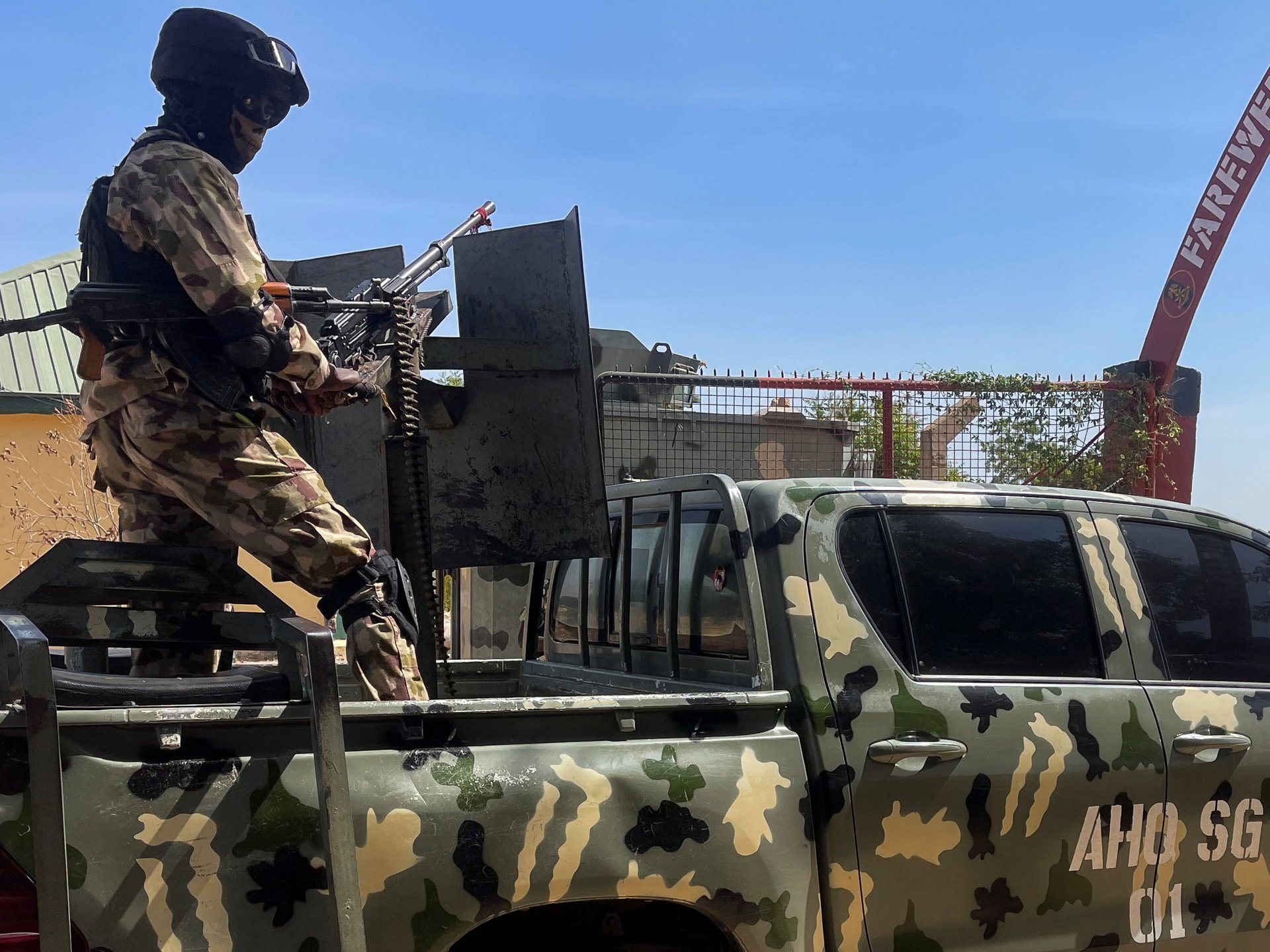
The Nigerian army described it as “a meticulously planned and highly complex precision air-land operation” carried out on Saturday between midnight and 4am (23:00 to 03:00 GMT) in Metele, in Borno State in northeast Nigeria.
Borno has been the epicentre of a long-running campaign by the Boko Haram armed group and its splinter faction, the ISIL affiliate in West Africa Province (ISWAP).
Who was al-Minuki?
Little is publicly known about al-Minuki, who had been under US sanctions since 2023.
Before pledging allegiance to ISIL in 2015, al-Minuki was a prominent Boko Haram leader, according to the Nigerian army.
An army statement described him as a “key” operational and strategic figure who provided guidance to ISIL entities outside Nigeria on media operations, economic warfare and weapons manufacturing.
“His death removes a critical node through which ISIS coordinated and directed operations across different regions of the world,” the army said.
It added that al-Minuki oversaw ISIL-linked operations across the Sahel and West Africa, including attacks against “ethnic and religious minority communities”. In 2018, he was linked to the kidnapping of more than 100 schoolgirls in Dapchi, in northeastern Nigeria’s Yobe State.
Dennis Amachree, former director of the Department of State Services in Nigeria, told Al Jazeera that the killing of al-Minuki “is going to create a huge vacuum in the leadership and financing of ISWAP, as many top officers were decimated with him.
“Expect internal friction over succession because he managed global funding streams and external operations; the group’s ability to move funds across borders, acquire high-end drone technology, and coordinate with administrative cells outside West Africa will face immediate friction,” he added.
Emerging power
Al-Minuki is believed to have risen through the ranks of ISWAP following the disappearance of veteran commander Mamman Nur in 2018.
His reported ability to operate discreetly and avoid public attention helped him maintain influence over operations, while evading detection by regional and international security forces.
Cheta Nwanze, chief executive of the Lagos-based advisory group, SBM Intelligence, said al-Minuki had previously been declared killed in 2024 after a military operation in Kaduna State.
“That earlier announcement did not produce a lasting degradation of ISWAP’s capabilities,” he told Al Jazeera, warning that eliminating a single commander may have a limited impact.
Nwanze said the group will be able to recover as long as a growing “ransom economy” in Nigeria, which raised some $1.66m between July 2024 and June 2025, according to an SBM Intelligence report, remains intact.
“The ultimate tool for control is the man on the ground with a gun, and the ultimate backing for that man is a functional social contract, which sadly Nigeria does not have,” he said. “Until the economic logic that feeds these groups is disrupted, the cycle will continue.”
Experts say leaders such as al-Minuki have been central to coordination between local fighters and ISIL’s broader network, but are not irreplaceable due to the group’s decentralised command structure.
“The killing of al-Minuki will disrupt ISWAP operationally in the short term,” Alex Vines, the Africa programme director at the European Council on Foreign Relations, told Al Jazeera.
“ISWAP has proven resilient to leadership losses, suggesting this killing will not be strategically decisive on its own.”
Kabir Amadu, managing director of Beacon Security and Intelligence Limited, Nigeria, noted that the killing is significant and would affect ISWAP’s strategic leadership.
“If followed through with other tactical operations to disrupt the group’s funding and logistical capabilities, it can support the containment and disruption of its activities in the Lake Chad Basin and greater northern Nigeria,” he told Al Jazeera.
‘Inclusive governance reforms’
ISWAP has recently intensified attacks along the Nigeria-Cameroon border, targeting military outposts and humanitarian convoys.
These operations are seen as part of a deliberate effort to consolidate territory and demonstrate the group’s continued relevance despite ongoing pressure, including after Trump accused Nigeria of not doing enough to protect Christians in the country’s north from attacks.
The Nigerian government has rejected the claim, insisting that Muslims are also being targeted by armed groups. In recent months, dozens of US troops have been deployed to Nigeria to help in the fight against armed groups by providing intelligence sharing and technical support.
Tinubu said Nigeria “appreciates” the partnership with the US “in advancing our shared security objectives,” adding that he looked forward “to more decisive strikes against all terrorist enclaves across the nation”.
Vines said al-Minuki’s killing was “a tactical win” for the Tinubu administration, but ISWAP remains a “serious security concern”.
As for the US, eliminating al-Minuki is likely to be framed as a victory against ISIL’s Africa network. It will also reinforce Nigeria’s importance “as a key security partner and a reminder that bilateral relations are much better than a year ago”, Vines told Al Jazeera.
Nwanze said the joint nature of the attack signalled a deepening of US‑Nigeria security cooperation, but the collaboration “will face limits”.
“Washington’s willingness to engage is likely contingent on narrow counter‑terrorism objectives, not on a wholesale commitment to rebuilding Nigeria’s fractured security architecture,” he added.
Mubarak Aliyu, a political and security risk analyst, called the elimination of al-Minuki “a remarkable operational success”. He stressed, however, that “broader, inclusive governance reforms remain fundamental to solving the long-term security challenges in the wider region”.
Read the full article here