




Listen to this article
Estimated 4 minutes
The audio version of this article is generated by AI-based technology. Mispronunciations can occur. We are working with our partners to continually review and improve the results.
A plan has been reached to move a meteorite that is sacred to many First Nations from a museum in Edmonton to a new home on a former golf course in Elk Island National Park.
Finding a home for the Manitou Asinîy — also known as the Manitou Stone — has been decades in the making, with First Nations in Alberta and Saskatchewan spearheading efforts to find an appropriate permanent location for the stone.
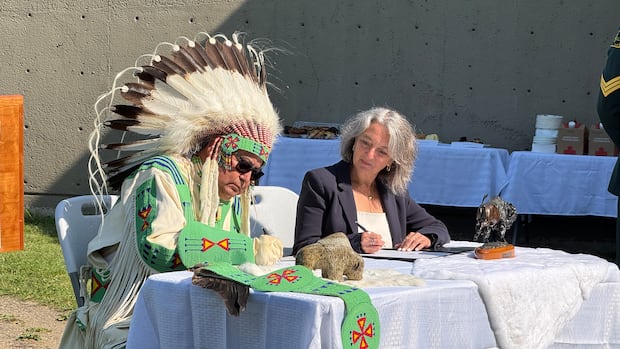
At an announcement Monday, representatives from the federal government and the Manitou Asinîy-Iniskim-Tsa Xani Centre (MAITX) signed a memorandum of understanding to establish a permanent home for the 145-kilogram iron meteorite in Elk Island National Park.
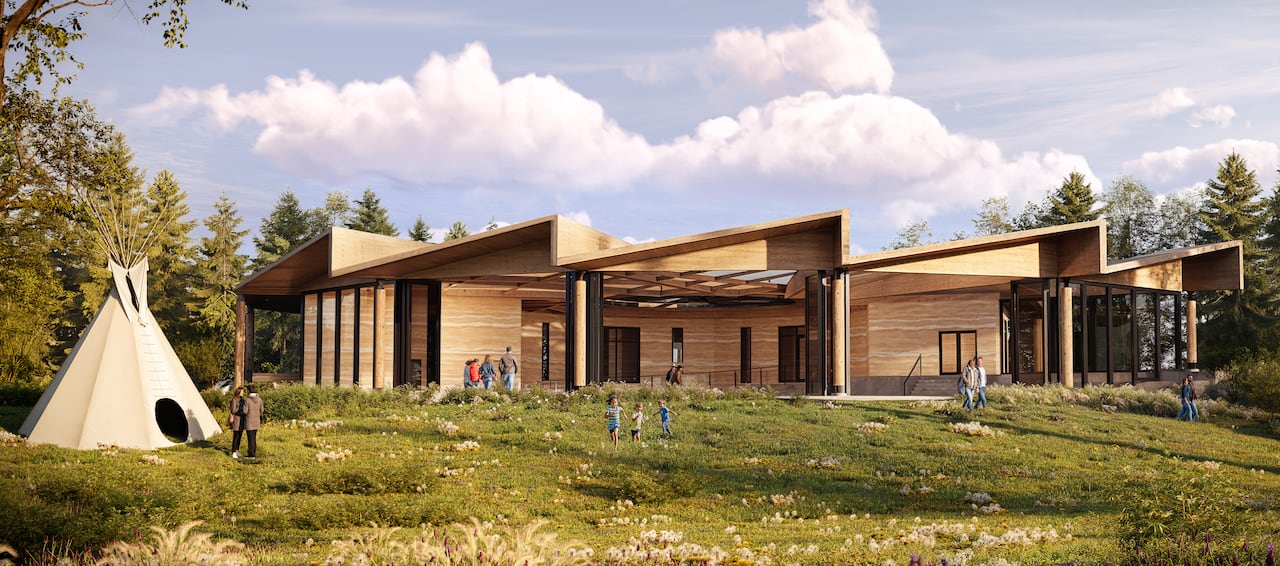
“The vision will be to have a building on the golf course where the [stone] will be housed. Where people can come have ceremonies. The Dene, the Cree, the Blackfoot, we can all have ceremonies,” said Blaine Favel, a member of the board of directors for MAITX.
The First Nations-led, not-for-profit was formed in 2023 with the goal of securing land and funding to create a centre to “rematriate the Manitou Stone.”
It says the ancient artifact, believed to have landed near Hardisty, Alta., approximately 200 kilometres southeast of Edmonton, once served as a gathering place for tribes.
In 1866, a missionary took the stone. It eventually ended up in Ontario where it was displayed at a college in Cobourg, Ont., east of Toronto.
The Royal Alberta Museum brought the rock back to Alberta in 1972. It is still on display in the museum’s downtown Edmonton space, in a quiet gallery on an upper floor.
Although the initial plan was to return the stone to its original site near Hardisty, Favel said it was later decided the national park would be a better fit.
“As much as we fought to bring it back to Hardisty, it didn’t belong there anymore … The land’s cleared. There’s no more buffalo. There’s no more wildness,” Favel said.
Favel noted that the preserved landscape and wildlife of the national park made it an ideal setting for the stone’s return.
“If you look to [places] in Western Canada, where is the only place that would have looked like when the stone was stolen from us 160 years ago?”
“What’s the only place that looks like it’s home? It’s here — Elk Island — surrounded by buffalo,” said Favel.
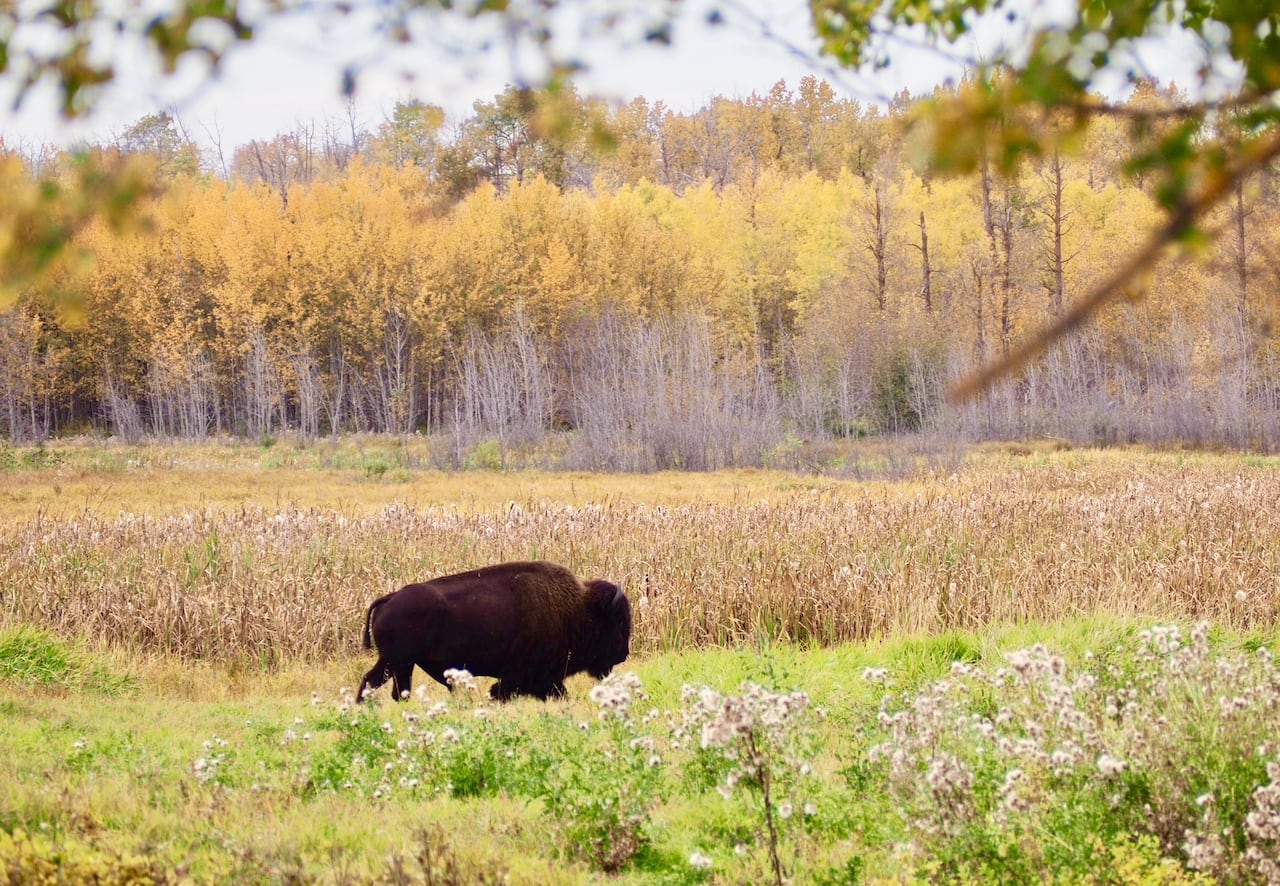
The nine-hole golf course in the tiny national park hasn’t operated since the end of the 2022 season.
Favel said the next step will be a building in which to house the stone. His organization will be independently fundraising for the project, but added that he is looking to different levels of government for support.
“We have a little home now. That’s important. We need a building, right? I’m going to look to Ottawa for help there,” Favel said.
He also said he hopes the provincial government will be able to help with the operating costs of the planned site.
At the announcement, Julie Dabrusin, the federal minister of environment, climate change and nature, said environmental assessments are being completed for the site, but there is no set timeline to move the stone yet.
While no clear schedule was presented for when the site will be constructed, Favel said his organization is fully dedicated to returning the stone to nature.
“We can’t stop because we’ve made this promise.… We all know that as First Nations people. We can’t stop until that building [is] built.”
Read the full article here