




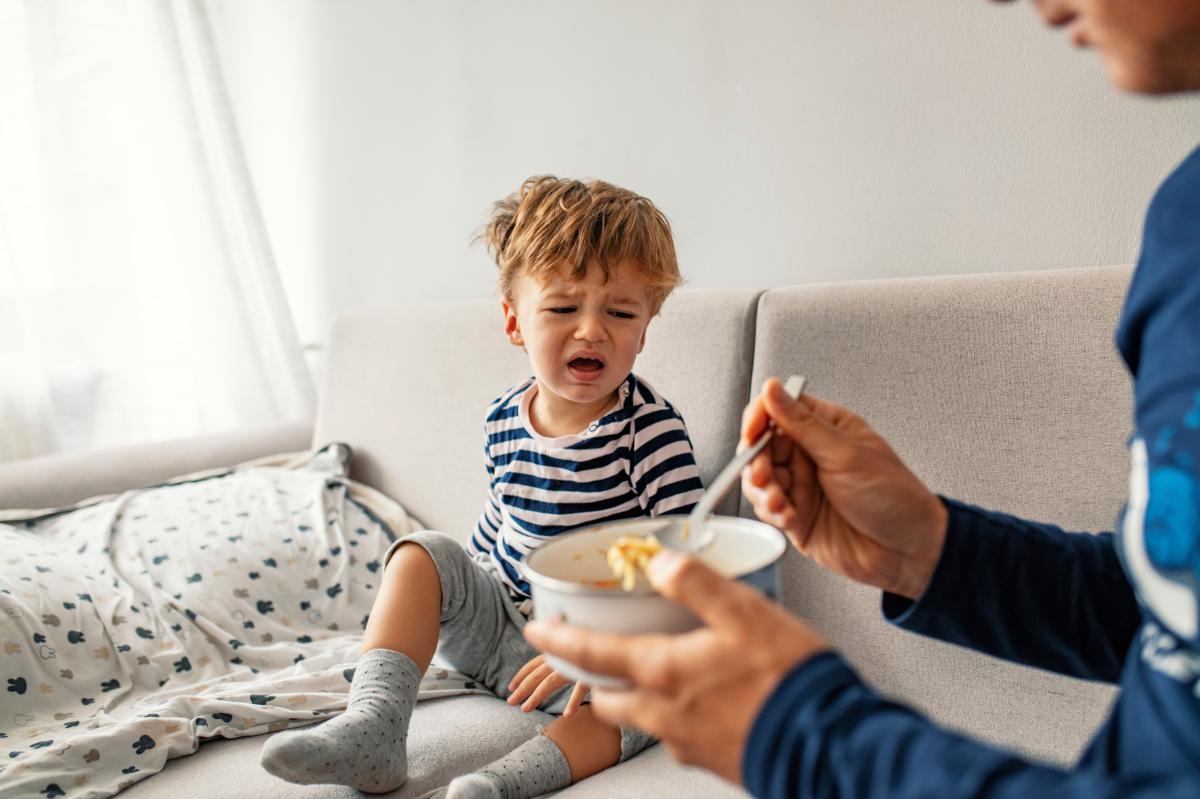
With her new book, history professor Helen Zoe Veit tackles a fraught, emotionally charged, controversial subject: kids being fussy eaters.
The prevailing modern wisdom is that “children have biologically keen taste buds, that children are naturally sensitive to texture and color, and that children are evolutionarily cautious about new things,” she writes in “Picky: How American Children Became the Fussiest Eaters in History.” And yet, throughout nearly all of history, kids survived and even thrived without cheddar bunnies, chicken nuggets or plain buttered noodles.
To understand how we arrived at this moment of peak pickiness, Zeit goes back to the 1800s.
“Children used to eat completely differently than they do today — and with vastly more pleasure,” she writes. “They ate spicy relishes, vinegary pickles, wild plants, and a huge variety of animal species and organ meats. The slurped up raw oysters and looked forward to their daily coffee. Root beer, licorice and mincemeat were favorite treats.”
Tiny diners tended to eat whatever they were served because they were hungry. They weren’t loading up on snacks, and they worked up an appetite playing and laboring outside.
A lack of refrigeration and reliance on home preservation methods also meant that children didn’t have the option of only eating bland fare. They had to have a taste for pickled vegetables and smoked meats.
But the high rate of childhood fatalities in the 19th century led some reformers to start to question if varied diets were safe for kids.
“[They] articulated an increasingly clear — and deeply pseudoscientific — argument,” Zeit writes. “They said that rich, diverse, and highly seasoned foods weakened children, causing them to crave alcohol, and sparked fatal disease.”
So some middle-class parents in the early 1900s started actively working to limit what their kids ate, seeing it as a matter of safety. Kids did get healthier — though that was really due to improved hygiene, refrigeration and vaccines, not a bland diet.
In the 1940s, the rise of celebrity pediatrician and author Dr. Spock, a passionate Freudian, took things further. He believed picky eating was a psychological issue, not a matter of taste, and that it came from Mom.
“The more the mother frets and urges,” he wrote, “the less the child eats. And the less he takes, the more anxious the mother is. Meals become agonizing.”
When one mother asked Spock for advice on how to deal with her finicky toddler who barely ate, he said the solution was for her to get therapy.
He, along with Sigmund Freud’s daughter, Anna Freud, and other mid-century child development authorities, counseled parents to not encourage kids to eat, lest they turn them into picky eaters. They told parents to let kids refuse food and that they would eventually come around on their own.
“This advice might sound a little familiar, because it has circulated in American culture ever since,” Veit notes. “[They] advocated extreme maternal passivity around food and broadcast the message that the dinner table was a place where children’s budding individuality could be nurtured — or where it could be trampled.”
But, Zeit writes that these theories were “unfounded” and “essentially pulled out of thin air.”
In the ensuing decades, kids became increasingly picky. Post-war abundance made food seem less precious, encouraging entitlement. Food manufacturers and marketers seized on the opportunity and sugary, highly processed kiddie food became its own genre, often pushed by cuddly cartoons. Convenience foods also became a thing, allowing (err, forcing) moms to cook three different breakfasts and two unique dinners to please every family member.
At the same time, supermarkets were proliferating — and with them shopping carts that placed children in prime positions for grabbing and choosing what they might want to buy. They “powerfully elevated children, literally as well as figuratively,” Zeit writes.
“The old sense that children were naturally curious, appreciative, eager eaters was utterly gone by the postwar decades,” she laments in the book.
So what’s a modern parent to do? While Zeit has written a history book, not an advice tome, the mother-of-three does have some suggestions.
She told The Post that, first and foremost, children should have a “pleasant pre-meal hunger” — something we’ve lost amidst all those amazing snacks from Trader Joe’s.
Secondly, parents shouldn’t be deterred if a child has a negative reaction to a food — but just keep offering it, over and over and over, and having them try it. And while, in recent years, parents have been advised to not label foods as “healthy” and “unhealthy,” Zeit believes it is good to emphasize the benefits of wholesome foods.
“Kids are capable of caring about their health,” she said.
Mostly importantly, “try to be confident,” advised Zeit, even when you feel like you’re going against the grain.
Tell the waiter you don’t need the children’s menu, advise your in-laws not to make mac ‘n’ cheese just for the grandkids, and — as she once had to do — let the preschool teacher know that your child will eat the funky leftovers in their lunchbox, so long as they’re not offered graham crackers as an easy alternative.
“This is really hard,” she said. “But kids are really capable of learning to love anything.”
Read the full article here