




A picture is worth a thousand words, but sometimes it’s far more valuable.
The Artemis II crew took hundreds of stellar photos while slingshotting around the moon, using little more than an off-the-shelf Nikon Z9 mirrorless camera. It turns out those images are not only good enough for desktop backgrounds but also for scientific discovery.
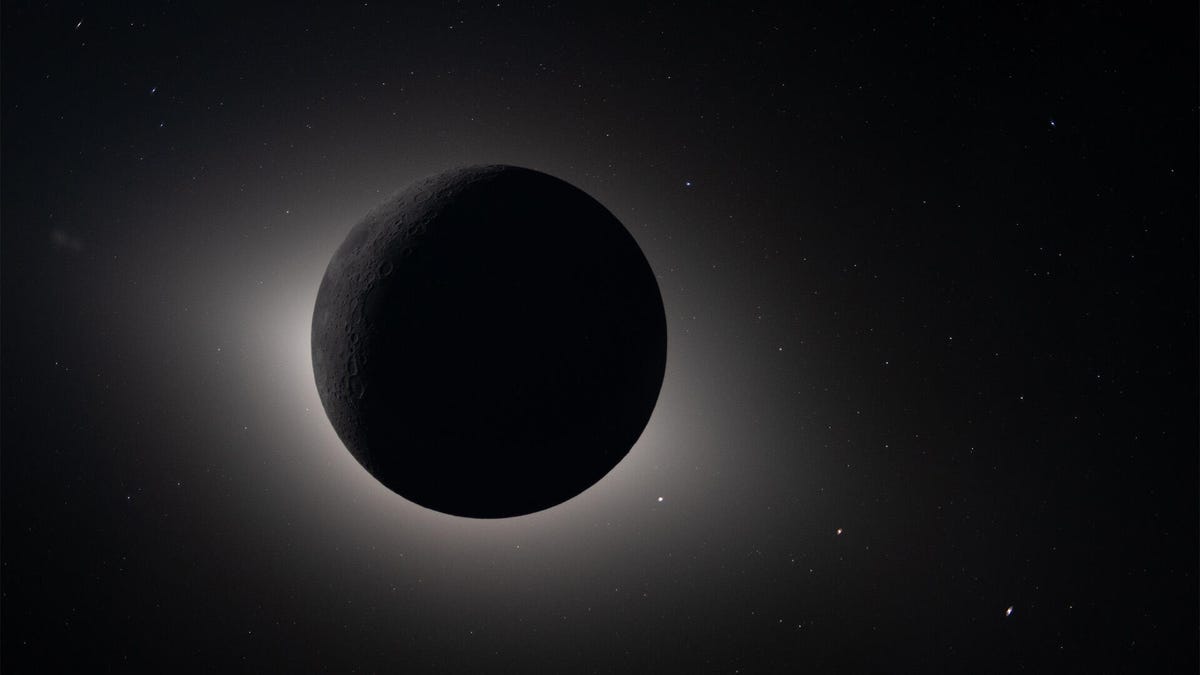
Researchers from Tokyo City University published a study in June using photographs of a total solar eclipse obtained during the Artemis II lunar flyby to investigate the properties of the F-corona — fancy science-speak for interplanetary dust particles that scatter sunlight when the moon is viewed with the sun directly behind it. This faint astronomical phenomenon gives the moon a halo-like glow.
One of the most iconic photographs from the mission, “Artemis II in Eclipse,” captured a 54-minute total eclipse and offered a rare, never-before-seen view of the F-corona. Using the JPEG image, the Japanese researchers obtained reliable measurements and confirmed the F-corona’s structure, demonstrating that simple imaging can yield valuable astrophysical data.
According to Nikon and NASA, the Nikon Z9 was paired with a 35mm f/2D lens to capture the image at an aperture of f/2, an exposure time of 2 seconds and an ISO of 1600.
Researchers used the “Artemis II in Eclipse” photo and analyzed it in several ways to support their research. It was taken by a high-resolution camera in JPEG format.
Using a regular camera for science
Kohji Tsumura, an associate professor at Tokyo City University and co-author of the study, said in a statement to CNET that he was initially skeptical about using JPEG images since most space imagery used for research relied either on raw, uncompressed image data or highly specialized codecs. Yet the end result was “comparable to data used in professional astronomical observations.”
“I was amazed to learn that this remarkable image was captured by an astronaut using a commercially available Nikon Z9 with an exposure time of just two seconds,” Tsumura said.
The study’s other co-author, Ko Arimatsu, agreed that high-performance commercial technology could serve as a tool for future space exploration and other scientific discoveries. “The findings demonstrate that scientifically valuable data can be extracted from consumer camera images when properly calibrated and analyzed,” Arimatsu said.
The Nikon Z9 wasn’t originally part of the mission. The crew planned to use NASA-certified Nikon D5 cameras, which are outfitted to better withstand deep-space radiation. However, Commander Reid Wiseman pushed to include the Z9 as a test platform for future Artemis missions, and NASA ultimately approved bringing it on board.
“We did some training on the Z9, and it’s a great piece of gear,” Wiseman said.
NASA has been using Nikon cameras for over 50 years and has collaborated with the photography company to develop equipment for the agency’s missions. They’re currently working on the Handheld Universal Lunar Camera, which is expected to go to the moon with astronauts as part of Artemis IV.
“Seeing the images from the Artemis II mission return to Earth is a profound honor for all of us at Nikon,” said Hiroyuki Ikegami, senior executive vice president at Nikon, in a statement to CNET. “Nikon has been privileged to support NASA with cameras and lenses designed for exceptional clarity and reliability in the most demanding environments.”
The Nikon Z9 used by the astronauts is a commercially available model, considered the flagship of Nikon’s mirrorless lineup and widely regarded as one of the best cameras on the market. CNET said the Z9 is “packed with awesome camera tech delivering blistering shooting rates for serious enthusiasts and pros alike.” Indeed.
Read the full article here