



One of Southern California’s infamous traffic choke points has gotten a high-tech facelift, but it might come with a little extra pain for starters.
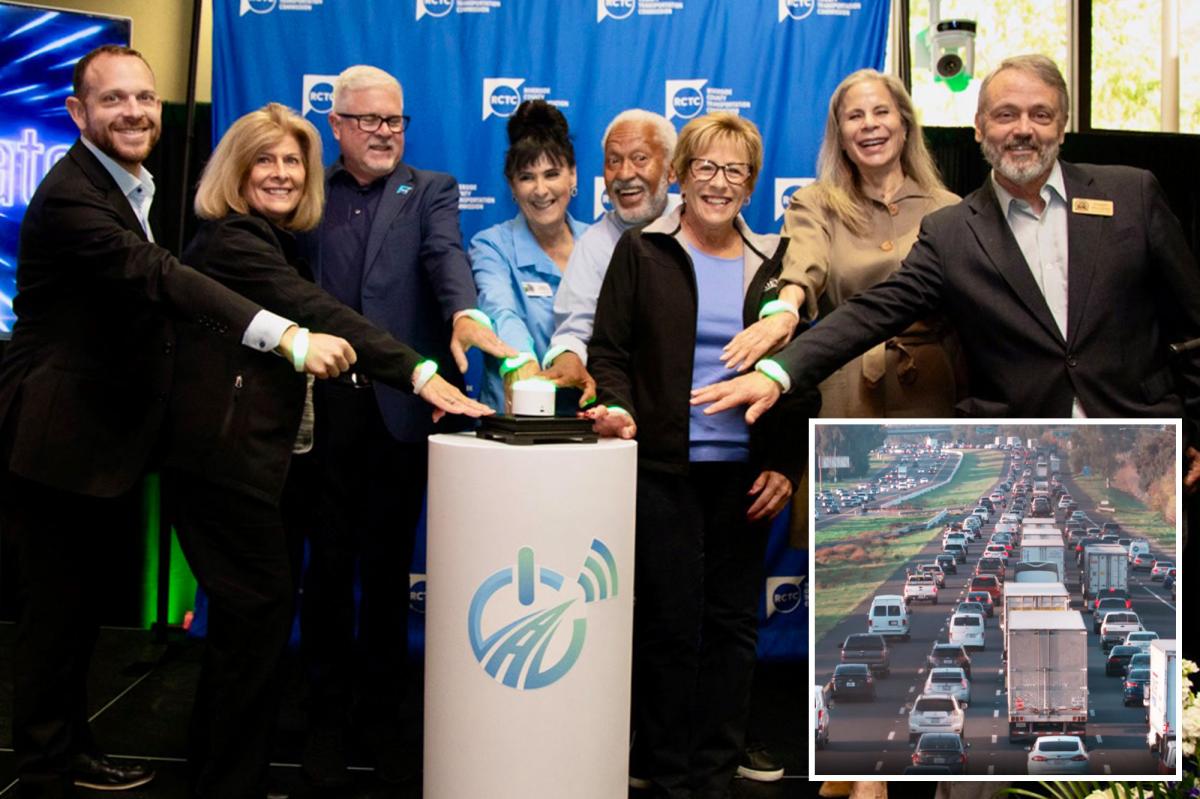
On Monday, the Riverside County Transportation Commission officially flipped the switch today on a new $33 million “smart freeway” pilot program along an eight-mile stretch of northbound Interstate 15 between Temecula and Murrieta, where bumper-to-bumper traffic has long frustrated commuters.
Rather than adding more lanes, the Smart Freeway Pilot Project system utilizes AI, advanced sensors, coordinated ramp meters and digital speed advisories to aggressively manage traffic flow, effectively turning the highway into a thinking machine.
But there’s one catch: Drivers may have to wait longer before getting on the freeway.
The targeted area, northbound I-15 from the San Diego/Riverside County Line in Temecula to the I-15/I-215 Interchange in Murrieta, is notorious for gridlock amongst commuters, with a deluge of traffic from local on-ramps reducing the interstate to a standstill.
Under the new system, the highway’s on-ramp meters will no longer operate on automated timers. Instead, they will act as a “coordinated system,” talking to each other and “adjusting in real time to allow more or fewer vehicles to enter the freeway” based on how jammed the highway actually is.
Since the meters can speed up or slow down access to the highway depending on conditions farther ahead, drivers will be made to wait a little longer to get on.
Leaders are pitching it as a win, promising smoother rides and overall time savings once drivers actually get onto the blacktop. But they are also offering a stark reality check: motorists trying to get onto the I-15 will “initially experience short delays at on-ramps.”
Officials say the goal is to reduce stop-and-go traffic, improve travel times and make the clogged corridor flow more smoothly without building additional lanes.
“Building our way out of traffic congestion is not an option,” Riverside County Transportation Commission Chair Raymond Gregory said. “We must look at how we can combine technology with existing infrastructure to improve the driving experience.”
Temecula city officials also say that the technology could also reduce rear-end crashes, improve fuel efficiency and cut vehicle emissions by minimizing idling and repeated acceleration.
The project is in partnership with Caltrans, Western Riverside Council of Governments, and the City of Temecula. The results of the smart freeway experiment will be studied for the next two years.
Read the full article here