




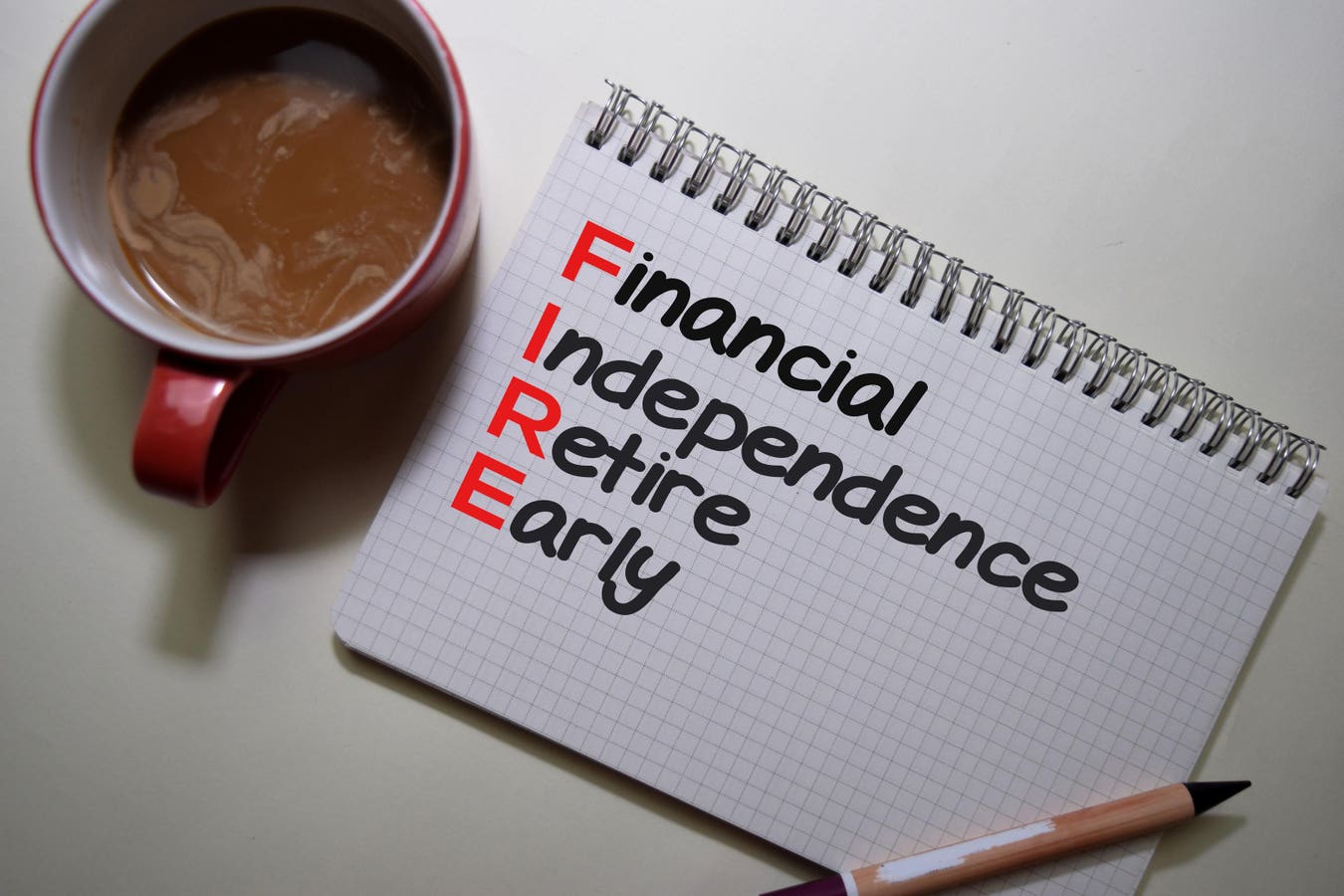
The Retire Sooner Method is a research-based roadmap that aims to help people reach financial freedom earlier so they can choose whether to work, then use that freedom to build a happier, more purposeful life in retirement. The FIRE movement (“Financial Independence, Retire Early”), on the other hand, is focused on saving and investing aggressively—often 50% or more of income—to achieve financial independence well before traditional retirement age.
In other words, the Retire Sooner Method is a more realistic, research-grounded version of FIRE.
Why Retiring 5–10 Years Early Is Realistic For Many Americans (And 20 Years Sooner Isn’t)
Other than creating a wildly successful business and selling it for millions, it’s tough to chart a workable plan that offers typical Americans a reasonable probability of retiring 20 years early without ever needing to work again. Is it possible? Yes, and if it happens, wonderful; but that’s typically rare.
Rather than emphasizing extreme saving and sacrifice to fund a work-free retirement decades ahead of schedule, the Retire Sooner Method focuses on research-based principles and actions designed to open the door for a work-optional, happiness-focused retirement 5–10 years sooner than would’ve otherwise been possible.
What The FIRE Movement Really Requires To Retire In Your 40s
The basic FIRE formula requires:
- Saving 50% or more of all income.
- Aggressive investing.
- Living on an extremely lean budget for decades before retiring.
- Often assuming there will be no children or at least accepting very low-cost living for far longer than most people would choose.
Again, it is mathematically possible, but for many families, sacrificing heavily for 20 years on the front end—followed by stringent budgeting for another 30–40 years—may not be realistic or desirable. To pull off the described goals of the FIRE movement, individuals may be forced to build a life centered around deprivation and rigid financial optimization.
The Retire Sooner Method, however, is based on research that seeks to help people find a life with margin, purpose, and enough money to enjoy meaningful core pursuits, community, and memorable life experiences.
The Money Green Zones: How Much You Really Need Saved To Retire
The Money Green Zone represents the level of savings where many future retirees begin to feel more financially secure. In our 2025 “Money and Happiness in America” research, that point frequently emerged around $1 million or more in liquid, investable assets, excluding home equity, with respondents above that threshold generally reporting higher happiness scores.
Reaching the Money Green Zone does not mean the individual is beyond disciplined decisions, but it does typically mean they may be better positioned to pay bills, weather unexpected expenses, and make work optional without living in constant fear of running out of money.
The Money Green Zone may be different for each individual or family.
How To Calculate Your Money Green Zone With The 25X Rule And 4%+ Rule
The Money Green Zone numbers serve as practical checkpoints built around two related retirement rules of thumb: the 25X rule and the 4%+ rule. The 25X rule of thumb estimates how much you may need to save by multiplying your annual portfolio income need by 25, while the 4%+ rule of thumb works in reverse by showing how much annual income a portfolio may be able to generate in retirement, starting with a 4% first-year withdrawal and adjusting for inflation over time.
For example, if someone needs $100,000 per year from savings and investments, multiplying $100,000 by 25 suggests a ballpark nest egg of $2.5 million; viewed the other way, a $2.5 million portfolio could support an initial withdrawal of about $100,000 per year under the 4%+ framework.
How Disciplined Savers Can Retire 5–10 Years Earlier Than Traditional Retirement Age
Young couples looking to retire as early as 40 or 45 are not only trying to build what most retirees accumulate in about half the time but also trying to make those funds last over a much longer period. Both of those factors contribute to the difficulty of successfully implementing the FIRE movement.
Conversely, if the goal is to shave 5–10 years off your retirement, perhaps retiring at 60 instead of 65, or 58 instead of 63; there are typically more paths toward success.
Here’s why that 5–10-year “Retire Sooner Zone” may work:
- Individuals have 30–40 working years to accumulate, instead of trying to cram everything into 15–20.
- Social Security is still a meaningful part of a retirement plan, instead of being decades away and without an accurate payment calculation.
- By this point, individuals are often past the most expensive years: raising kids, paying for college, and carrying a larger mortgage.
- The retirement horizon might be 25–30 years, not 45–50, so the portfolio doesn’t have to stretch quite as far.
If an individual maxed out contributions to a 401(k) for 15–20 years and experienced returns generally consistent with long-term market history, they could potentially accumulate savings approaching the $1 million range. Extending that timeline with additional years of saving and compounding may further improve the likelihood of reaching higher Money Green Zone levels.
In other words, retiring 5–10 years early may be achievable through optimization and consistency, depending on income, savings rate, market returns, and personal circumstances. Retiring 20 or 25 years early often requires a much more aggressive financial independence approach that may not be realistic for every household.
The Bridge Problem: Why Retiring At 40 Or 45 Is So Hard To Fund
There’s another practical challenge that may come with retiring 20–25 years early: you can’t easily withdraw your money yet. An individual who quits at 45 would not have access to Social Security funds. Furthermore, to avoid early withdrawal fees attached to traditional retirement accounts before age 59½, they may need to rely heavily on other options, such as:
- A large taxable brokerage bucket built up outside of IRAs and 401(k)s.
- Rental income, side businesses, or taxable investments robust enough to sustain someone for 15 years.
Again, anything is possible, but the financial hurdles become significantly steeper for someone trying to retire that early. Furthermore, when most of the proposed heavy lifting depends on tax-advantaged accounts tailor-made for a standard 60s retirement, it’s easy to see why the plan may break down. And refusing to keep any kind of part-time income trickling in only further complicates the situation.
A Healthier Alternative To FIRE: Retire Sooner And Make Work Optional Instead
The impulse behind FIRE is admirable—intentionality, high savings, valuing time over possessions. However, the extreme rigidity of working non-stop until 40 or 45 and then never again may lead to problems down the road.
In contrast, the Retire Sooner Method maintains the spirit of the pursuit of freedom without tethering itself to overly aggressive tactics. It’s not about quitting work on a whim; it’s about making work optional 5–10 years earlier than traditional norms suggest by hitting a realistic Money Green Zone and building the flexibility to use it well.
By utilizing simple tools such as the 25X rule of thumb and the 4%+ rule of thumb, individuals may be able to back into practical income targets. Those assets may then be spread across tax-deferred, Roth, and taxable buckets so that the cash flow can be accessed as the individual downshifts in their late 50s.
Instead of treating those earlier years as a hard stop, the Retire Sooner Method frames them as a phase change from full-time into part-time, consulting, encore, or entrepreneurial work that fits around a schedule full of meaningful and fun core pursuits.
The FIRE movement may work for some, but disciplined individuals who allow themselves to revisit the plan as life evolves may decide that the Retire Sooner Method affords opportunity for ample freedom to change careers, take long breaks, or work only part-time, without having to submit to so much stringent sacrifice. Rather than an all-or-nothing early retirement, the Retire Sooner Method aims to help people find the sweet spot where money and happiness intersect.
The examples provided are hypothetical and for illustrative purposes only. They are not guarantees of future results or financial outcomes. The “25X rule” and “4%+ rule” are general retirement planning guidelines and rules of thumb that rely on numerous assumptions, including future market returns, inflation, taxes, spending levels, and withdrawal behavior. Actual results will vary significantly based on individual circumstances and market conditions. Investing involves risk, including the possible loss of principal. Past performance and historical market returns are not indicative of future results. References to “financial freedom,” “work optional,” or “retiring sooner” are aspirational concepts and are not guarantees that any individual will achieve a specific retirement age, lifestyle, or level of financial security. The “Money and Happiness in America” research referenced herein reflects survey findings and observations only and should not be interpreted as investment, legal, tax, or psychological advice. This material is for informational and educational purposes only and should not be construed as personalized financial planning or investment advice. Individuals should consult their financial, tax, and legal professionals regarding their specific situation.
Read the full article here