




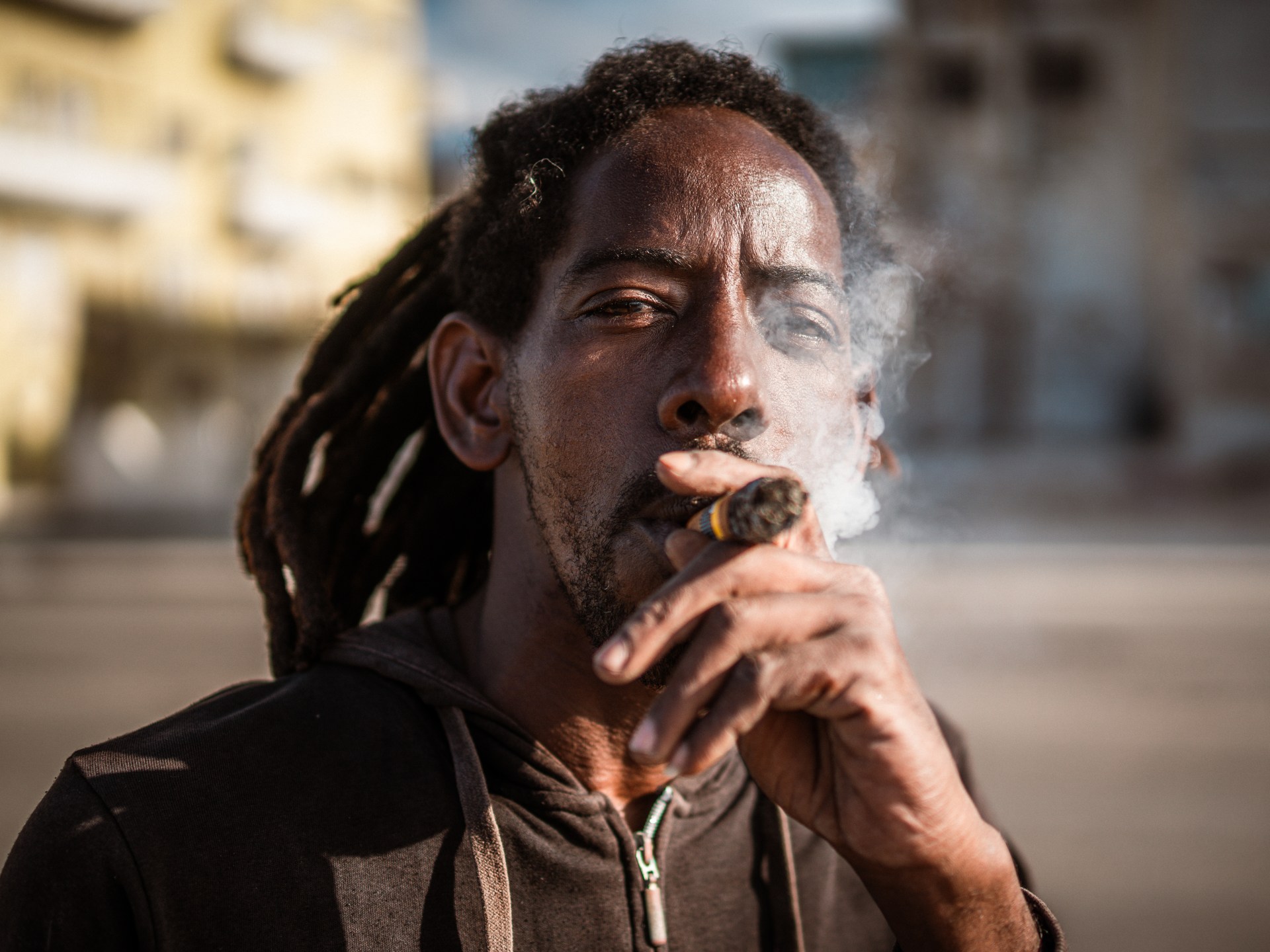
New pressures on a straining industry
Still, tobacco remains Cuba’s top export, and in 2024, its government reported record revenue from its sale: nearly $827m.
Lloyd Smith explained that the demand is linked to prestige. Around the globe, Habanos are considered a symbol of luxury.
“A lot of people, when they think of the cigar, they automatically think of Cuban cigars,” he said.
That reputation for exclusivity has been bolstered, in part, by the fact that Cuban cigars are illegal in the US due to a longstanding embargo.
The trade restrictions were largely a response to the 1959 Cuban Revolution, which ushered in the island’s communist government.
The new regime quickly nationalised the island’s industries, much to the ire of US authorities.
Traditional tobacco brands like Montecristo and Romeo y Julieta fell under state control, and new products were launched. They included the premium cigar brand Cohiba, a favourite of the late Cuban revolutionary Fidel Castro.
But experts say the US blockade has exacerbated the woes of a cigar industry that has faced multiple supply-side shocks in recent years.
In September 2022, Hurricane Ian ravaged Pinar del Rio, damaging as many as 90 percent of the province’s tobacco curing barns, where the leaves are dried.
That season saw just 5,150 hectares (13,725 acres) of tobacco planted, the lowest level since records began. Tobacco growth has remained sluggish in the years since.
Just last month, the Cuban government announced it had failed to meet its target for the 2025-2026 growing season, set at 12,152 hectares (30,028 acres). That goal had already been revised down in September due to heavy rains.
Those crises have lowered cigar supplies, both domestically and abroad.
In 2024, the island exported 50 million cigars, little more than half of the 93.9 million shipped abroad in 2018, according to Tabacuba, the state-owned tobacco company.
While Tabacuba has not shared data from the past year, industry insiders say exports have slowed even further in recent months.
Some cigar sellers have not received shipments of Habanos since last year, says Lloyd Smith, while others are getting smaller deliveries less often.
Chetan Seth, the president of India’s only Cuban cigar importer, Cingari, told Al Jazeera that “international logistics have slowed down the delivery of cigars”.
But, he added, “stocks are available”.
Read the full article here