




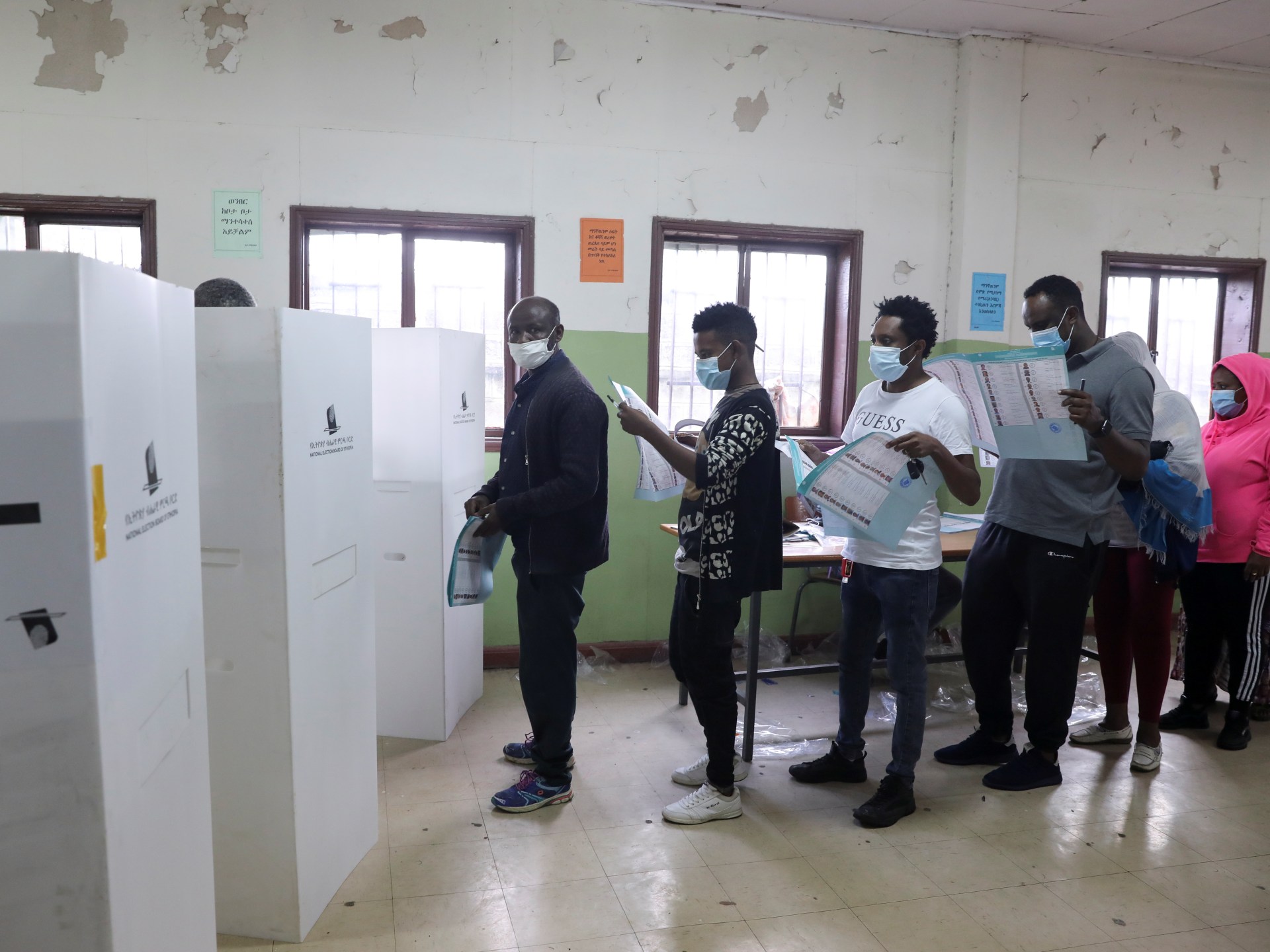
On June 1, more than 57 million Ethiopians are going to the polls in the country’s seventh national election since the adoption of the 1995 constitution. At a time when democratic systems across the world are under strain, Ethiopia’s vote is more than a routine electoral event — it is a significant test of whether a large, diverse, and rapidly changing state can navigate the difficult process of democratic transition.
Ethiopia’s electoral system differs from that of many African countries. Voters do not directly elect a president; instead, they choose parliamentary representatives, reflecting a system closer to that of the United Kingdom. In this election, 47 political parties and more than 10,000 candidates are competing for seats at both the federal and regional levels.
Recommended Stories
list of 1 itemend of list
The government’s performance in key sectors over the past few years is expected to reflect positively on the election outcome. During the past electoral cycle, Ethiopia has recorded strong economic growth, with average annual gross domestic product (GDP) expansion of around 7.5 percent and projections for this year reaching more than 10 percent.
These figures are not just abstract statistics. Across major cities, including Addis Ababa, visible urban transformation is under way, reinforced by ambitious infrastructure development and a renewed push in agriculture and industry.
Export performance has improved markedly, driven by agriculture and mining, while sectors such as tourism and digital services are beginning to play a growing role in the economy. The completion of the Grand Ethiopian Renaissance Dam has further cemented the country’s position as a regional energy powerhouse, with additional large-scale projects in the pipeline pointing to continued economic momentum.
At the same time, the government faces serious challenges. Economic and security challenges remain areas that need continued intervention from the government to meet the ever-growing public demand. Yet the opposition has not managed to capitalise on this challenge by developing a coherent and compelling alternative way to address the challenges.
Many opposition groups remain fragmented along ethnic and sectarian lines, limiting their ability to compete effectively within Ethiopia’s first-past-the-post electoral system. In such a system, a divided opposition risks diluting its own support base, often translating into disproportionate advantages for the incumbent.
Against this backdrop, steps have been taken to broaden political participation. The ruling party has refrained from fielding candidates in a portion of available seats, aiming to create space for opposition representation and encourage a more pluralistic parliament.
There is also an expectation that the post-election political landscape will continue the recent practice of including opposition figures in executive roles, reflecting an ongoing effort to build a more inclusive political culture.
Ethiopia’s democratic trajectory must also be understood within a broader global and historical context. Even established democracies are grappling with rising polarisation, disinformation and political extremism.
In Ethiopia, these pressures are compounded by longstanding structural challenges, including deep-rooted ethnic divisions and a recent history of conflict.
For this reason, elections alone cannot resolve all of Ethiopia’s political challenges. The country’s ongoing National Dialogue Process is a critical complement to electoral politics. By seeking consensus on fundamental constitutional and political questions through an inclusive, deliberative process, the dialogue aims to address issues that lie beyond the reach of simple majoritarian decision-making. Its successful conclusion will be as important as the election itself in shaping Ethiopia’s democratic future.
The significance of the upcoming vote, therefore, lies not only in who wins, but in what it represents. It is an exercise in popular sovereignty under challenging conditions, and a step — imperfect but meaningful — along a longer path towards democratic consolidation. For a country of Ethiopia’s size, diversity and geopolitical importance, the stakes extend well beyond its borders.
More than 57.2 million citizens heading to the polls are not only choosing representatives; they are affirming a collective commitment to a democratic future. The question is not whether the journey will be difficult — it already is — but whether the institutions, processes, and political will can continue to evolve to meet that challenge. Anyone who knows Ethiopia’s history of resilience knows the answer to this important question.
The views expressed in this article are the author’s own and do not necessarily reflect Al Jazeera’s editorial stance.
Read the full article here