



Published on •Updated
European officials have called for the negotiation of a free-trade agreement between the European Union and the Gulf nations to be fast-tracked, as the bloc looks to diversify trade ties worldwide to counter the impact of US tariffs and an inundation of Chinese exports.
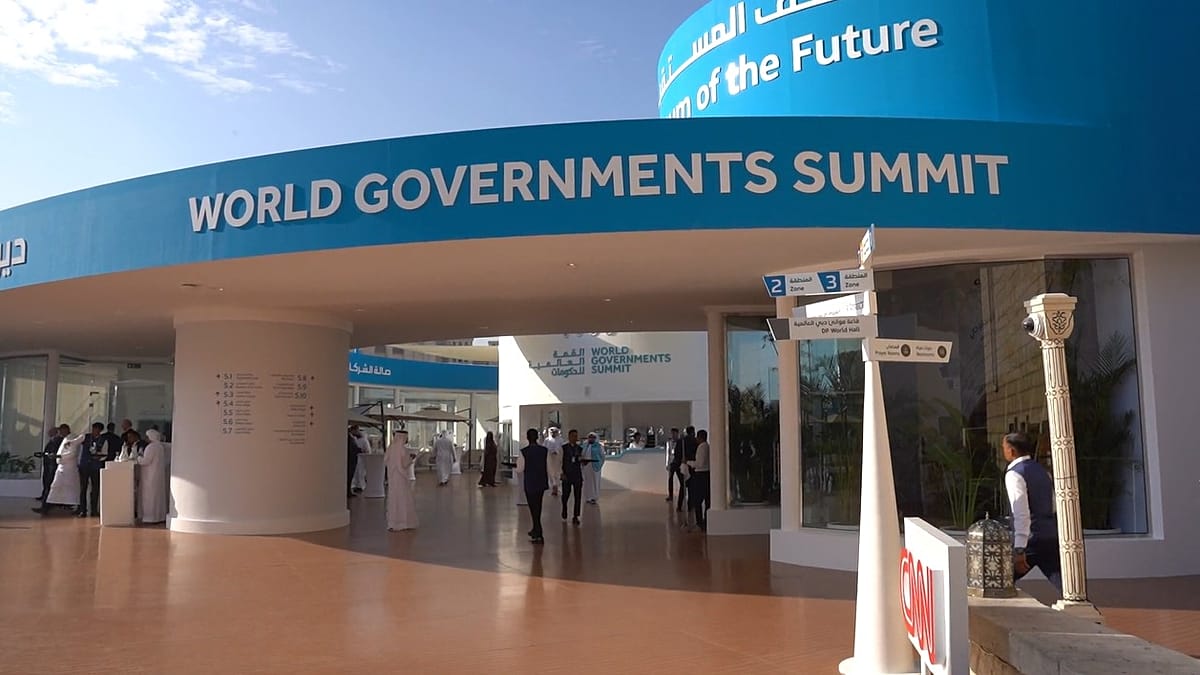
Speaking at a panel discussion moderated by Euronews at the World Governments Summit in Dubai, Latvia’s Prime Minister Evika Silina said the EU should reach out to new partners in a pragmatic fashion.
“This is a good, historical time for Europe to strengthen new partnerships,” she said on Thursday.
“Pragmatic, new partnerships for a market of 500 million people – who wouldn’t want to make a deal with us?”
Speaking separately, the EU’s special envoy to the Gulf Luigi di Maio suggested political talks should intensify this year.
Since US President Donald Trump imposed an aggressive tariff policy on allies and foes alike last year, the EU has sought to cushion the blow by opening up new markets and diversifying its exports network across the world.
The EU recently signed two major trade deals with Latin American countries and India after the pressure of US tariffs finally ended years of impasse.
Commission President Ursula von der Leyen has promised to unlock more deals for European companies faced with US tariffs, competition from China and higher energy costs.
With the Mercosur deal, which includes Brazil, Argentina, Paraguay and Uruguay, the EU hopes to gain market access to sell European cars and strengthen economic ties in a continent rich in raw materials, while the India agreement – which the Commission described as the “mother of all deals” – promises access to 1.3 billion consumers, with tariffs slashed on 96.6% of EU exports.
The Gulf’s principal attraction for the EU is in its energy sector. Most EU member states have cut their use of Russian gas and oil following its full-scale invasion of Ukraine, as well as severing Russian access to strategic routes.
Negotiating past political disagreements
The negotiations are being handled under the framework of the Gulf Cooperation Council (GCC) which includes the United Arab Emirates, Saudi Arabia, Qatar and Bahrain.
The EU and the GCC signed a cooperation agreement in 1988, but have since struggled to strike a full trade agreement.
EU envoy Luigi di Maio said the institutional framework for a deal is now in place to allow for political discussions between the Commission, which handles trade negotiations on the 27 member states, and the GCC countries led by Kuwait-born Secretary General Jasem al-Budaiwi to accelerate this year after a multi-decade impasse.
The EU has historically placed great importance on environmental clauses and social protections when signing partnerships with third countries. On Thursday, Silina insisted that the EU will always uphold the rule of law.
Speaking at a separate panel, Al-Budaiwi told a panel discussion moderated by Euronews that the agreement should focus on getting business done, rather than issues considered too political by Arab nations.
“When we discuss trade, we would like to discuss trade,” he said. “To introduce other issues and put them on the table does not encourage us to move forward.”
He suggested that trade between the two blocs could rise to $300 billion annually, compared to $197 billion currently, if a deal is finally inked this year.
Al-Budaiwi said he puts the chances of a deal at “50-50”.
Read the full article here