


Published on
Washington and Beijing are both trying to weaken Europe because it constitutes an “unknown variable” in their power struggle, France’s foreign minister said on Monday, urging the European Union to stop doubting itself and assert itself on the global stage.
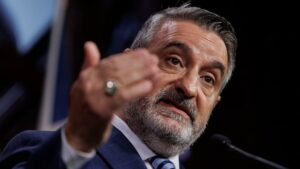
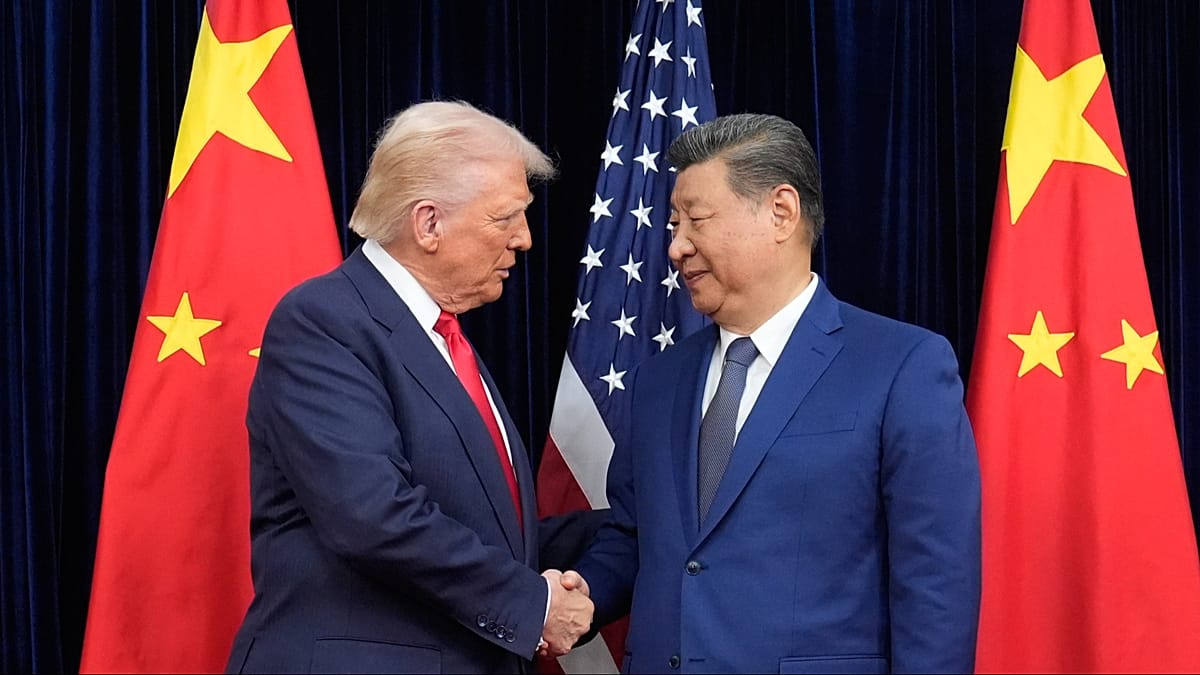
“The main geopolitical challenge is the growing rivalry between two powers, two superpowers,” Jean‑Noël Barrot told the annual European Union Ambassadors Conference on Monday, citing the US and China.
The two countries’ increasingly confrontational stances, coupled with their common desire to reshape the international order to their advantage, Barrot said, could see the world divided into rival spheres of influence dominated by a Sino-American duopoly.
In the worst case scenario, Barrot warned, the rivalry could escalate into open confrontation between two nuclear-armed powers – both permanent members of the United Nations Security Council – with profound consequences for the rest of the world.
Yet the outcome is not predetermined, he argued.
“In this inherently complex system of equations, there is one unknown variable that could change everything,” Barrot said. “That unknown variable is Europe.”
That’s because “resistance to the brutalisation of the world is being organised here, in Europe. And from Southeast Asia to Latin America, via Africa, free peoples who wish to remain so are waiting for Europe to stand up and show the way,” Barrot said.
This has led both Washington and Beijing to try to weaken Europe, he continued, with China often seeking to bypass European institutions by prioritising bilateral ties with individual member states, while the US said in a new National Security Strategy last year that Europe is facing “civilisational erasure” and that Washington stands ready to interfere by “cultivating resistance to Europe’s current trajectory within European nations”.
Barrot’s view is that while Europe is a “mature” power – which he said was borne out by the creation of the European Union to put an end to “decades of fratricidal conflict” – it is now struggling to “exert influence in the global strategic equation” because it is “plagued by deep doubt”.
This doubt is fed by citizens increasingly questioning whether democratic systems protect them from economic upheaval, geopolitical tensions and social change and years of political elites failing to recognise these anxieties, Barrot claimed.
“The European Union, our political organisation, is in danger. All is not lost, but Europe will only recover if it strikes a new pact with its peoples,” he said. He described that pact as one under which Europe protects borders, resists economic coercion, defends democratic processes from foreign interference and responds firmly to trade disputes or energy pressure.
Europe is beginning to wake up to the challenge, he said, but the pace must accelerate “because there is little time left”.
European Commission chief Ursula von der Leyen earlier in the day called on the bloc to project its power “more assertively” and to develop “a more realistic and interest-driven foreign policy”. She stressed that this might at times not “perfectly reconcile” with its values.
Read the full article here