




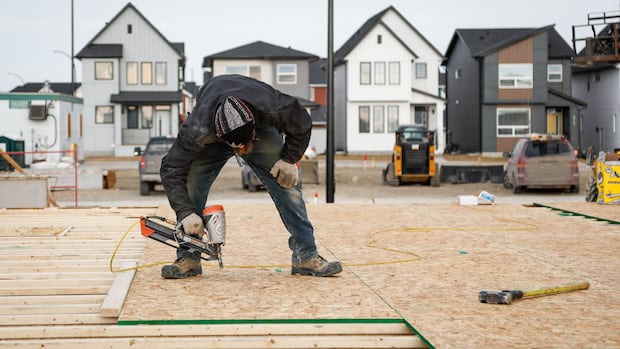
Alberta broke housing construction records in 2025 and led the country in housing starts per capita — a massive upswing in homebuilding that comes after a period of similarly massive population growth.
Some experts say there are lessons other Canadian cities could learn about how to ramp up housing supply to meet demand.
First, the numbers.
In 2025, there were about 54,900 housing starts in Alberta — an increase of about 15 per cent compared to the year before, according to numbers from the Canada Mortgage and Housing Corporation (CMHC). Housing starts in 2024 were also strong, with a 33 per cent increase compared to 2023.
Alberta saw a particular boom in the construction of rental housing, according to a provincial news release celebrating the numbers, which said new construction helped rents fall and settle at around $400 less than the national average.
Supply meeting demand
The province saw similarly steep increases in building during the late 1970s and mid-2000s — boom times in the oil and gas industry that drew young people west.
But it’s not a given that the market will respond to a surge in demand by ramping up construction, according to housing commentator Mike Moffatt.
In the past decade and a half, the Greater Toronto Area (GTA) famously saw several spikes in demand that didn’t lead to much of a boom in homebuilding — or, at least, not enough construction of the homes that were most needed — just much higher prices, Moffatt said.
“It’s that combination of having that demand, but then also having the policy environment to meet that demand,” said Moffatt, founder of the Missing Middle Initiative at the University of Ottawa.
“That’s where Alberta really shines.”
Why developers like Edmonton and Calgary
Some of Alberta’s advantage comes down to geography. Cities in Alberta tend to be a bit more spread out, said Moffatt, which means you can build outward more easily (though that can come with its own challenges, such as the need to build new water infrastructure to service far-flung suburban neighbourhoods).
Calgary’s population is growing, and new residents need a place to live. The city is known for sprawling communities of single-family homes, which require an extension of public services and infrastructure. But as CBC’s Jo Horwood reports, residents from both developed and new communities could be paying more to continue building out.
In Alberta, developers also don’t need to contend with provincial sales tax, he said, which makes it cheaper to build.
Fees that developers pay to municipalities also tend to be lower in Alberta, with costs more evenly spread among property taxes rather than focused on new development, he said.
And, generally, development policy is also friendlier at a municipal level in Alberta, said Moffatt.
Edmonton and Calgary ranked first and fifth, respectively, in a 2024 study of Canadian municipalities based on how affordable and how easy it is to build there. Vancouver and Toronto ranked 17th and 21st, respectively, in the same report from the Canadian Home Builders’ Association.
The rankings were based on the fees municipalities charge for development, how long it takes them to approve permits and the features they offer to help companies navigate the development process.
“That policy lens really is hugely different in places like Edmonton and Calgary, as opposed to places where you have much higher-priced housing, like Vancouver and Toronto,” said Kevin Lee, CEO of the Canadian Home Builders’ Association.
The speed of permit approvals depends on a mix of factors, Lee said, from how well cities staff their planning offices, to how much they prioritize getting paperwork finished, to how many studies they ask of developers.
Moffatt pointed to Edmonton’s use of AI technology to speed up the approval of homebuilding applications.
Policies big and small move the needle
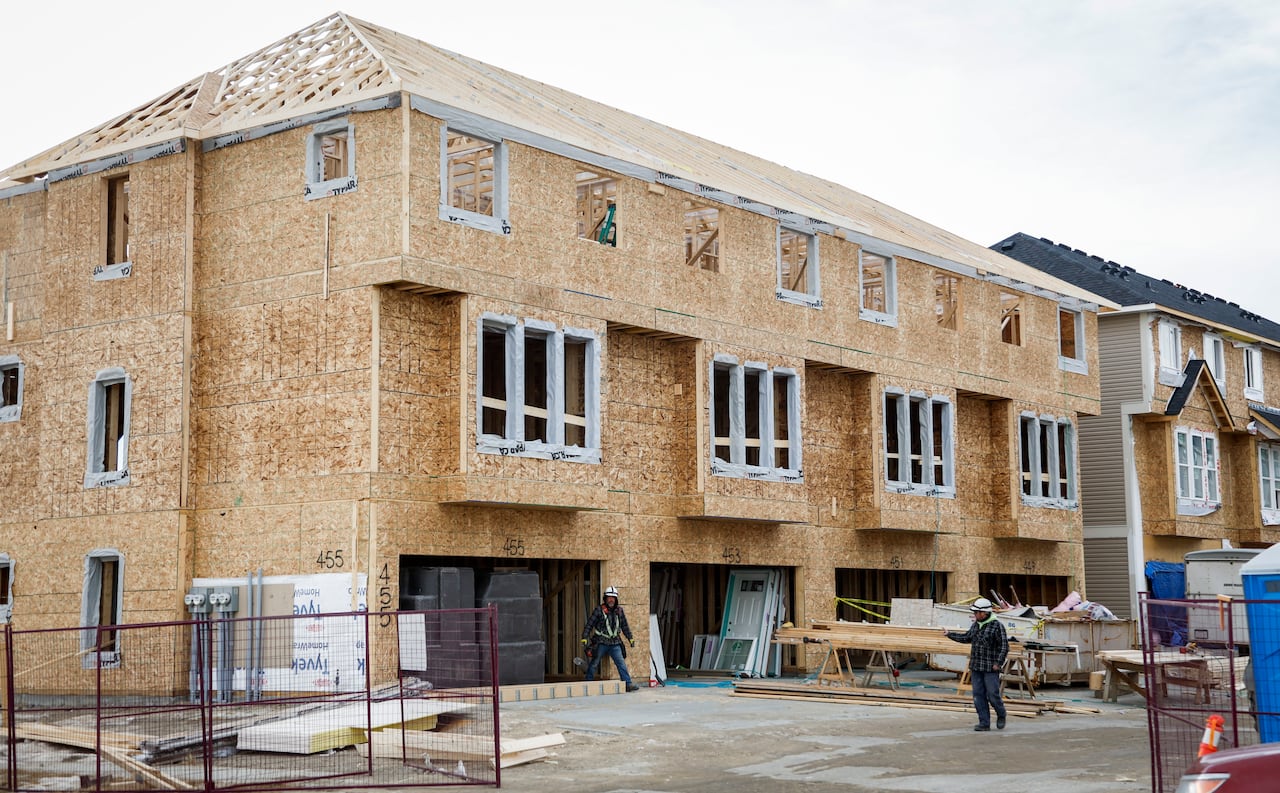
While most of Alberta’s building surge has been concentrated in Calgary and Edmonton, the City of Brooks has also ramped up construction through a suite of development incentives ranging from scaling back taxes to offering discounts on city lots.
Some federal policies and programs have also helped move the needle — both in Alberta and elsewhere — such as the federal government’s removal of GST on purpose-built rental housing, and a CMHC program that offers discounted mortgage insurance on certain multi-residential projects.
“All the changes that have come about have really made it more attractive to build purpose-built rental units,” said Lee.
Blanket rezoning
Not all policies aimed at ramping up construction have been met with a warm response. In Calgary, for example, council approved a rezoning policy in 2024 aimed at building higher-density housing in neighbourhoods that previously only allowed single or semi-detached homes.
It’s hard to tease out exactly how much the policy contributed to the rise in construction in the past couple of years, said Taylor Pardy, Prairies economist with CMHC.
He noted that even before rezoning was introduced, Calgary was doing “fairly well” at building multi-residential units like semi-detached houses and townhouses.
Shameer Gaidhar, chair of the Calgary Inner City Builders Association, estimates that in Calgary, rezoning shaved about six months off the approval process, ultimately making projects cheaper.
But the policy has also been met with pushback from some residents frustrated by changes in their neighbourhoods, ranging from a loss of community character to issues with parking.
In Calgary, many candidates in the fall municipal election campaigned on a platform of ending rezoning, and the new city council voted in December to begin the process of scrapping it.
More growth?
Moffatt said given the pushback, it might be “tough” to see other municipalities move forward with rezoning policies of their own.
But he believes cities in other provinces should look to Alberta to understand how to ramp up homebuilding, whether that be through lowering development charges or using AI to sort through applications.
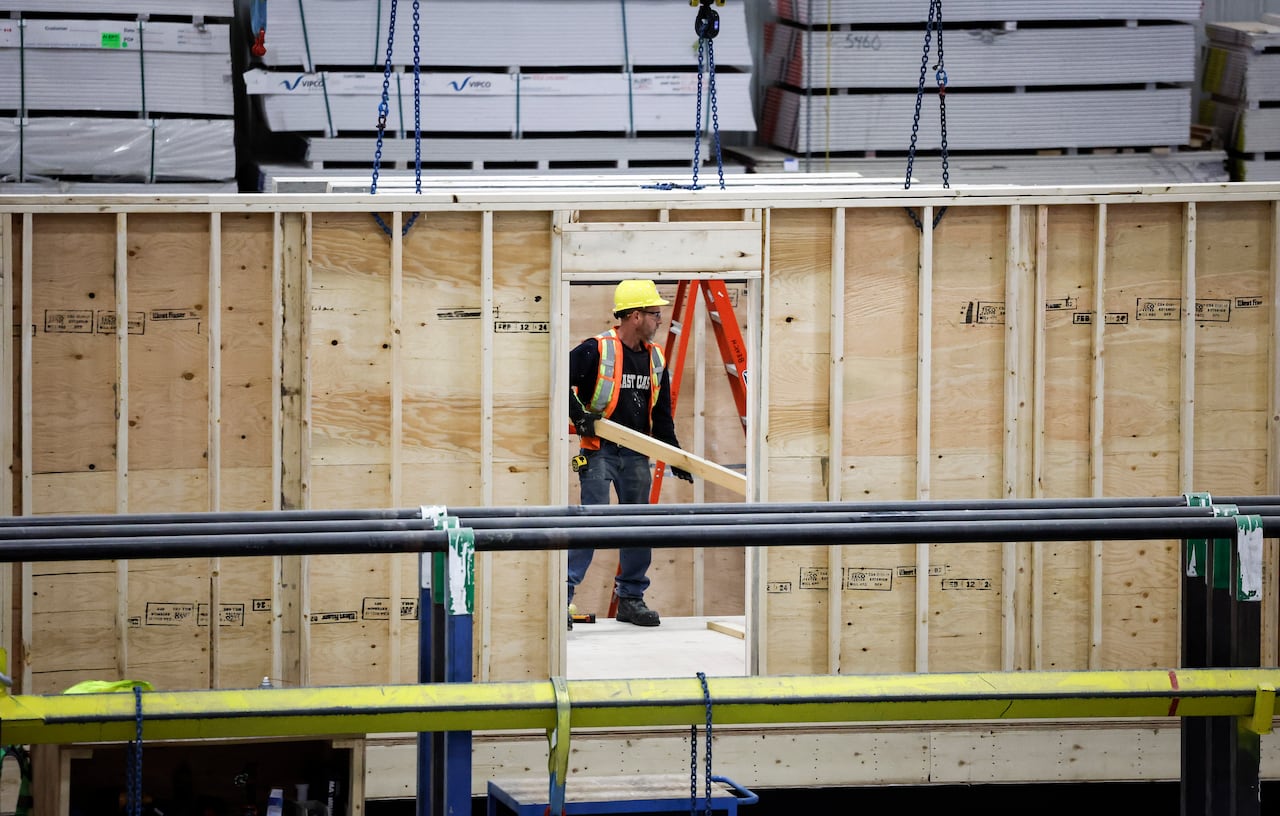
Moffatt thinks the federal government is also taking note, pointing to a program in Budget 2025 aimed at reducing development charges.
“I think part of that is inspired by Alberta,” he said.
Given that international migration is expected to slow down, CMHC’s Pardy believes construction in Alberta will also moderate a bit.
But according to Statistics Canada, Alberta’s population will likely keep growing at a strong clip and eventually surpass B.C. as the third largest province in Canada. That will mean more demand on housing — and if history is any indication, a lot more supply.
Read the full article here