



Listen to this article
Estimated 4 minutes
The audio version of this article is generated by AI-based technology. Mispronunciations can occur. We are working with our partners to continually review and improve the results.
As It Happens6:12Canadians will be banned from using Border Road in Coutts, Alta., starting on July 1
Roger Horgus is a wheat farmer from Sweet Grass Hills, Mont. He grew up just a few kilometres away from the Canada-U.S. border.
The 14-kilometre stretch of manicured gravel that connects his community to Coutts, Alta., is nicknamed Border Road.
“We’d go across on bicycles or go karts or horseback or whatever and spend an hour or two chumming with each other,” he told As It Happens host Nil Köksal.
Like many Americans living in border towns, Horgus’s family knew a lot of Canadians, and they considered their northern neighbours friends and good people.
But that carefree travel is set to end this summer, thanks to U.S. President Donald Trump.
Starting July 1, Canadians access to the historic road will be limited, and a parallel gravel path will be laid down on the Canadian side.
U.S. Customs and Border Protection says Canadians won’t be prohibited from driving on Border Road but they must first enter the U.S. at a port of entry.
Horgus doesn’t support the change.
“I didn’t think it was fair because they made some sort of a deal and I feel the U.S. reneged on it,” he said. “You’re just going to see a lot of wasted money building two roads.”
Road closure frustrates residents on both sides of the border
Border Road was born out of the Treaty of 1908. The agreement led to Canada and the U.S. adopting modern surveying techniques for creating boundaries resulting in several changes to the border.
The shared road is on the Montana side, but maintained by Alberta.
Alberta Transportation Minister Devin Dreeshen signalled last year that changes were coming in 2026. Dreeshen told the Canadian Press that $8 million has been allocated to build the gravel path. Construction is scheduled to begin in April with the goal of having the road ready by summer.
Horgus says residents were asked to share their opinion about the proposed changes, but he believes the meetings were just attempts to appease them.
“They acted like they wanted our opinion but they had already made all the decisions. But why’d they even come and ask us?” he said.
The road closure is the latest move aligned with Trump’s approach to the U.S. border. Trump says he wants Border Road closed along with other security measures to prevent cross-border drug traffickers and illegal immigrants from entering the U.S.
Last year, Trump accused Canada of sending fentanyl south of the border. But data from the U.S. Customs and Border Protection shows that from 2013 to 2024, 99 per cent of pills and 97 per cent of powder-form fentanyl captured in large seizures at U.S. land borders came from Mexico.
Horgus says he’s seen increased security around the border and local communities since the Sept. 11, 2001, attacks on the U.S., but argues that these new security concerns are unfounded.
“They say they’re short-handed and don’t have enough employees to take care of the border, so that’s why they’re doing this,” said Horgus.
He says residents can act as an extra set of eyes for law enforcement agencies and alert them.
Horgus has noticed increased stops at the border while travelling with his family. He says he’s been stopped at least six times by law enforcement agents who’ve incorrectly confused him and his family for Canadians.
“They’ll stop us and they’ll tell us, ‘We jumped the line and we’re coming across from Canada,’ and we didn’t,” he said.
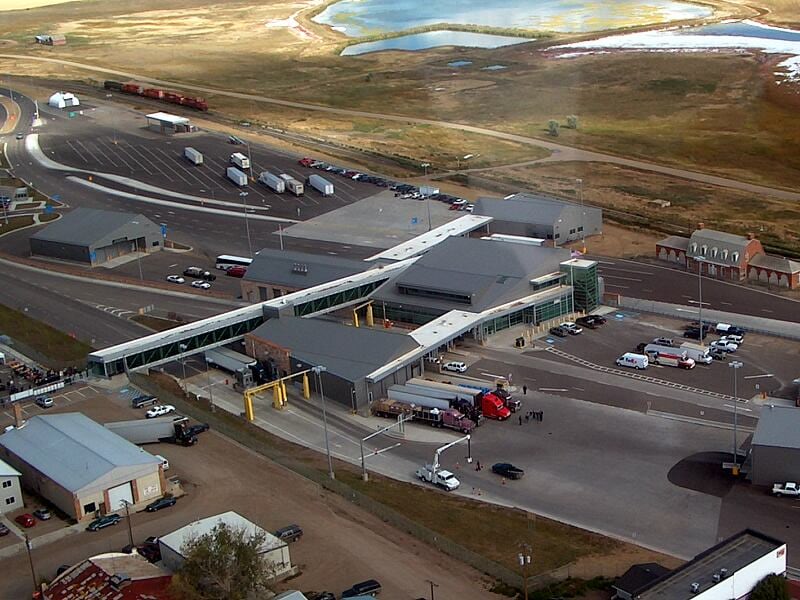
But Horgus says he’ll continue to visit friends in Canada and do business with people across the border, despite the added barriers.
“We’ll run to Canada a lot because they have good parts inventory, and they’ve got good parts men up there,” he said. “I like where I live. It’s a good area and neighbours are all good, it doesn’t matter what side of the line they were on.”
Read the full article here