




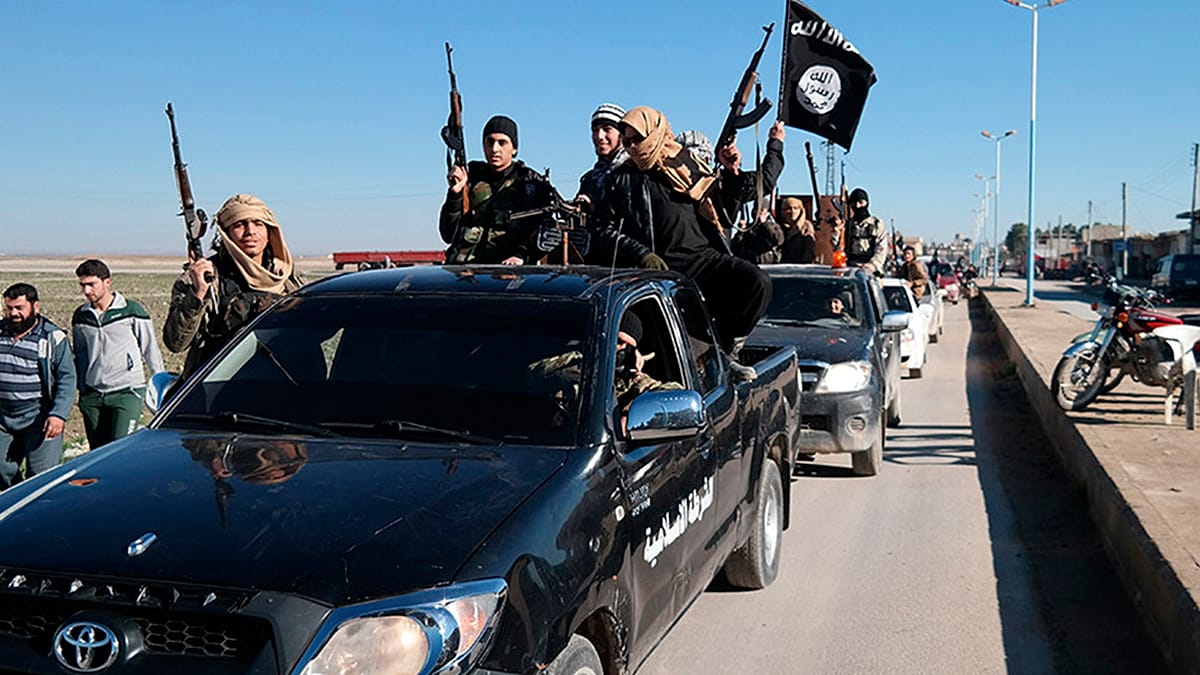
Islamist groups are increasingly using social media influencers and commercial tactics to recruit young Germans to extremism, framing conflict zones as opportunities for rapid social advancement, according to an expert on radicalisation.
Kaan Mustafa Orhon, an Islamic studies scholar at German advisory centre Grüner Vogel, said recruiters target vulnerable young people with poor education and limited job prospects, promising status and belonging.
“The appeal is different: in Syria, anyone—regardless of their background or resources—can supposedly achieve rapid social mobility,” Orhon told Euronews.
“Come to Syria, and with just a basic school diploma, you could be the police chief of some small town, have four wives, a car, a home, money and a weapon.”
Tactics turned dramatically different
The recruitment landscape has changed dramatically over 25 years, Orhon said. The Hamburg terror cell that included Mohammed Atta, involved in the 11 September 2001 attacks, consisted of high-achieving students in scientific fields.
“Back then, organisations sought people who could operate long-term within these structures and independently lead a terror cell. Now, they want as much foot soldiers as possible as cannon fodder,” Orhon said.
Salafism has become a youth movement targeting teenagers and young adults aged 15 to 35, with influencers playing a major role, Orhon said, while warning of strong commercialisation in the radicalisation space.
“People are making massive profits,” he said, citing cases where influencers collect donations ostensibly for Palestine but spend the money on luxury items.
Islamist influencers as ‘rockstars’
One German influencer known as “Abdelhamid,” a TikTok personality with hundreds of thousands of followers, was sentenced to three years in prison in July 2025 for commercial-scale donation fraud, according to German media reports.
He had raised nearly half a million euros through approximately 37 donation campaigns but reportedly passed only a small fraction to charity.
The gender distribution among extremists has shifted significantly, Orhon said. Previously 95 to 99% male, the movement is now approximately 75% male and 25% female, with influencer content targeted at women contributing to the change.
Hannah Hansen, a German influencer with a large social media following, sells packages including headscarves, long robes, prayer rugs, literature and perfume in pink boxes. “People pay for things they could get for free at a mosque,” Orhon said.
Social media facilitates connections with Islamists in Syria or Afghanistan, Orhon said.
“There are no so-called lone actors,” he said. “Even if someone acts alone, they usually receive instructions via Telegram. Almost all attackers prepared their acts with people in Syria.”
Recent attacks illustrate this trend, such as the 13 February 2025 attack at a Verdi demonstration in Munich, or the so-called Islamic State group (IS) sympathiser Safia S, who stabbed a police officer at Hanover Central Station in 2016.
Orhon said young people often have unmet personal needs that people in the Salafist scene can fulfil. Preachers often take on authority or father figure roles, older women act as mother figures, and peers serve as older siblings.
“Young people are offered a mission. They become part of something bigger, supposedly contributing to the betterment of humanity,” he said.
Networking with terrorists
Antisemitism can act as a bridge between left-wing and right-wing extremism and Islamism, Orhon said. Protests related to Palestine offer a shared cause to connect over a common enemy.
Orhon highlighted “switching extremisms,” where individuals exit one form of extremism only to enter another.
He cited Sascha Lemanski, a former German IS group sympathiser who had previously been registered as a right-wing extremist, and Bernhard Falk, who transitioned from left-wing extremism to Salafism.
Islamism stands out among extremist movements because anyone can join regardless of background, Orhon said. Germany is unique in Europe because radicalisation has operated primarily in German rather than immigrants’ original languages, which facilitates recruitment, he said.
Orhon has worked since 2019 with 40 women who were affiliated with the IS group. None have returned to extremism, he said.
Reintegration is difficult, Orhon stressed. “Radicalisation is not irreversible, and unfortunately neither is the exit.”
Motivations for leaving often involve a mismatch between reality and expectations.
Restrictions on music, pets or personal expression create isolation. Traumatic experiences — sexual abuse, domestic violence or loss of children due to poor medical care — also play a role, Orhon said.
One recruitment tactic is “lovebombing,” where new converts, especially women, receive overwhelming attention and praise online, only for support to vanish, leaving them vulnerable.
Despite challenges, reintegration is possible, Orhon said. “Most people come through word of mouth, though some are referred by courts.”
Read the full article here