




Published on
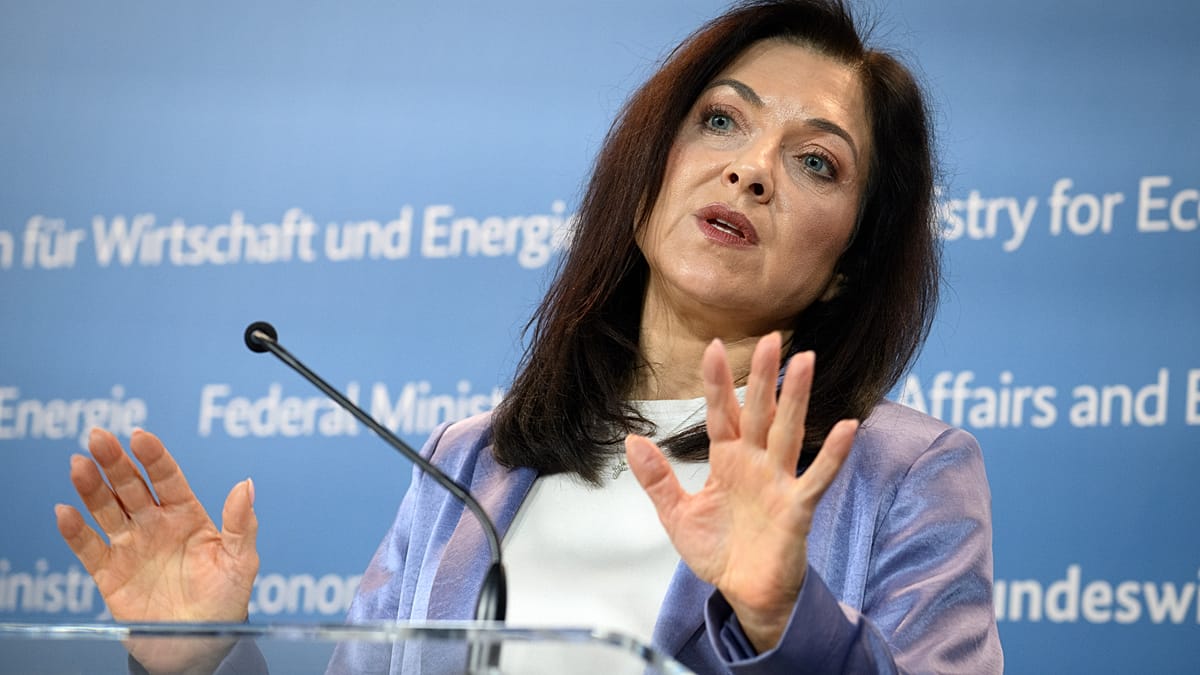
On Wednesday, German Economic Affairs and Energy Minister Katherina Reiche announced a sharp reduction in projected GDP, lowering the 2026 growth target to 0.5%.
ADVERTISEMENT

ADVERTISEMENT
This is a sharp reduction from the 1% growth rate initially predicted in January, signalling a period of prolonged stagnation for the Eurozone economic engine.
According to the latest figures released by the German government, the outlook for 2027 has also been dampened, with growth forecasts lowered to 0.9% from a previous estimate of 1.3%.
This official confirmation follows days of speculation regarding the resilience of the German industrial model in the face of escalating global tensions.
Officials in Berlin noted that the downward revision was unavoidable and that the primary catalyst for this economic contraction is the ongoing Iran war, which triggered a massive energy shock across the continent.
Germany, as a major industrial hub, is particularly sensitive to fluctuations in the cost of oil and natural gas, both of which have seen prices surge since the outbreak of hostilities.
Government reports state that the “Iran war fallout” has disrupted supply chains and increased the cost of raw materials, making it difficult for German exporters to remain competitive on the global stage.
The uncertainty surrounding the war has also led to a visible “wait and see” approach among private investors. Many firms have chosen to put major expansion projects on hold, fearing that a wider regional escalation could lead to further market volatility.
This lack of investment, combined with higher household energy bills that reduce domestic consumption, has created a pincer movement on the German economy.
Italy follows suit with fiscal adjustments
Germany is not the only major European power forced to recalibrate its expectations, as the Italian government has also moved to slash its economic outlook on Wednesday.
Italy has trimmed its 2026 GDP growth estimate to 0.6%, down from a previous forecast of 0.7%.
The Italian authorities noted that the “Iran war weighs heavily” on their fiscal planning, particularly as the nation remains highly susceptible to the volatility in energy prices.
“We’re not faced by normal circumstances but totally exceptional ones,” stated Italian Economy Minister Giancarlo Giorgetti, referring to the Iran war.
“Unfortunately in coming weeks the numbers will probably need to be reviewed, adjusted and updated,” Giorgetti added while highlighting the current uncertainty surrounding the projections.
Giorgetti also said the budget deficit is now seen this year at 2.9% of GDP, up from a previous target of 2.8%, and would only edge down to 2.8% in 2027, compared with the previous goal of 2.6%.
Earlier on Wednesday, the Italian national statistics bureau confirmed that Italy posted a budget deficit of 3.1% of GDP in 2025, dashing Rome’s hopes of exiting an EU disciplinary procedure this year for its “excessive” deficit.
The synchronous downgrades in Berlin and Rome point to a broader systemic weakness across the Eurozone.
As energy-intensive industries struggle to cope with the new geopolitical reality, the prospect of a swift economic rebound across the continent appears increasingly distant.
Read the full article here