




The new Consumer Price Index from the Bureau of Labor Statistics is out; inflation has jumped to 3.8% year over year. The explanation, at least for now, is the rising price of energy due to the U.S.-Israeli war with Iran. Over time, chances are decent that inflation will continue to rise, giving the Federal Reserve a reason to increase the federal funds rate, with other interest rates eventually following.
The BLS was clear on the reason for the significant inflation jump: energy at 17.9% year-over-year, which was responsible for more than 40% of the total inflation increase. Energy commodities grew by 29.2%. The two parts of that were gasoline, up 28.4%, and fuel oil, at a 54.3% jump. Electricity was up by 6.1%, although that is understated because it doesn’t include increases in delivery charges, which aren’t tallied but are significant.
On a month-over-month basis, energy was up 3.8%; energy commodities at 5.6%, with the gasoline part 5.4% and the fuel oil portion 5.8% higher; and electricity 2.1% more expensive than in March.
Also, month-over-month, food was up 0.5%; food at home, up 0.7%, and food away from home, 0.2%; apparel increasing by 0.6%; transportation 0.3% higher; and shelter increased by 0.6%.
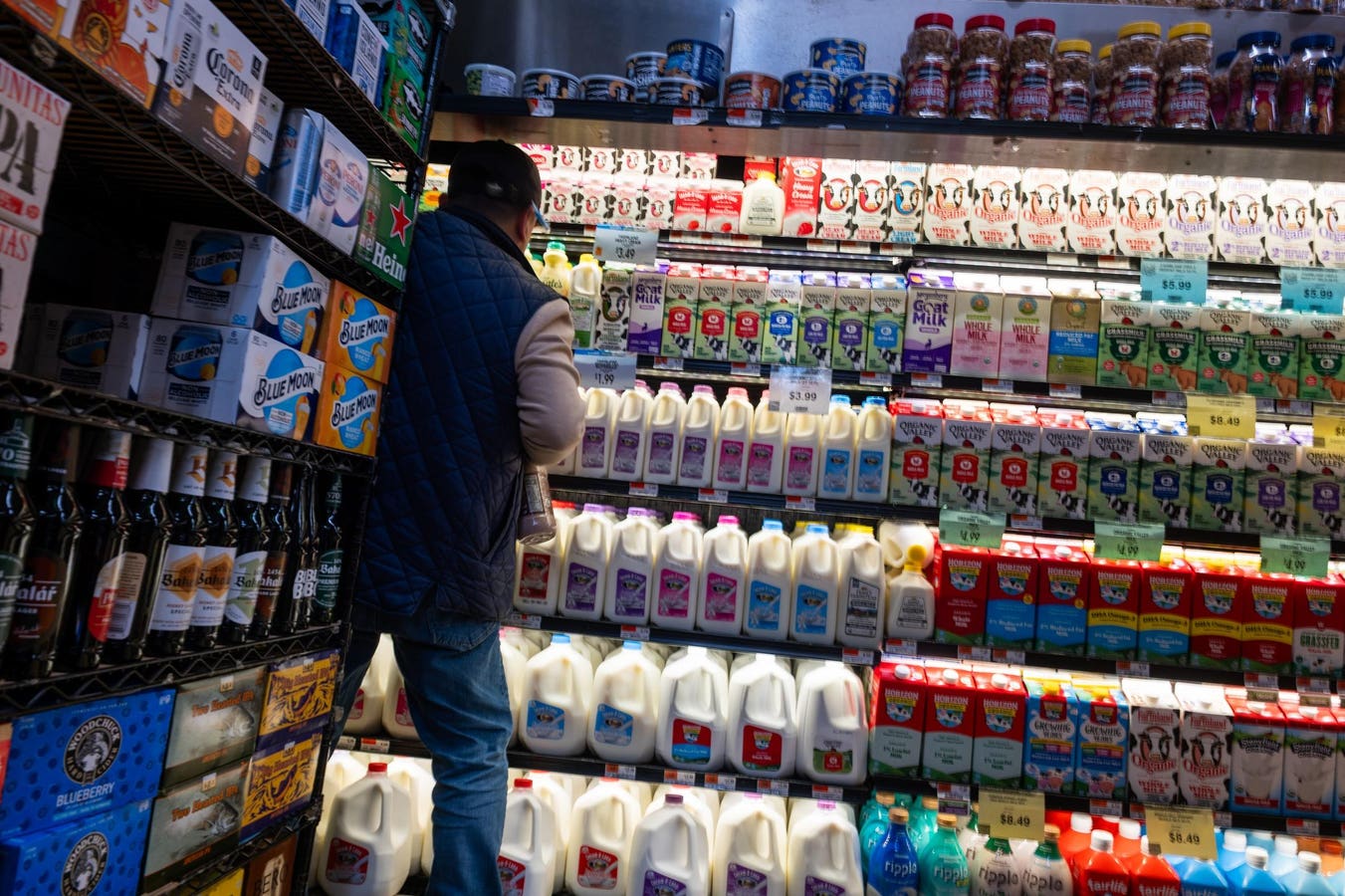
On an annual basis without any seasonal adjustments, overall food prices were up 3.2%, with food at home rising by 2.9% and food away from home growing 3.6%. Apparel increased 4.2%, transportation up by 4.3%, shelter growing 3.3%, and medical care services up by 3.2%. Food, energy, housing, and medical care: four fundamentals of living. Food prices will probably rise significantly, given that the war has disrupted the availability of fertilizer and 70% of farmers can’t afford to grow all their crops.
The graph below, which comes from the Federal Reserve Bank of St. Louis, shows the CPI index by year.
This is a reasonable look, showing the growth over time of prices. But time for a different view, taking CPI indexes and showing the year-over-year change done with the first graph, using tools on the St. Louis Fed’s FRED site.
That helps put current times into a different light. The relative changes year-over-year are stronger than even in the 1970s and 1980s. One way to consider this is that while the percentage growth in prices was higher decades ago, there is a history, as the growing CPI is effectively a summation of all previous price hikes.
Since 1948, when this data was first available, except for the temporary spike during the pandemic, this is the highest year-over-year relative increase, which helps explain why so many people feel strong economic pressure.
Many experts see the issue as well. Dan Ivascyn, the Group Chief Investment Officer for Pacific Investment Management Company — an investment management company, usually called Pimco, with $2.3 trillion in assets under management — told the Financial Times that the closure of the Strait of Hormuz has significantly affected the world’s economy.
“We’ll want to see measured responses [from central banks] or even, if necessary, potentially a tightening of policy,” Ivascyn told the FT. “[The] US is further away from that, but you are going to see more tightening as it looks today in Europe, the UK, and maybe even Japan, and I wouldn’t take it completely off the table for the US either.”
He added that expecting cuts in interest rates, particularly by the Fed, would be “counter-productive” with inflation uncertainty high.
Franklin Templeton CEO Jenny Johnson (the firm has $1.7 trillion assets under management) told the FT that “inflation is going to be harder to keep control of” and that “it’s going to be difficult for the Fed to cut.”
At the April meeting of the Fed’s Federal Open Market Committee, when the decision was to keep the federal fund rates where they were, three officials — Cleveland Fed President Beth Hammack, Minneapolis Fed President Neel Kashkari, and Dallas Fed President and CEO Lorie Logan — thought the FOMC statement should not have included language that sounded like there would be eventual more cuts.
“I am increasingly concerned about how long it will take inflation to return all the way to the FOMC’s 2 percent target,” Logan wrote. In the past, this question has arisen within the central bank: whether conditions have changed enough so that the target inflation rate should be adjusted upward. However, the consensus has been that any reassessment would have to wait until the 2% level had been achieved.
Now, things are moving in the opposite direction again as the Fed has to balance price stability and maximum employment, given economic conditions. The so-called dual mandate is difficult for policy, because there are both concerns about rising inflation (with current lower rates depending on using a tailored definition of inflation) and a weakening labor market.
Higher inflation and, therefore, higher interest rates aren’t a guarantee, but neither are cuts.
Read the full article here