




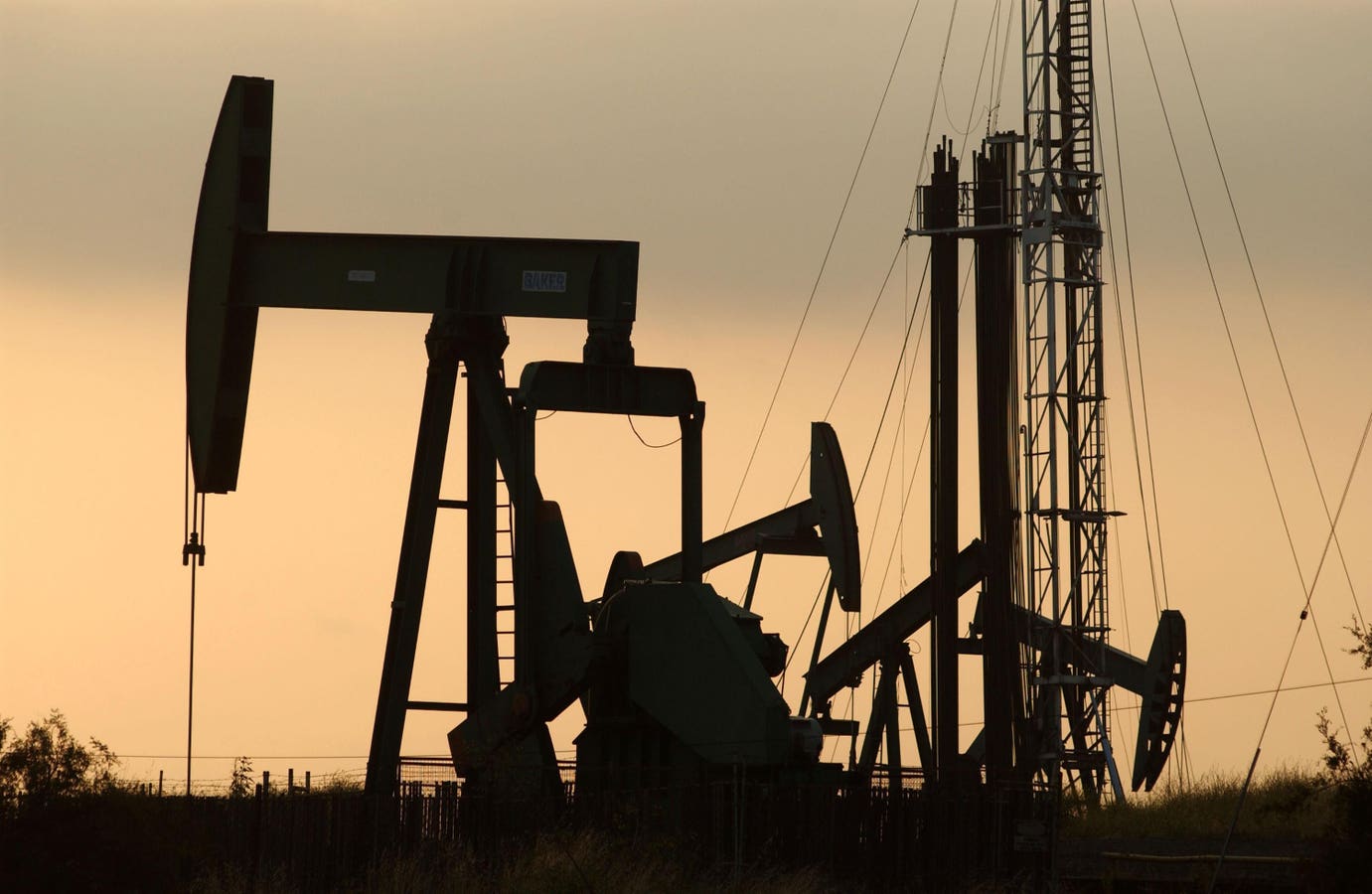
As a new oil trading year begins, crude futures continue to trade at or near their lowest levels in five years, as fears of a glut and uncertainty over demand in 2026 continue to weigh on traders’ minds.
Following the capture of oil-rich Venezuela’s President Nicholas Maduro by U.S. forces on alleged drug offenses in an operation authorized by President Donald Trump on Saturday, the first full oil trading week began on a mildly bullish note.
At 12:48pm EDT on Monday, global proxy futures benchmark Brent’s front-month contract was trading at $61.68 a barrel, up 1.53% or $0.93, and the U.S. West Texas Intermediate was up 1.67% or $0.93 to $58.27 per barrel.
However, the intraday uptick cannot mask the fact that both oil futures benchmarks are around 20% lower than they were a year ago. In the case of Brent, it’s front-month contract was last this low in the first quarter of 2021, just as the world was mounting a recovery from the Covid pandemic.
Geopolitical Risk Is Not What It Used To Be
The escalation in Venezuela is just one among a long list of geopolitical incidents the world has faced in the past 12 months – ranging from the ongoing Russia-Ukraine war to Gaza, U.S. air strikes on Iran’s nuclear facilities to trade tensions between Beijing and Washington.
In crises past, such levels of tension would have been enough to trigger double-digit spikes for oil futures. But we currently live and breathe in different times. As things stand, there is plenty of oil out in the market at a time of uncertain demand.
On the supply front, last year the world saw record non-OPEC oil production led by U.S. According to the Energy Information Administration – statistical arm of the U.S. Department of Energy – in the months of April and October, the nation’s crude production came in at record and all-time highs of 13.47 million barrels per day and 13.84 million bpd respectively.
The said levels capped a previous record of 13.45 million bpd set in October 2024. It is not the just U.S. Other non-OPEC producers like Brazil, Canada, Guyana and Norway also continue to pump oil at a canter.
This uptick in production was capable of more than meeting global demand growth of 830,000 bpd for 2025, predicted by the International Energy Agency, let alone what the Organization of Petroleum Exporting Countries did.
There are now fresh concerns in the wider market of a surplus in this year. The IEA’s projected demand growth for 2026 is in the region on 860,000 bpd, and OPEC’s projection is for 1.4 million bpd. But even the latter’s bullish oil demand growth forecast for this year is once again on track to being met by non-OPEC production increases alone.
Easing Of Tensions May Drag Oil Prices Even Lower
Given a climate of elevated production and uncertain demand, an easing of geopolitical tensions – including the latest one in Venezuela – could bring yet lower crude oil prices.
Much has been made of Venezuela’s oil reserves which happen to be largest in the world, according to some estimates. Should the U.S. intervention raise the possibility of more Venezuelan barrels on the market over the medium-term, it would be a bearish development contingent upon prevailing demand scenarios.
In its heyday, Venezuela pumped close to 3.5 million bpd prior to the late Hugo Chavez and Nicholas Maduro’s tinkering of its oil assets for over two decades. At present, Venezuela’s production barely touches the 1 million bpd mark.
So, the said uptick will need long-term investment, commitment and more importantly peace and stability of the sort that simply isn’t obvious right now. It is also why the U.S. incursion has so far had little impact on the wider oil market given Venezuela has been relegated to the status of a smaller producer over the past decade.
Ditto applies to a potential resolution of the Russia-Ukraine War, which however imperfect, if achieved, may mark the return of more sanctions-free barrels to the global supply pool from Moscow. This would yet again serve to drag oil prices lower. In summation, there’s not much on the approaching horizon to suggest a bullish case for oil.
Disclaimer: The above commentary is meant to stimulate discussion based on the author’s opinion and analysis offered in a personal capacity. It is not solicitation, recommendation or investment advice to trade oil and natural gas stocks, futures, options or products. Oil and natural gas markets can be highly volatile and opinions in the sector may change instantaneously and without notice.
Read the full article here