




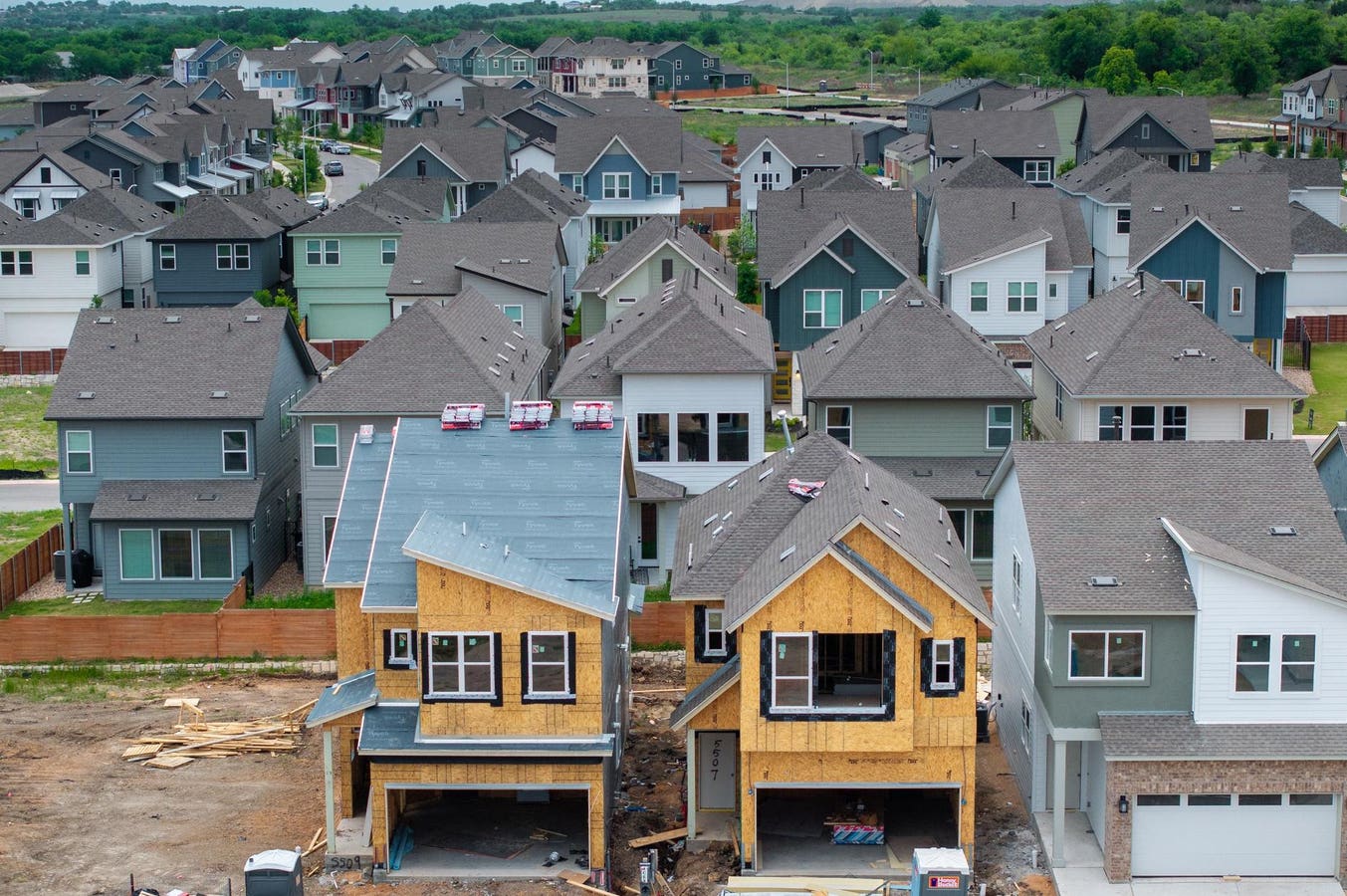
Affordable housing isn’t just based on the closing costs and the mortgage payments; it’s also the ongoing costs to maintain the home, including property taxes, which have become a hot topic in many places across the country.
Many voters want to cut property taxes with the intent of lowering ongoing housing costs, which would allow them to stay in their homes. For instance, in Florida, there are proposals to eliminate property taxes completely for homeowners. This proposal for the November ballot that is hotly debated at the moment, but for good reason.
The cost of housing is escalating quickly in Florida, along with the associated costs like home insurance. While insurance is mandated by the insurance companies, property taxes are the lever that the state owns and can adjust, and would look good to voters.
At a national level, property taxes have been rising higher than inflation for several years. According to real estate data firm ATTOM, nearly $397 billion in property taxes were collected from 90 million homes in 2025, which was a 3.7% increase over 2024. With an estimated value of $494,231, the average single family household paid $4,427 in taxes, which is 3% more than the previous year.
While property taxes are obviously a big revenue source for municipalities, and while it’s also true that they create challenges for homeowners, at the same time the are commonly misunderstood. Some might say that homeowners should love their property taxes and the benefits that come with them.
The Property Tax Duality
Even though voters typically think that lower taxes mean more money in their pockets, a recent University of Cincinnati study found that cutting local property taxes had a negative impact on household incomes.
University of Cincinnati economics professor David Brasington published the study, “Fiscal policy and economic activity: new causal evidence,” that looked at decades of levy renewal data in the state of Ohio to estimate the impact of property taxes on income, and that could be applied nationwide given Ohio’s diverse socioeconomic landscape.
Ohio has three metros with populations around two million, small farming communities, and manufacturing towns of all sizes, making it a representation of most parts of the country. His research across the state and dozens of years showed that household incomes actually decreased when city service taxes were cut that would have supported public servants’ salaries and road repair.
He found that while taxpayers may get a temporary personal benefit from a reduction in taxes, once the effects of the decrease in tax-supported services take hold, there could be negative economic consequences bigger than the tax savings that payers benefit from.
Brasington reviewed more than 4,000 levy renewal votes to understand the dollar allocations when levies get renewed, along with what happens when a levy is not approved. Then, he saw the long-term impacts on the median incomes of the communities that voted to renew tax levies and those that voted to cut them.
“What we found is that cities that voted to cut taxes and services had a decrease in incomes up to two years after the vote,” Brasington said. “This was especially true for lower-income communities.”
His research shows that one year after the vote, cities that fail to renew current expense tax levies have $7,020 lower median family incomes than cities that successfully renew. That trend continues for about two years as the local economy adjusts to the “shock” of less government spending.
Brasington pointed out that welfare was not even a factor.
“Only the largest central cities in Ohio give welfare,” Brasington said. “Everything else is at the state level or federal level.”
Property Taxes Unlock The Locked In Place
In 2024, the Minneapolis Fed reported that property taxes can shift the total cost of housing into the future. The research found a strong and meaningful property tax and home price connection, with property taxes having the ability to shape housing choices across an owner’s lifecycle in ways that could impact labor mobility and overall social welfare.
The research reported that property taxes can influence an older homeowner’s decision to sell or stay put. Low property taxes make it financially advantageous to sit tight, providing the “lock-in” effect. On the other hand, higher property taxes can motivate older homeowners to downsize, putting more homes on the market for young families who will make use of the empty bedrooms. Most bedrooms in the U.S. are owned by people between 50 and 70 years old, and many of these bedrooms are less than fully occupied, especially once owners enter their 60s.
The research also found that doubling property tax rates was associated with a 20% drop in housing prices and lower home-price-to-rent ratios. They further find that higher property tax rates are associated with a younger-skewing population.
So, not only can the services that property taxes provide raise the quality of life and the household income in an area, but they also can create mobility and open up opportunities for younger homebuyers to purchase a home.
The Property Tax Debate Simmers
In South Hadley, Massachusetts, a recent proposal asked for a 50% increase to current property taxes, which was voted down, but not before a lot of discussion around its impact.
The duality of what voters think about the rising rates is that they would never see the money again. The city argues that without millions in additional taxes, there will be negative impacts to school programs, along with other city services, like police and firefighters. But critics counter that a jump in property tax bills, even phased in over five years, would overburden residents already feeling higher prices for groceries and gas.
The average length of homeownership in the U.S. is about 12 years, which means that homeowners will benefit from short- and long-term impacts of property taxes.
“The findings at the local level show that preserving existing taxes and increasing local taxes and services all result in better outcomes, size of new houses, home prices,” Brasington said. “What I haven’t been able to do is look at the limit of what is the maximum for it to deliver positive outcomes.”
One result he noticed was that in high-income areas, an increase in police services led to a decrease in home prices, whereas in low-income communities, increased services caused home prices to go up.
“Policing and police spending and home prices do have a correlation, so you have to split the communities into low and high income,” he concluded.
Property Taxes Aren’t The Only Mechanism
There are six states that have low or minimal property taxes, but it’s difficult to replace, and voters need to understand that those states have to use higher income or sales tax to provide the necessary income.
“Replacing the property tax is virtually impossible in most states, at least without avoiding substantial economic harm,” Jared Walczak, the vice president of state projects at the Tax Foundation, told Business Insider. “Property taxes generate about 70% of all local tax revenue nationwide. In many states, it’s 80 to 90% or even higher.”
Most homeowners are true believers that property taxes are driving them out of homeownership opportunities, not understanding the secondary, tangential benefits of taxes. As of 2026, rising assessments and tax rates have led to property taxes and insurance consuming a record 32% of the average mortgage payment, so it isn’t surprising that voters want a change.
And it’s not on a good trajectory, because as home values increase, so do property taxes. The National Association of Home Builders data shows that home prices in the U.S. increased about 55% between 2020 and 2025.
So, now, is the question how do we slow property taxes down, or is it, should we slow them down?
Read the full article here