



The Susan Holt government plans to add six billion dollars to the province’s debt over its next three years in power, according to its latest budget.
While the premier and finance minister had warned of “difficult decisions” ahead of budget day, the spending plan issued Tuesday instead looks to make those choices over the longer term.
Holt had said difficult choices were necessary to curb the deficit — which hit a record high $1.37-billion at the end of this fiscal year.
But, according to a multi-year plan included in the budget, her government plans to record deficits in each remaining year of the mandate.
That’s after an initial campaign promise to balance the books for all four years, a goal Holt has since walked back.
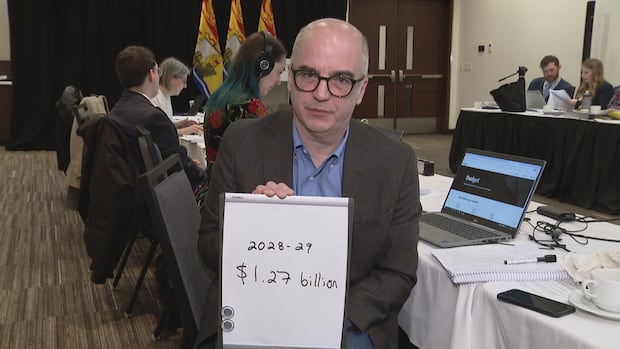
Over that time, the net debt is expected to grow from its current level of $13.9 billion to $19.7 billion.
That would push the net debt to GDP ratio, a measure of government’s ability to repay debt, up by about eight per cent from now until the end of the 2029 fiscal year.
N.B. government avoids major cuts next year, sending deficit even higher
It’s an increase that economist Richard Saillant worries will impact the province’s credit rating in the future.
“Overall I consider it to be a highly irresponsible budget from a fiscal standpoint,” he said.
“I would even dare to say that it’s a complete dereliction of duty, meaning that the track in which we’re on right now is completely unsustainable.”
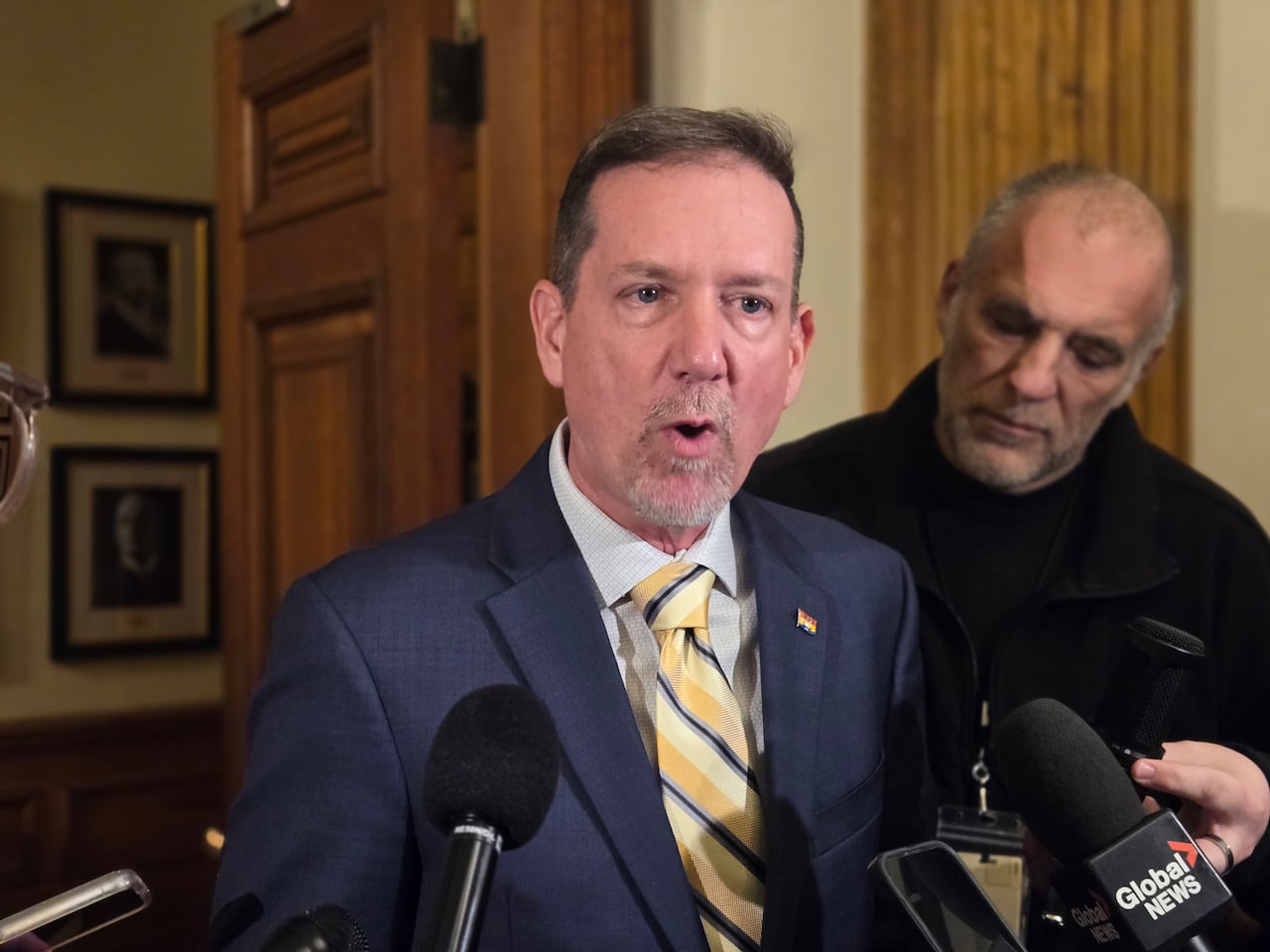
Finance Minister René Legacy said the government is still “conversing with groups” about how to proceed with cost-cutting measures.
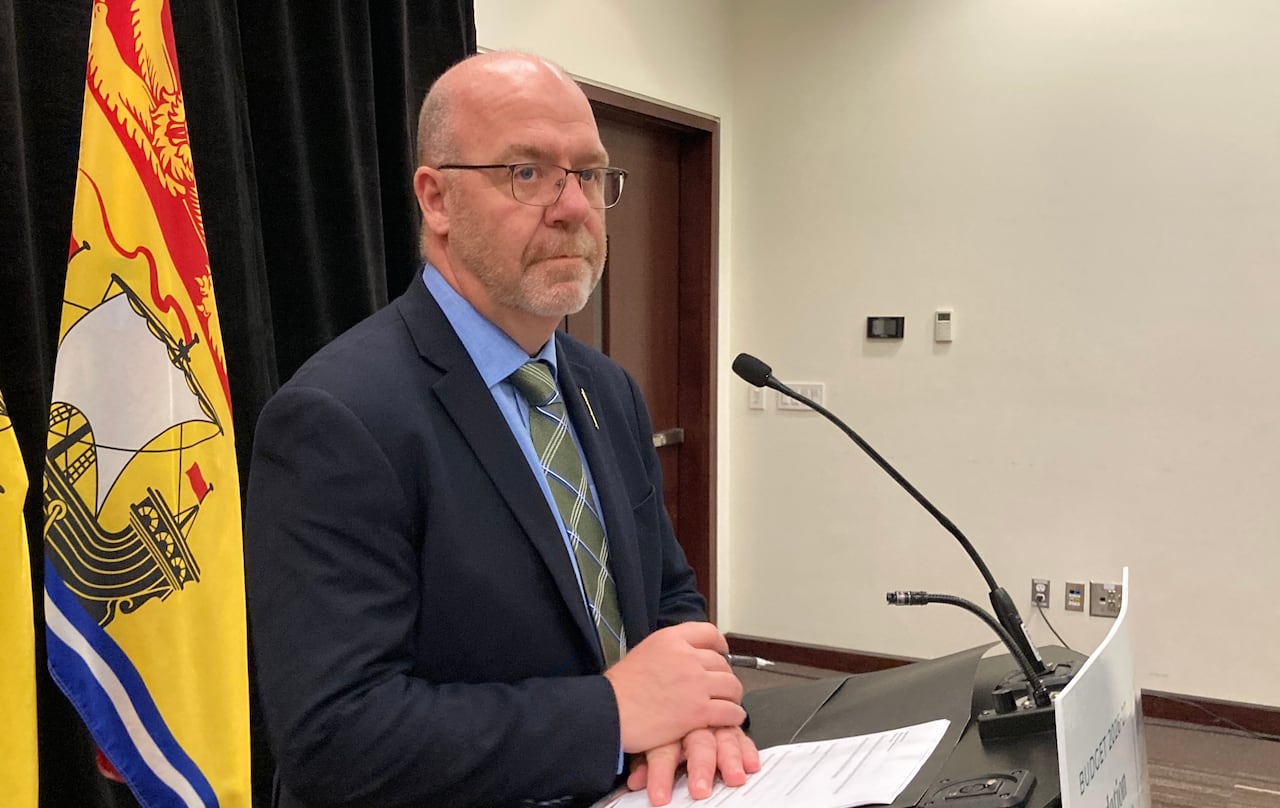
“We could have chosen to respond to the pressure by slashing programs and services across government to reduce the deficit faster,” he said during the budget speech. “But New Brunswickers told us clearly that is not what they want, and we agree.”
Don Monahan, the Progressive Conservative finance critic, called the budget “quite astonishing,” when speaking with reporters at the legislature on Tuesday.
“We’re asked for difficult decisions, we’re expecting massive cuts, and all this worry and fear is going around New Brunswick … and there were no difficult decisions that were made at the end of the day,” he said.
Green Party Leader David Coon wasn’t concerned by the level of the deficit, but the government’s plan for the coming years caught his eye.
“You look at the trajectory that they’re proposing, and that’s a concern,” Coon said. “You can see that our debt to GDP ratio, they’re proposing year over year over year it’s going to get worse. This is something to be concerned about.”
Three departments see cuts
Holt had asked all departments to find a way to cut 10 per cent of their overall expenses — but that hasn’t happened.
The comparative statement of expenses shows an 11 per cent reduction in general government spending.
But other cuts to department budgets were smaller — 0.4 per cent in the Finance and Treasury Board, 4.3 per cent in the Department of Natural Resources and 1.2 per cent in the Regional Development Corporation.
All other departments saw a budget increase — with government spending across the board projected to increase by 5.5 per cent this year.
In the budget speech, Legacy said health care is the government’s highest priority and touted the budget’s “single largest investment in health care ever.”
The health budget will increase from last year’s budgeted amount by 17.4 per cent.
But the province went over budget on health care last year.
When compared with what health care actually cost the province last year, the budgeted amount for next year represents a 6.1 per cent boost.
The Department of Social Development’s budget is a similar story. There’s a 15.5 per cent increase from last year’s budgeted amount.
But that leaves the department with 7.6 per cent more to work with compared to what was actually spent last year.
Holt Liberals pitch cuts that come with political cost
Holt did follow through on some cost-saving measures the province had said publicly were under consideration.
Legacy said the province will reduce the size of the civil service by 12 per cent through attrition, and expects that to save up to $100 million.
The province will introduce a toll on non-New Brunswick vehicles near Aulac, at the Nova Scotia border, which is projected to open in 2028 and bring in $10.4 million annually.
It will also close or transfer ownership of ten provincially-owned heritage sites that attract fewer than 5,000 annual visitors, and phase out provincial field veterinary services over the next three years.
The budget speech promised to reduce the government’s reliance on outside contracts with stricter approval processes, and to review “underutilized” assets, including schools with fewer than 100 students.
The province will also freeze operating grants to post-secondary schools.
The government is also proposing to raise more revenue by “cracking down” on contraband tobacco, and will spend $1.2 million to strike a dedicated “contraband tobacco enforcement team” within the Department of Justice and Public Safety.
Similarly, $667,000 will go toward enforcement against illegal lobster sales, which the province says could bring in an added $5 million to $8 million.
Read the full article here