




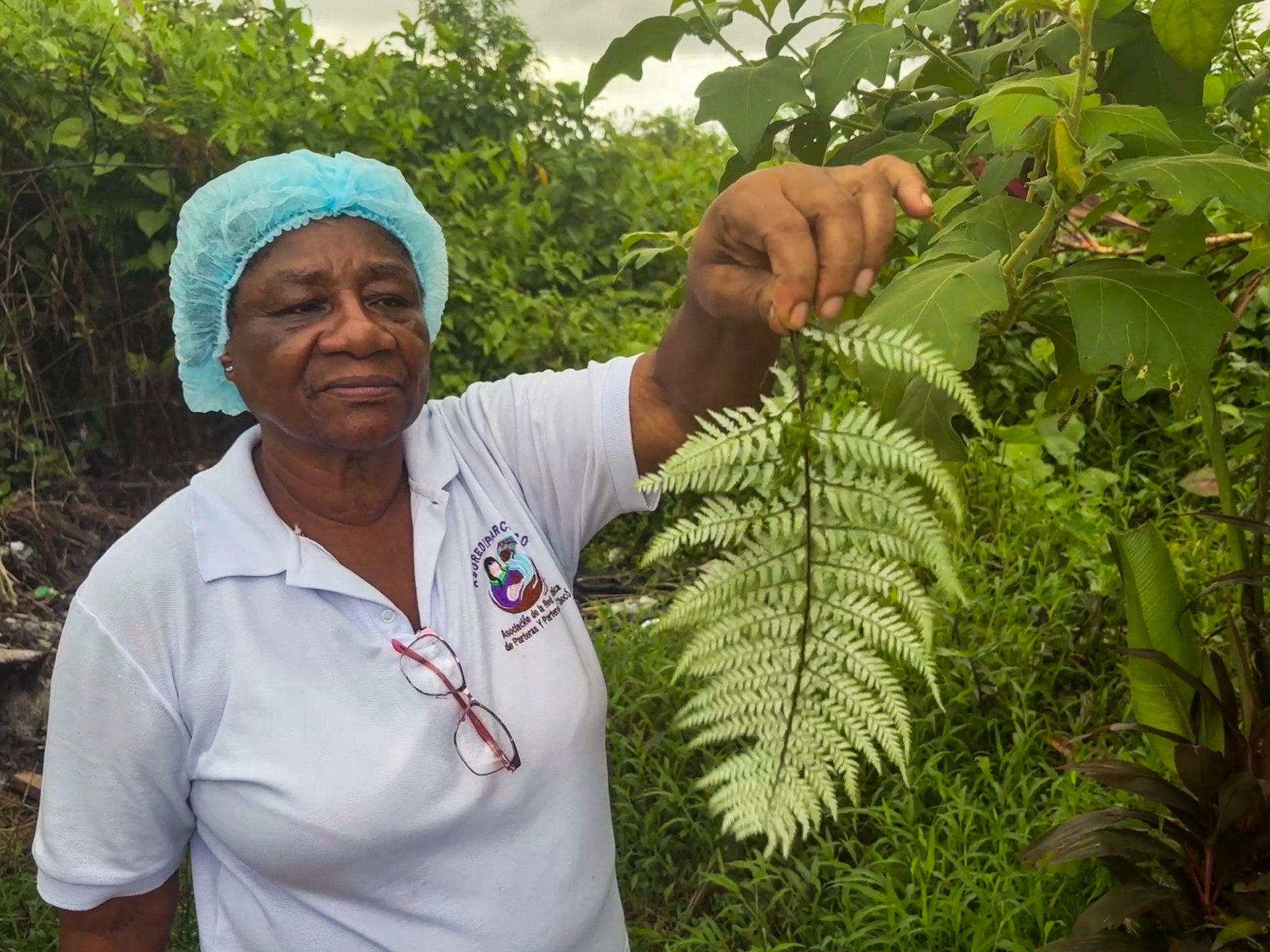
Quibdo, Colombia – Nohemí Manco was just 14 when she delivered her first baby. She had no choice but to step in.
Her sister had gone into labour, and no one else was around. Their home, in the remote Colombian municipality of Unguía, was surrounded by dense jungle canopy, waterfalls and wildlife.
But healthcare options were limited. So too was emergency transportation, not that Manco could afford it.
Still, Manco knew what to do. Since childhood, she had watched her mother comfort pregnant women through humid nights and sweltering days.
She learned where to cut the umbilical cord, which teas to prepare to ease the pain, and how to care for women after birth. By the time her sister’s water broke, Manco felt ready to help.
“I loved it. I wasn’t even scared, although my sister was a little frightened,” Manco recalled.
Four decades later, she estimates she has delivered about 1,200 babies in the coastal department of Choco — perhaps more.
“When a baby starts coming, it feels like sunrise. Everything is dark, and then it’s dawn,” Manco, 53, said. “When the child arrives, it’s like joy and relief at the same time.”
Manco is part of a long tradition of “parteras tradicionales” — traditional midwives — who play a central role in many remote communities across Colombia, particularly among Afro-descendant and Indigenous populations.
Often the first point of care for expectant mothers in these areas, midwives monitor pregnancies, attend births and provide postpartum care.
In some parts of Colombia, hospitals can be hours or even days away. The isolation leaves many pregnant women and their newborns at risk of facing complications with limited medical care. That, in turn, can be fatal.
“There is a higher concentration of deaths, proportionally, in rural territories,” said Liany Katerine Ariza Ruiz, a public health researcher specialising in maternal health inequality at Pontificia Universidad Javeriana in Bogotá.
“Midwives are therefore the main and most constant resource for rural communities.”
Read the full article here