




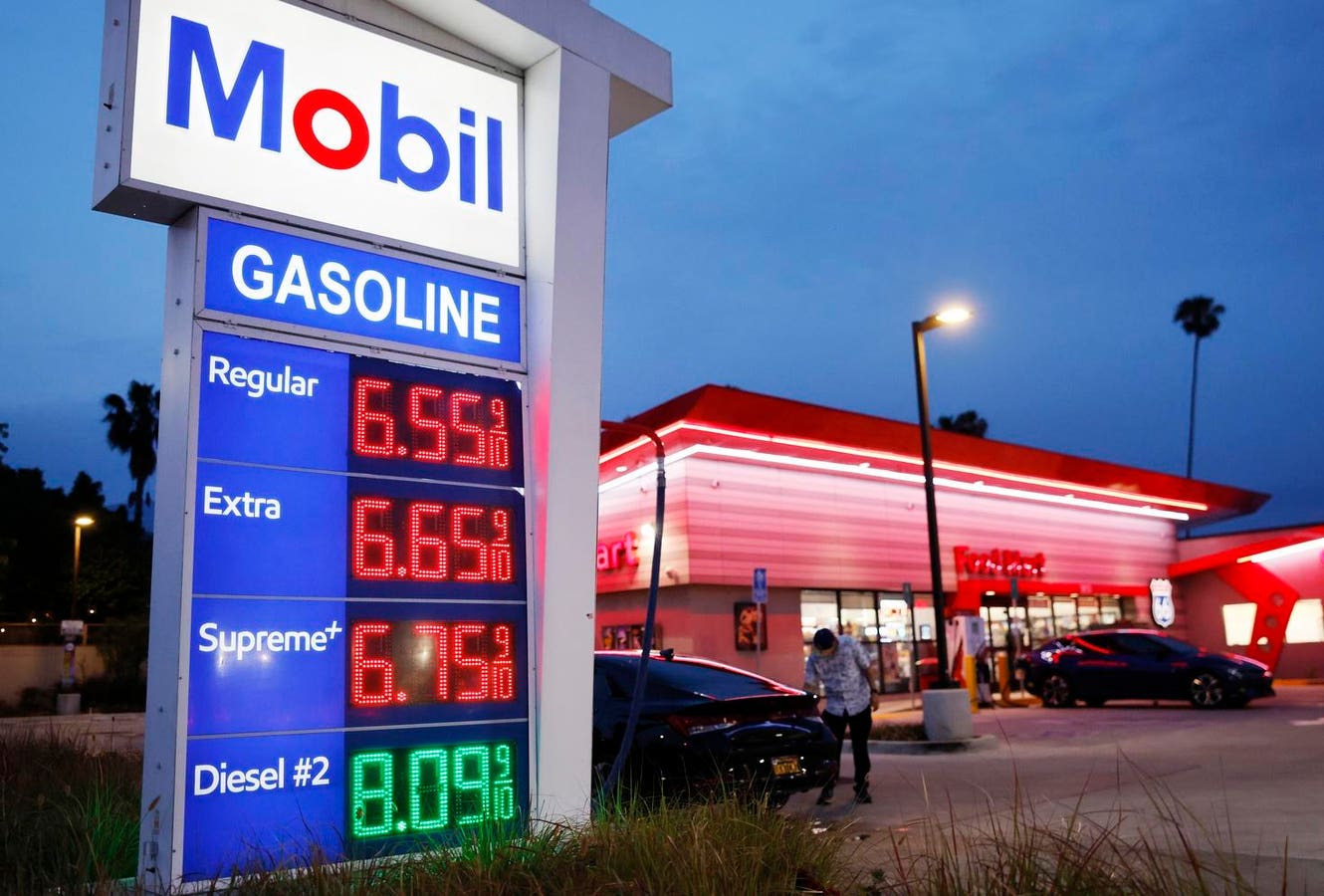
With fuel prices skyrocketing due to his war in Iran, President Trump says he wants to suspend the federal gas tax “for a period of time.” GOP lawmakers immediately promised to introduce bills to do just that. And Democrats were way ahead of them: Back in March, senators Richard Blumenthal (D -CT) and Mark Kelly (D-AZ) proposed pausing the levy until next October.
Make no mistake, while Trump and these lawmakers promise to suspend the gas tax only until Iran-war energy prices fall, you would not see the levy again any time soon. In the current political environment, there is little or no chance that lawmakers of either party would be willing to raise unpopular gas taxes once they cut them.
The demise of the gas tax not only would put funding for highways and mass transit at risk, it would send a troubling message about the futures of Social Security and Medicare. That signal: Do not trust the federal government when it promises to designate taxes for specific programs. Given the chance, it will raid those programs by cutting their revenues, spending the money elsewhere, or both. And it will borrow more money to manage the shortfall.
Underfunding Programs
The story is hardly new. Congress has been underfunding the highway, Social Security, and Medicare Part A trust funds for years and effectively borrowing the money to keep those programs running without interruption. But suspending the motor fuels levy would be an important reminder of how short-term political convenience beats fiscal responsibility every time.
What does a gas tax have to do with federal retirement and health care programs? Bear with me, it is complicated. Which, in fact, is part of the problem. All this happens because normal people can’t possibly follow the pea hidden under the shells.
Slashing Gas Taxes
It is no wonder lawmakers want to slash the gas tax. Prices for gasoline at the pump have gone up by roughly $1.50-a-gallon since Trump started his war with Iran in March. Trimming the 18.4 cents a gallon levy would provide drivers a bit of relief. Cutting the 24.4 cent tax on diesel, now a staggering $5.50 a gallon, might help hold down price hikes on food and most everything else delivered by truck.
Most of all, it would allow politicians to say they did something to alleviate price increases at a time when inflation is now rising at an unsustainable 3.8%.
The problem: How will Trump and Congress fill the $23 billion financial hole suspending the tax would create each year? The motor fuel tax, established nearly 100 years ago, is supposed to fund the Highway Trust Fund. But the levy last was raised to a flat rate of 18.4 cents in 1993 and never indexed for inflation. In recent years, the rise of electric vehicles has further cut gas tax revenues.
Of course, the costs of road and mass transit construction have increased substantially. Thus, the trust fund is structurally underfunded.
That may be why Congress has rejected past proposals to suspend the levy, most recently by President Biden. But given Trump’s ability to pressure Hill Republicans to do his bidding and with the support of at least some Democrats, Congress could pause the levy this time.
Even if the tax is not suspended, the Congressional Budget Office predicts it will become insolvent in 2028. Lawmakers, who love nothing better than to cut ribbons at local construction projects, have filled in the hole by borrowing hundreds of billions of dollars from the general fund (most recently in 2021).
Since the federal government is running an annual deficit approaching $2 trillion and a debt exceeding $30 trillion, and since lawmakers won’t raise taxes (in fact, at Trump’s urging they cut them by $4 trillion last summer) the Treasury has no choice but to borrow the money.
Which is why interest on the debt will top $1 trillion this year.
The Lesson
And here is where the gas tax and the payroll tax stories merge.
In all three cases, Congress created a special trust fund (call it a reserve fund or a lock box, if you prefer) which was to hold a dedicated tax intended to fund a specific government program. In all three, it is systematically underfunded the programs, including by explicitly cutting taxes intended to keep the funds solvent.
The gas tax suspension is just the latest example. And while lawmakers insist, for now, it would be paused only until gas prices fall, that outcome is improbable at best.
While Trump has not said how or for how long he’d halt the levy, we can use last March’s Democratic bill as a good model. It would suspend the tax until October 1. Anyone out there think Congress will allow the tax to increase a month before the November election? Or that Congress will do anything but borrow even more money to fund the coming Medicare and Social Security shortfalls?
Any takers?
Read the full article here