




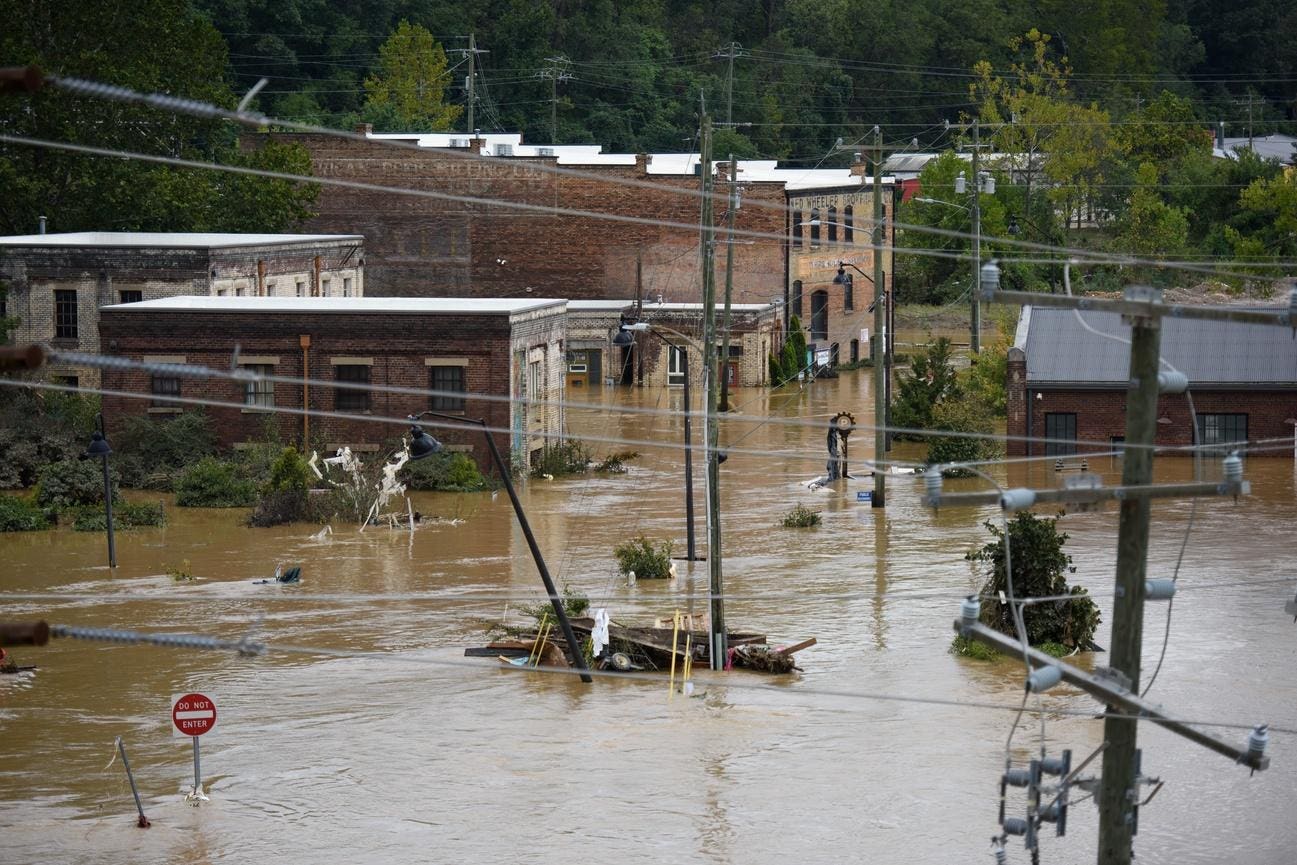
Spring brings warmer air, increased moisture and melting winter snowpack, creating ideal conditions for flooding.
In the Midwest and Northeast, a formidable, occasionally record-breaking winter has produced notable snow accumulations. In areas where snow may still exist, rain on top of melting snow, or on soil saturated from melted snow, can’t soak into the ground, increasing the potential for rivers to overflow or water to accumulate in low-lying areas.
Flooding is the most frequent natural hazard, one of the costliest in the world, and a common cause of business disruption, costing the country US$180 billion to US$496 billion each year, according to one government estimate. In addition to short-term consequences, combined business interruption and property damage from flood has a longer-term effect of reducing both market share and shareholder value for businesses.
Warmer climate and land-use decisions exacerbate flood risk
The past season’s heavy snowpack exacerbates an already rising flood risk related to a combination of land use changes, increased value in harm’s way and a changing climate. Rainfall rates are increasing due to a generally warming atmosphere that holds more moisture. From basic thermodynamics, the atmosphere can hold 7% more water for every increase of 1°C (or 1.8°F ). That means big storms especially can produce more rain and at a higher rainfall rate.
My office in Norwood, Mass., has seen a 15% increase in annual rainfall rates since the 1950s. In fact, nearly nine in 10 U.S. weather locations analyzed by Climate Central have experienced an increase in hourly rainfall intensity since 1970, according to Axios; the affected locations have had an increase of more than 15% on average. And last year saw the most flash flood warnings on record in the country (Jan. 1 through July 15).
Which businesses are most vulnerable to flood risk?
Rainfall is just one cause of flooding. In coastal areas, rising sea levels combine with high rainfall rates to overwhelm drainage systems, resulting in accumulation of flood water in low-lying areas that may not be identified as flood-exposed.
Hence, flood risk affects not only properties in designated hazard zones but also those affected by site- or community-specific building decisions. Construction of impermeable roads and parking lots often alters drainage, resulting in overflowing stormwater drains.
Another factor in flood loss is human nature. Property owners are drawn to be adjacent to water and often underestimate the potential damage that high tides or overflowing riverbanks can do to homes and businesses.
Publicly available flood maps, like those from FEMA or FM, are helpful for loss prevention planning. Dates on those maps are important. Although updated analyses may incorporate recent development and changes in rainfall rates, the adoption of new mapping results can take time, as communities evaluate planning, regulatory, and economic considerations. Some communities rely on flood maps that are 40 to 50 years old, which may not account for changes in development patterns or flood risk over time.
Why insurance alone can’t fully protect against flood risk
Insurance can only do so much to protect property owners from catastrophe. The National Flood Insurance Program has been operating at a loss for over 20 years. As of early 2026, the NFIP is more than $20 billion in debt. Although the number of private options for flood insurance has increased notably over the past decade, underwriters are justifiably cautious on coverage and rates for each business as well as their aggregate exposure in regions known to be exposed. State FAIR plans (designed to be insurers of last resort) typically exclude flood damage.
Most flood loss is preventable with the right planning
Fortunately, the majority of loss is preventable, and here are some ways to mitigate flood risk.
- Select sites thoughtfully. When planning a new facility, the simple solution to the flood hazard is to build well outside known flood zones, including levee-protected areas, and design the site to ensure all stormwater drainage systems are adequate.
- Carefully assess your facilities, focusing first on preventing water from entering and, second, on how to get any floodwater that does enter your facility out as soon as possible. We helped one of our clients – a plant in a flood zone – design a channel on their ground floor that enabled floodwaters to flow in one door and out the other with minimal damage.
- Assess your land based on maps (FEMA’s here, FM’s here), topology, hydrology and observation. Establish a regular maintenance program to ensure all drains are clear of leaves and other debris.
- Elevate important equipment like servers from the basement to the second floor. In flood‑prone areas, basements or ground‑level floors are sometimes designated for uses that can better tolerate potential flooding.
- Consider perimeter and opening protection such as floodgates or inflatable dams. Sandbags can be economical for single use in a smaller property, but they are difficult and slow to fill and place. You’ll have to arrange to dispose of them afterwards since they will be contaminated from floodwaters.
- Ask your insurer about your coverage and clarify whether your property’s contents, as well as the structures, are covered. Also clarify which types of flood are covered (e.g., rain, dam breaks, riverine, etc.) and which are excluded. Ideally, flood coverage addresses any water in the building or affecting outside equipment.
- If you’re a smaller business, enlist your peers and or municipality to tackle flood risk on a community basis with shared assets like permanent local area flood protection. And consider the impact on neighbors: If you divert floodwater from your property, it’s going somewhere else.
- Create a flood emergency response plan and train against it regularly.
The harsh truths of snowy winters and warming climate conspire to fuel one of the costliest and devastating natural hazards. Good long- and short-term decisions by property owners can help to prevent most of the losses. Looking forward, the best tactic is settling in the right place.
Read the full article here