




Web hosts and website builders make building a website sound super easy: sign up, pick a template, add your text or let the built-in AI do it and hit publish. There’s a bit more to it, though, especially for small businesses. However, most of the time, it isn’t nearly as difficult (or need to cost nearly as much) as independent web design companies make it out to be.
Building a small business website is very similar to how to make a general website, but the stakes are a bit higher, and there are some specific needs to consider (beyond the e-commerce features that every host touts), such as compliance with legal requirements for accessibility and privacy laws.
How To Make a Small Business Website: A Step-by-Step Guide
The dirty secret of web design is that there is no one way to do things. No website is perfect and no step-by-step guide fits every situation. However, taking extra time to plan upfront will lead to better results, faster progress and fewer mistakes during the building process.
1. Pick a Website Purpose
For small businesses, the overall goal of your website is always to connect with customers, but how will it connect? The specific purpose of your website will affect everything from budget to hosting to whether you hire a pro or DIY the site.
For example, do you need an informational website, the equivalent of an online business card, or do you need a robust online storefront for e-commerce? Knowing what you want to accomplish will determine the type of website you need to build.
2. List Potential Domain Names
It might seem a little early to be listing domain name possibilities but not having a list of alternatives is the biggest mistake I see from small businesses as they are setting up websites.
There’s something about staring at that “domain name not available” message during a registration process that triggers an urgency to get something, anything registered, as though there was a ticking bomb beside you.
That’s when bad decisions happen as you try adding a location to the end of the name first, then abbreviating a name, then reordering parts of the domain and so on until it is completely nonintuitive and hard to remember.
That’s why I always suggest small business owners start thinking of a list of 10 to 15 potential domain names very early in the process. Spend time with the names and look at your list over several days or weeks to make sure you are happy with every name on your list before you start the domain registration process later on. Choose names that are relatively short, easy to spell, easy to remember, are accurate representations of what your company does and don’t create unfortunate new words where parts of your name are run together.
Pro Tip – Don’t check domain name availability at this point. Brainstorming ideas and refining them without outside pressure will help you create a better list of possibilities.
Likewise, think about what top-level domain (TLD) options fit for your business. The TLD is the part after the dot. Examples include .com, .org, .store, .buzz and .info. There are hundreds of TLDs, and while many are available to anyone, some are restricted to specific groups. Be sure to choose several just in case the domain registrar or host you choose doesn’t offer your preferred domain extension.
3. Plan Your Website Pages and Functions
Even if you want a single-page website that people scroll through without clicking anywhere to change pages, you need to plan what content and functions should be included on the page. For small businesses, this is where it gets a bit tricky because beyond planning the pages you want, there is a lot of legislation out there that affects you.
Laws and Regulations and Guidelines, Oh My!
Some laws might apply because of your physical location, but others apply based on where your traffic comes from. For example, if someone from Devonshire, U.K., visits your Vermont bed and breakfast website as part of planning a vacation, and your website uses any kind of cookies or collects any personal data, your website probably falls under the General Data Protection Regulation (GDPR) thanks to treaties.
Before creating your small business website, it is important to do your research and check with a lawyer familiar with these regulations. A few of the major laws and guidelines you may have to take into account include:
I know that all sounds scary and it drives even experienced web designers crazy trying to keep track of it all. Thankfully for DIYers, many website builders include templates and boilerplate text for the most commonly required pages and notices. Some platforms, such as Wix, also include third-party accessibility plugins to make compliance with ADA rules easier.
These commonly required pages and forms include:
- Terms and Conditions
- Privacy Statement
- Cookie consent
- Shipping and return policies
- Ability to opt out of private information being sold or shared
Basic Website Pages
The near-universal set of website pages are behind the five-page website quotes you’ll see from a lot of professional designers for entry-level packages.
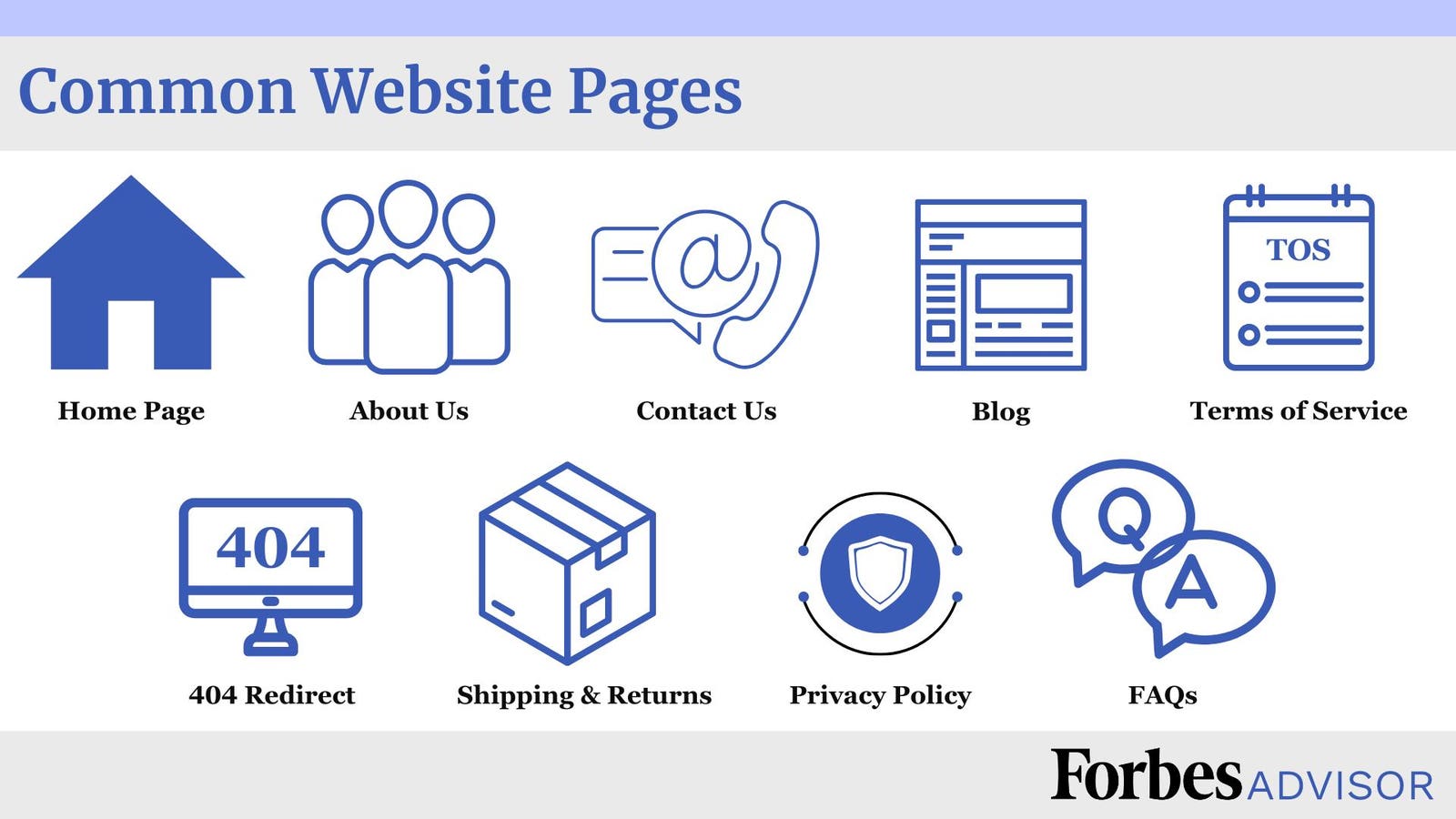
The core five pages of most websites are:
- Home. Often called a landing page, this is the first page visitors see of your website.
- About Us. Tells the story of your company. Make the text here good because journalists, Chambers of Commerce and content writers tend to look at this section to explain your company in articles.
- Contact Us. Your physical location and contact information, including phone numbers, business email addresses and social media links.
- Products or Services. Whether you are building an e-commerce website or just informational, you need to include information about what your company does and sells.
- Legal Notices. Originally, many websites just had a disclaimer or copyright notice. Now, there are many more laws and regulations to follow locally, nationally and internationally. Some of those require separate pages.
Of course, you may need more pages, but these five are generally the bare minimum needed, whether you put them on separate pages with their own URLs or as sections on one long homepage.
While there are no hard rules about what pages to use, most websites have a standard set of pages at their core.
Some of the most common additional pages to add to your website are:
- FAQs. Including a frequently asked questions section adds value for your customers and saves you or your customer service team a lot of time repeating themselves. It can also help you hit additional keywords for SEO.
- Reviews and Testimonials. Social proof, what others think of your business, is powerful. Adding testimonials and reviews to your website help reassure potential customers.
- Work Portfolios. Showing off completed work such as house remodels, great hairstyles and wedding photography is important for service-related companies and often takes the place of product catalogs.
- Blog. Keeping your website updated with fresh information helps SEO. A blog of content related to your business is a great way to keep your website fresh.
- Instructions and Troubleshooting. Helping customers with products they buy adds value, but it also helps attract new customers who find your business while looking for help with products they already own.
Special Functions
Even for an informational site, you may need special functionality from your website and you need to plan those out ahead of time. For example, you may want a live chat customer service option.
While some extended functions, such as scrolling animations, may be included in certain website builders, most rely on plugins and connecting third-party apps to your website. Many website builders have app stores with free and paid applications and CMS platforms such as WordPress use plugins.
Common extra functions include:
- Live chat
- Password-protected pages for gated content
- Animations
- Reviews
- Share to social media buttons
E-commerce is a special function in itself, but it is also a category of functions, many behind the scenes that your visitors won’t see. Some of the e-commerce-specific functions you might want include:
- Shipping integrations
- Automatic sales tax calculations
- Reviews
- Live chat
- Connection to marketplaces such as Amazon
- Print-on-demand integration
- Integration with your accounting app
- Loyalty programs
- Affiliate programs
- Dropshipping
Knowing ahead of time which features you want to use will help you pick a platform and host and plan your budget.
4. Choose Your Platform and Website Host
This is where all of that time and research start to pay off. You now have a shopping list of what you want and need when looking for how to build and where to host your website. This makes it much easier not to get lost in the plan comparison lists.
Start by deciding between a CMS and a website builder.
CMS or Website Builder
Website builders are graphical interfaces, usually employing a drag-and-drop interface, where users need no coding or design experience to create a website. However, that ease of use comes at the cost of flexibility in many cases. Some of the best website builders include large app markets, but they are still usually very limited when compared to third-party plugins available for a CMS.
Most websites start off with templates, whether using a CMS or website builder.
Read the full article here