




This is our flagship newsletter Morning Wire. You can subscribe here and we’ll email it to you daily.
In the news today: The Trump administration orders ICE to suspend most vehicle stops after deadly shootings in Maine and Houston; the House passes a bill that would make daylight saving time permanent; and Tehran threatens to halt all Middle East energy exports after the U.S. reimposes its blockade on Iran. Also, a dinosaur fossil sells for a record $50 million.
Protesters gather near a U.S. Immigration and Customs Enforcement facility Scarborough, Maine, one day after the shooting of Johan Sebastián Durán Guerrero, Tuesday, July 14, 2026. (AP Photo/Robert F. Bukaty) CORRECTION: Corrects ID to Johan Sebastián Durán Guerrero NOT Joan Sebastian Guerrero
Trump administration orders ICE to suspend most vehicle stops after 2 deadly shootings
The policy change came after an ICE officer shot and killed a Colombian driver Monday in Maine and a week after one shot and killed a motorist in Houston, renewing criticism of the agency’s enforcement tactics that were widely condemned last winter after the killings of Alex Pretti and Renee Good in Minnesota. Read more.
What to know:
- The suspension of vehicle stops allows room for exceptions when executing a criminal warrant or working with partner agencies, according to a person who spoke Tuesday on condition of anonymity to discuss sensitive law enforcement operations. The Maine shooting marked at least the ninth time ICE has used deadly force since Trump began his immigration crackdown.
Related coverage →
What it means when federal authorities say cars are being weaponized
Maine Democrats criticize GOP Sen. Susan Collins after the fatal ICE shooting
DHS was granted $20M for body cameras. ICE agents in fatal Houston shooting had none
Mexico asks US state attorneys general to investigate migrant deaths in ICE custody
Man fleeing immigration officers in Florida struck and killed by tractor trailer, police say
House passes bill to make daylight saving time permanent
Proponents, including the White House, argued the change would provide more daylight during the times that Americans are most active. The vote was 308-117. Read more.
Why this matters:
- States could opt out if their respective legislatures act to do so before the bill’s enactment. The Senate would also have to pass the bill before it could be signed into law, but it’s unclear if it will do so. Detractors said permanent daylight saving time would lead to darker and potentially more hazardous winter mornings where children will be waiting for school buses and parents will be driving to work in darkness.
Related coverage →
How Americans feel about changing the clocks
Former Obama counsel Kathryn Ruemmler to testify in Epstein probe
Warren Buffett omits gift to Bill Gates’ foundation after Microsoft cofounder’s Epstein ties disclosed
E. Jean Carroll is paid $5.6 million in Trump sex abuse and defamation case
Trump will speak on elections in primetime address after pushing debunked conspiracies
Senators rally to Russia sanctions bill, one of Graham’s top priorities
Biden will publish ‘Promise Me, America’ memoir after November elections
Iran threatens to halt all Middle East energy exports after US reimposes blockade
The U.S. military reimposed a naval blockade on Iran and intensified its airstrike campaign early Wednesday, hitting an Iranian army barracks and killing at least seven troops while wounding 260 people across the country, Iranian officials said. Read more.
Why this matters:
- Days of retaliatory strikes across the Middle East by Iran and the U.S., and both nations’ attempts to assert control over the Strait of Hormuz, threaten to push the region back to all-out war. The U.S. first imposed the blockade in mid-April and then lifted it in mid-June, a day after signing the interim deal that set a 60-day period for negotiations over issues like Iran’s nuclear program. But talks have stalled as fighting has intensified over the strait, through which a fifth of the world’s oil and natural gas trade passes during peacetime.
Related coverage →
Senate Democrats block $1 trillion defense bill in protest over Iran war
WATCH: Iran’s president condemns Trump’s ‘rude language’
Why it’s so difficult for the US to fully reopen the Strait of Hormuz
Trump to address defense technology gathering as the Iran war has reduced US weapon stocks
Mahmoud Khalil files suit alleging a ‘public-private’ conspiracy to target Israel’s critics
IN OTHER NEWS
Ebola: Confirmed cases top 2,000 in Congo, including 754 deaths
Alzheimer’s: Study shows blood test can help identify healthy people at high risk
Parasite outbreak: Michigan officials eye lettuce as a possible cause
UK: Police say former politician and TV personality was killed in ‘targeted attack’
Elon Musk: Billionaire likely broke the law by promising voters $1 million payouts, Wisconsin board says
Pat Oliphant: Fearless Pulitzer-winning political cartoonist dies at 90
Today in History: In 1799, the Rosetta Stone, a key to deciphering ancient scripts, was found in Egypt
WATCH
Wildfires: Smoke in Minnesota triggers air quality alert
World Cup: Fans celebrate as Spain beats France to earn spot in final
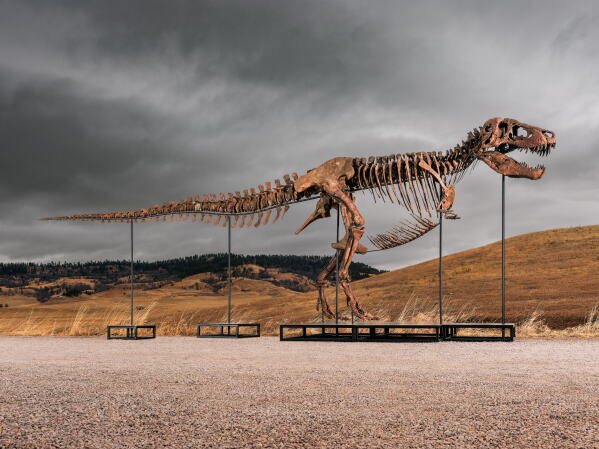
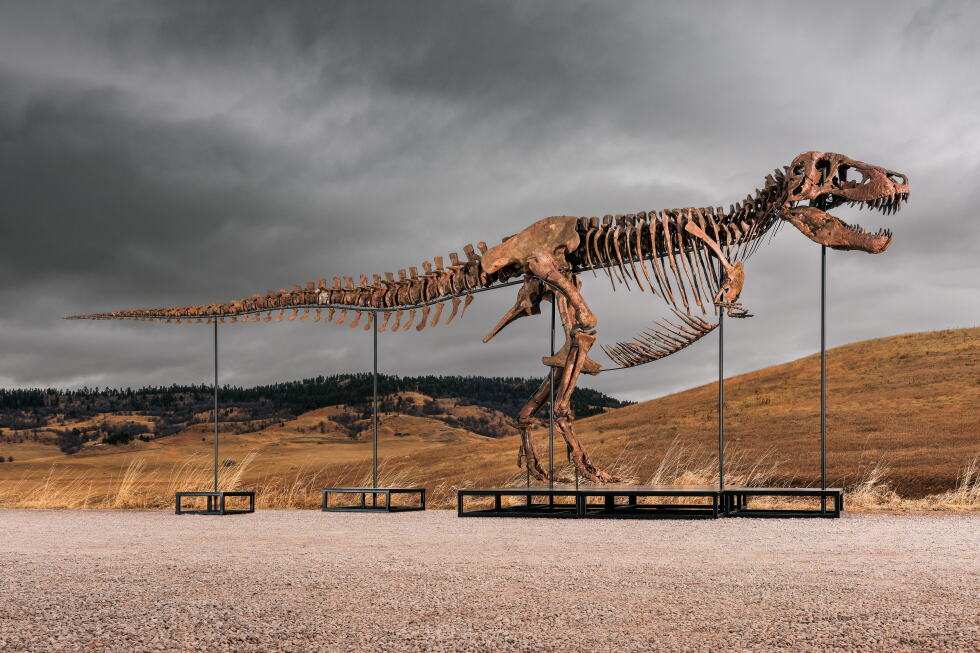
This undated photo provided by Sotheby’s on Tuesday, July 14, 2026, shows “Gus,” one of the largest and most complete Tyrannosaurus rex specimens ever discovered. (Matthew Sherman/Sotheby’s via AP)
Mystery bidder buys T. rex fossil for a record $50 million
Sotheby’s said the 67-million-year-old fossil, nicknamed “Gus,” is now the most expensive set of dinosaur bones ever auctioned off, besting the almost $45 million price tag for a nearly complete stegosaurus sold by the same New York auction house in 2024. “Gus” is about 61% complete, with what Sotheby’s describes as an “exceptionally preserved” skull including a gaping jaw of powerful teeth. Many scientists are hoping the anonymous buyer will put it on public display so future generations can learn from it and enjoy it.
This is our flagship newsletter Morning Wire. You can subscribe here and we’ll email it to you daily.
Read the full article here