




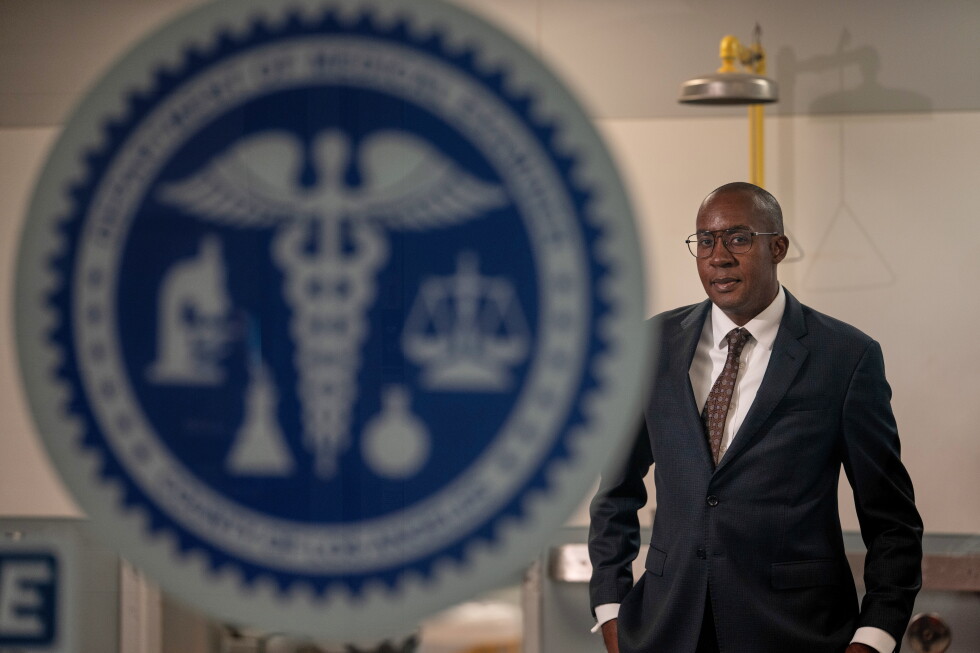
LOS ANGELES (AP) — The Los Angeles County Medical Examiner’s Office has performed autopsies in many high-profile cases, including that of 14-year-old Celeste Rivas Hernandez, who singer D4vd is charged with killing, and the death of “Friends” star Matthew Perry.
Chief Medical Examiner Dr. Odey Ukpo talked to The Associated Press about how his office handles its work and reaches its headline-making conclusions.
Why the cause of death is not always the most obvious option
Perry was found unresponsive in the hot tub at his Los Angeles home in October 2023 and initial reports speculated that he had drowned.
Two months after his death, Ukpo’s office determined the main cause of his death was acute toxicity of the surgical anesthetic ketamine and that drowning was a secondary cause.
Some advocates for ketamine, which is increasingly used to treat depression and chronic pain, said drowning should have been deemed the primary cause.
Ukpo said his staffers considered how anyone could drown in a hot tub and concluded Perry would have been able to climb out safely if he hadn’t been incapacitated by the drug.
“But for the ketamine, would he have been out of it and unable to rescue himself?” Ukpo said. “That’s why ketamine is the cause of death primarily, and then the drowning contributed.”
Why ‘overdose’ never appears in an autopsy report
“A medical examiner never certifies a death as an overdose. If you look at death certificates, you’ll never see ‘methamphetamine overdose.’” Ukpo said.
“It’s just part of the culture and understanding about how drugs kill people. People can understand ‘overdose,’ but any level of methamphetamine can kill somebody. When you say overdose, it suggests that there’s an appropriate amount that someone can take. This one overdid it,” he said.
“That’s never the message that we give.”
Why toxicology reports take so long
Autopsies are generally performed and initial conclusions reached soon after a body is found, but a report revealing cause of death can take months if a toxicology test is required.
“We want to make sure that we get it right,” Ukpo said. “When someone dies, the blood specimens are different than when you’re at the hospital, so they’re harder to handle. And we also have to have certainty. In the hospital if you do a urine drug test, they tell you within a few hours. And that’s because they’re OK if it’s wrong. They’ll treat you because the treatment for cocaine, it doesn’t hurt. We’ll just assume it’s cocaine and that’s fine. But for us, it’s cause of death and has implications. And so it does take months to come back.”
In some cases, toxicology tests are needed to understand what substance may have killed the person. In others, they’re more of a check to assure conclusions are correct.
When the autopsy was performed on Rivas Hernandez, who had been dead for months when her body was found, it was fairly clear she had been stabbed.
“We knew very early on what was going on, particularly defects in the clothing and on the body itself,” Ukpo said. “It’s then we have to do toxicology as due diligence to make sure drugs didn’t also play a role in the death.”
Alcohol was found in her system, but it was produced postmortem.
“When someone dies, the bacteria can then change the glucose into alcohol. And so therefore you have a presence of alcohol, which would appear that it was real, but it was actually produced by a bacteria,” he said. “There are also other interference things that can make things look like they’re positive at the beginning, but then at the later stage are negative. We do confirmation testing.”
Read the full article here