




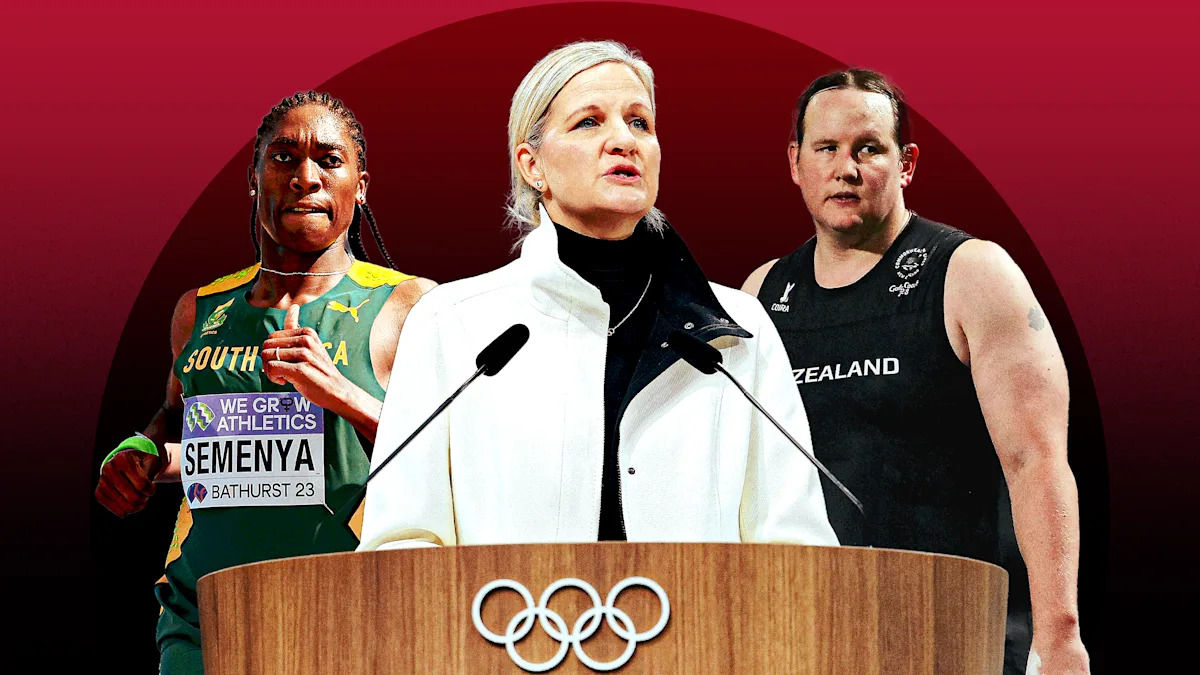
The International Olympic Committee on Thursday effectively banned transgender women and those with differences in sex development from competing as women at the Olympics, beginning at the 2028 Games in Los Angeles.
The IOC’s new policy codifies, for the first time, an international standard across sports regarding the classification of eligibility for female athletes, a topic which has been hotly debated within some individual sports and in politics. U.S. President Donald Trump and Republican lawmakers have sought to limit the participation of transgender women in sports through executive orders and through congressional measures, with mixed success.
More from Sportico.com
Kirsty Coventry, the IOC president and a retired Olympic swimmer for Zimbabwe, said the issue “was a priority” for her long before Trump’s second term. “There was no pressure from anyone outside the Olympic movement” to institute the policy, she added.
At the same time, the IOC conceded that “athletes who identify as women and who want the opportunity to compete at IOC events according to their legal sex or gender identity may disagree” with the policy. Coventry acknowledged that “we don’t have all the answers yet” on how the policy will be implemented.
According to policy language published by the IOC, athletes seeking to compete in women’s events at the Olympics must undergo a one-time screening test, conducted through collection of blood or saliva or with a cheek swab. The administration of these tests will be delegated to international sports federations, such as World Athletics, and national governing bodies, such as the U.S. Olympic and Paralympic Committee.
A spokesman for the USOPC said it was the governing body’s understanding of the policy that athletes seeking to compete in men’s events would not be subject to testing.
When asked how the IOC plans to test athletes whose home countries forbid or have outlawed sex testing, Coventry said that if the policy “is illegal in a country, athletes will have the possibility to be tested when they travel.”
The IOC anticipates potential challenges from legal and human rights groups. “Human rights experts, including UN Special Rapporteurs, disagree on the legitimacy of sex-based eligibility rules in competitive sports,” the policy states.
In February, the UN Human Rights Council issued a list of concerns regarding the adoption of mandatory genetic sex testing for sports on several grounds, including potential violations of human rights law.
“Discrimination on grounds of sex and gender is prohibited” according to the UN Special Rapporteurs. “Mandatory genetic sex testing likewise raises concerns in relation to privacy, bodily integrity, informed consent and data protection, particularly where athletes are compelled to undergo testing under threat of ineligibility and where sensitive personal data may be processed or disclosed without adequate safeguards.”
The test, known as SRY gene screening, determines whether an individual had male sex development, typically expressed through XY chromosomes. Athletes who test negative would have lifetime eligibility to compete in women’s events at the Olympics, while those who test positive would be eligible for additional screening to determine if they have differences in sex development or a rare condition known as Complete Androgen Insensitivity Syndrome, in which case they would be eligible to compete as women.
The new policy is expected to supersede existing policies established in some international sports federations, including in track and field, boxing, and swimming.
Best of Sportico.com
Sign up for Sportico’s Newsletter. For the latest news, follow us on Facebook, Twitter, and Instagram.
Read the full article here