

Published on •Updated
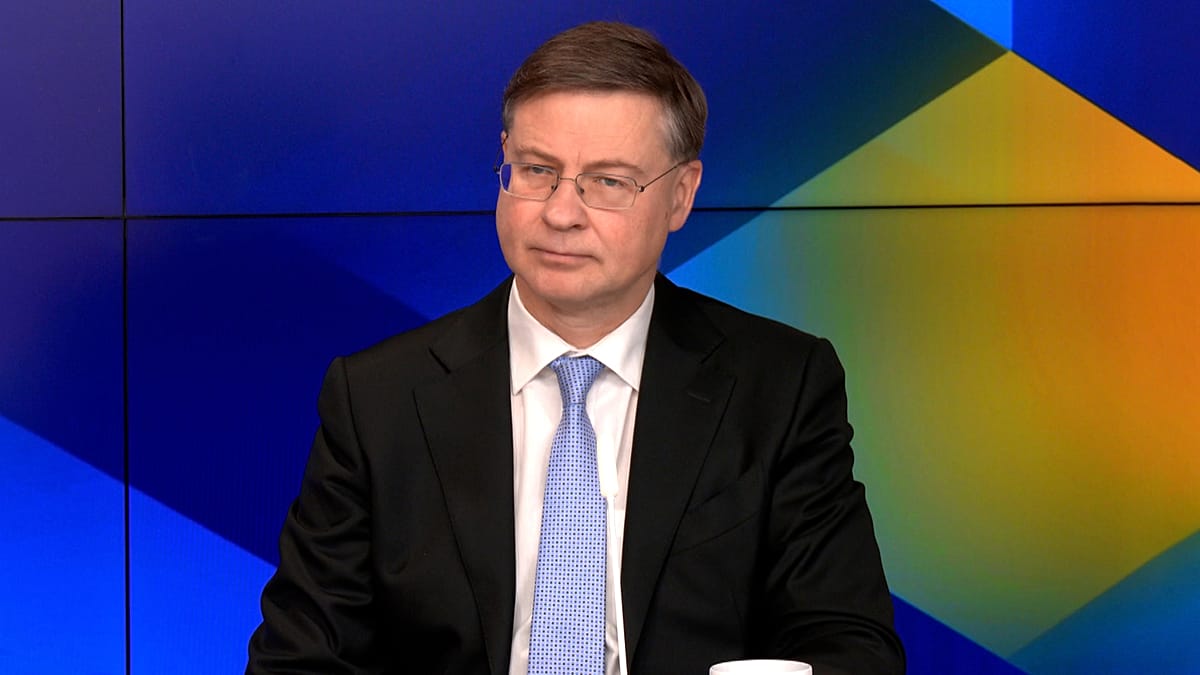
A further escalation in the Middle East could lead to a “stagflation shock” for the European economy, EU Commissioner Valdis Dombrovskis told Euronews in an interview as the bloc ponders measures to cushion the impact of higher energy prices.
Iranian strikes on Gulf countries coupled with a blockade of the Strait of Hormuz have rattled global energy markets, sending oil prices soaring above $100 a barrel. Uncertainty around the US-Israeli operation, its goals and timeline have added to price volatility with President Donald Trump calling the attack both a war and an excursion.
“The economic impact will depend on how long the conflict continues, and how wide it spreads,” Dombrovskis told Euronews’ morning show Europe Today.
“If it gets protracted, with more disruptions for oil shipping and gas, that could create a stagflationary shock for the European economy” as prices jump and growth stalls.
On Wednesday, a group of 32 countries including the United States and G7 members Germany and France agreed an emergency release of strategic oil reserves to the tune of 400 million barrels to stabilize what the International Energy Agency described as challenges of “unprecedented in scale” for the global oil market.
Dombrovskis welcomed the news saying the move will add “substantial volumes” to the market at a perilous time for global stability. Still, even as the IAE agreed its biggest reserves release in history, oil topped $100 a barrel for the second time this week on Thursday as Iran continued to hit strategic energy asserts in the region.
“Iran hit a major oil storage in Oman overnight. It continues to target energy infrastructure. Plus, oil reserves volumes have not reached the market yet,” he said.
“The volatility is certainly linked to this.”
Asked about whether the US has a plan for the next stages of the war, Dombrovskis said Europe had not been informed but is focused on regional de-escalation.
“There was no prior consultation (before the attack), but what’s important right now is to work towards a quick de-escalation of the conflict. And from our side, we are also engaged with the countries of the region aiming for that,” he added.
After a G7 call on Wednesday hosted by French President Emmanuel Macron, the group reiterated their defense commitments to the Gulf countries, bearing the brunt of the Iranian strikes targeting US bases in the region but also civilian infrastructure, airports, and hotel locations looking to maximise the impact on their economies.
Read the full article here