




Nvidia CEO Jensen Huang on Monday elaborated on his vision for keeping his company at the forefront of the artificial intelligence boom that he predicted will produce a $1 trillion backlog in orders within the next year.
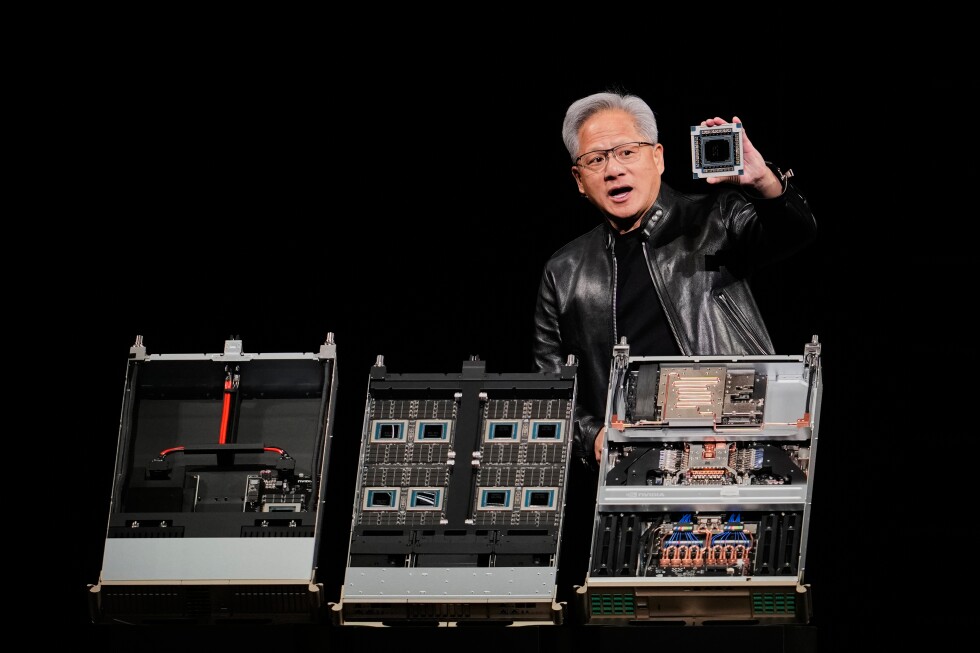
Sporting his signature black leather jacket, Huang spent more than two hours sauntering across a stage in a packed arena in San Jose, California, explaining how Nvidia’s processors became indispensable AI components and highlighting the products that he believes will keep the company in the catbird seat.
Huang, 63, also touched upon many of the themes that he has been trumpeting since he emerged as one of Silicon Valley’s most influential voices during the past few years, including his thesis that the AI buildup remains in its infancy.
“We reinvented computing, just like the PC (personal computer) revolution and the internet revolution,” Huang proclaimed. “We are now at the beginning of a new platform change.”
To hammer home his points, Huang predicted that Nvidia will be grappling with a $1 trillion backlog in orders for its chips by the end of the year, doubling his estimate from a year ago.
Nvidia has leveraged its dominant position in the AI chip market so far to increase its annual revenue from $27 billion in 2022 to $216 billion last year — a growth rate that has translated into a $4.5 trillion market value for the Santa Clara, California, company.
But Nvidia’s once-torrid stock has cooled since the company briefly became the first to surpass a $5 trillion market value last October amid worries that the the AI buzz is overblown.
“This is just a white-knuckle period for the technology industry,” said Wedbush Securities analyst Dan Ives.
Even after Nvidia released a quarterly report in late February that far exceeded analyst forecasts and management provided a rosy outlook, the company’s stock price is still down by 6% from where it stood before those numbers came out. After Huang’s disclosure about an anticipated doubling in backlogged chip orders, Nvidia’s shares edged up by nearly 2% to close Monday at $183.22.
While analysts expect Nvidia’s revenue to surpass $330 billion for the upcoming year, the company is facing its first serious challenges in the AI chip market as other technology powerhouses such as Google and Facebook’s corporate parent Meta Platforms try to develop their own processors.
Nvidia’s potential growth is being held back by security and trade barriers imposed by the U.S. that have impeded the company’s ability to sell its advanced chips in China.
Huang envisions Nvidia maintaining its instrumental role in AI by continuing to feed the feverish demand for chips that power chatbots like OpenAI’s ChatGPT and Google’s Gemini and expanding its reach into the emerging market for inference processors.
Once an AI tool is trained, inference chips enable the technology to take what it has learned and produce responses — whether it be writing a document or creating an image — more efficiently than the processors that were used while the large language models were being built.
“The inference inflection has arrived,” Huang said.
To help navigate its transition into the inference field, Nvidia struck a multi-billion dollar licensing deal with market specialist Groq that included the hiring of that startup’s top engineers.
“Nvidia isn’t going to cede any market share to Google or Meta,” said Ives, who believes Nvidia’s market value will eclipse $6 trillion during the next year or so.
Read the full article here