




Listen to this article
Estimated 5 minutes
The audio version of this article is generated by AI-based technology. Mispronunciations can occur. We are working with our partners to continually review and improve the results.
A B.C. Supreme Court judge acquitted a former Mountie of foreign interference Wednesday, finding the Crown had failed to prove William Majcher targeted an alleged fraudster at the behest of the Chinese government.
Justice Martha Devlin said prosecutors failed to prove Majcher was laying the groundwork for a campaign of coercion as an “end run” around Canadian laws preventing Chinese authorities from directly contacting a Vancouver-based millionaire wanted for financial crimes in China.
Majcher pleaded not guilty to one count of “engaging in preparatory acts to commit an offence” under Canada’s Security of Information Act.
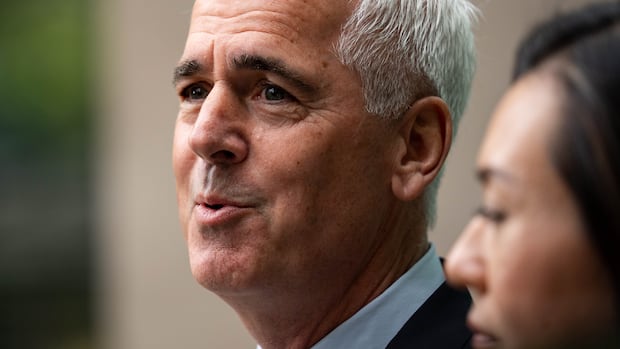
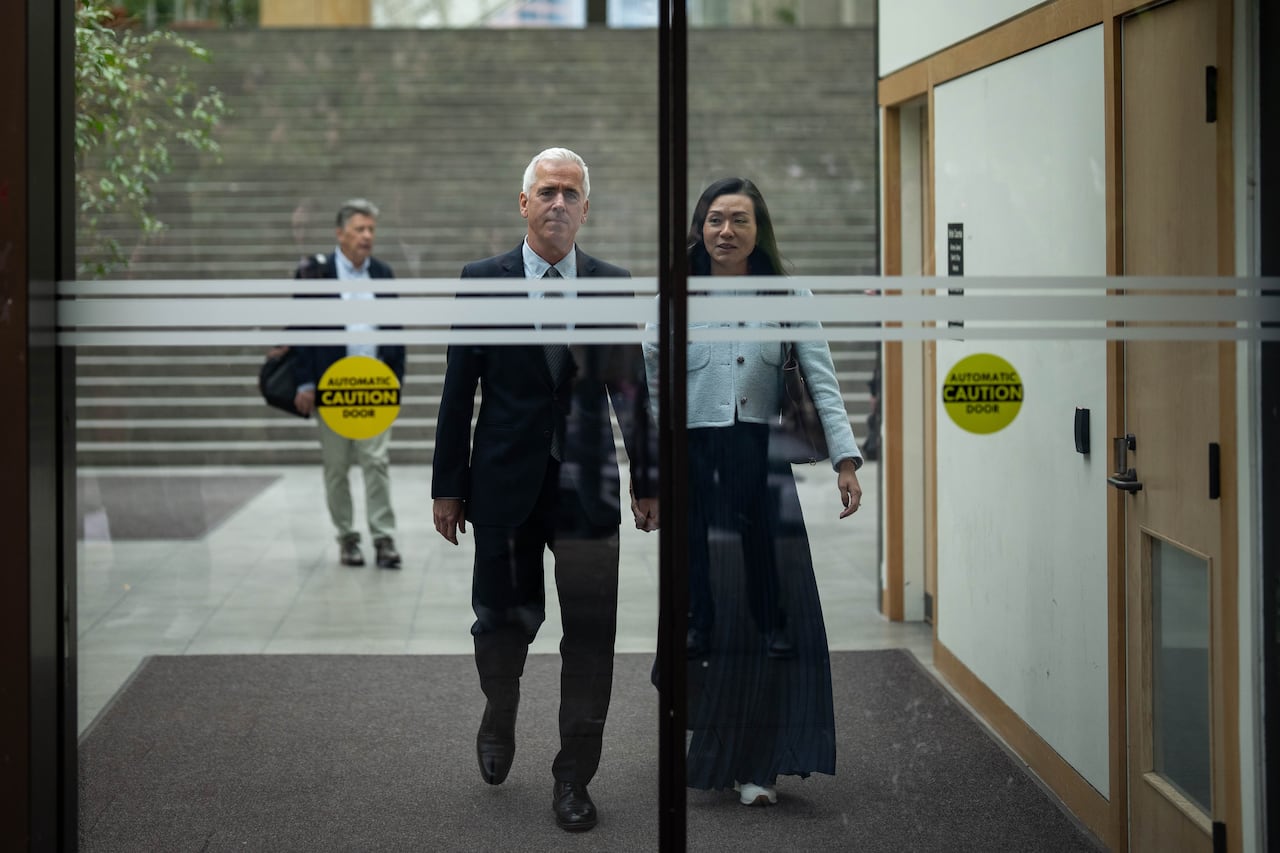
Standing outside the court with his wife at his side following the verdict, he thanked Devlin and said he looked forward to seeing his children in Hong Kong, the city he moved to after leaving the RCMP.
“Obviously, I’m very relieved,” Majcher said. “I appreciate that the smartest person in the room is the judge. She got to hear the entirety of the evidence and came up with the proper decision. So I’m very grateful.”
‘Too far a leap’
Devlin’s decision hinged on her assessment of what turned out to be a mostly circumstantial case, built largely on a portion of an email Majcher sent to a colleague in April 2017, when he was running the Hong Kong-based asset recovery firm he started after retiring from the RCMP.
The email referred to a “fraudster” who prosecutors contended was clearly Hongwei (Kevin) Sun — a multimillionaire real estate investor who settled in the Lower Mainland after leaving China, where he was wanted for financial crimes involving hundreds of millions of dollars.
“The fraudster is now a … major real estate mogul in Vancouver and we have located over $100M of assets. The Chinese Police have opened a Task Force and standing by to issue a global arrest warrant,” Majcher wrote.
“I hope to have a copy of the warrant before it is issued so we can impress upon the crook that we hold the keys to his future. I am meeting an associate of the target tomorrow in HK [Hong Kong] to see if he can help negotiate a settlement as the Chinese want to use this as a precedent case to settle economic crimes quietly and expeditiously.”
Devlin said she accepted the Crown’s contention that the “fraudster” Majcher was referring to was Sun — but that point turned out to be the last of the prosecution’s victories.
The Crown had argued that the emails were proof Majcher was attempting to force Sun to comply with the wishes of Chinese authorities: holding an arrest warrant over his head, threatening to withhold a passport, dangling the possibility of jail, and meeting a lawyer.
But Devlin said all those actions could just as easily have had non-criminal motivations. At the end of the day, she said the Crown had failed to prove that Majcher had the “specific intent” of breaking Canadian laws.
“Ultimately, I conclude that it is simply too far a leap to suggest, based on select sentences in one email chain, which are reasonably capable of supporting exculpatory interpretations, that Mr. Majcher had engaged in positive acts or steps with the requisite specific intent of doing so for the purpose of preparing for the commission of an offence,” Devlin concluded.
Collateral damage
Outside court, Majcher’s lawyer said the impact of the prosecution had been devastating to Majcher and a number of former colleagues, who were caught up in the RCMP’s investigation.
“The prosecution of Bill Majcher has been extraordinarily disruptive to him and his family,” Ian Donaldson told reporters.
“The collateral damage, as a result of him being charged, has been significant to others who might have been witnesses, to others who weren’t witnesses. People who were close to him have had very significant consequences as a result of a big charge.”
At trial, Donaldson claimed a reasonable inference from Majcher’s email was that he “was talking about chasing a fraudster for a bunch of money.”

“That doesn’t read as if it’s a criminal plan … an unlawful plan,” Donaldson said.
“The Crown is suggesting that from a few sentences in a couple of emails you should conclude that there is criminally culpable conduct.”
Donaldson described his client as a man who was prone to hyperbole, writing an informal missive about business plans that were entirely “in the public interest.”
He said the impugned paragraphs were only part of the story.
Neither Donaldson nor Majcher would comment on the prospect of Majcher and others bringing civil lawsuits for malicious prosecution against the Crown.
Donaldson was asked whether he believed that the politics around China and allegations of foreign interference, which roiled Ottawa at one point, had played a role in the decision to pursue charges against Majcher.
“I think there are many who believe that there was a small ‘p’ political agenda, that China, many years ago, was thought to be the enemy,” Donaldson said.
“Today, of course, with irony, America is thought to be the enemy, and China is our friend. From my perspective, that has nothing to do with what happened today.”
Majcher’s passport was returned to him after the verdict. He said he planned to return home to Hong Kong as soon as possible.
Read the full article here