





The Current19:01Canadians are facing a debt crisis
When Sean Picard couldn’t pay back almost $30,000 he owed on his credit card, he didn’t know where to turn for help — and spent years trying to just ignore the problem.
“I was basically just throwing money at interest, where it wasn’t going down. I was … avoiding calls from the bank, trying to just make the problem go away,” said Picard, 41, a retail worker in Toronto.
“You always have that concern in the back of your head … it gets a little daunting trying to push that to one side in order to, I don’t know, make it day-to-day,” he told The Current.
Picard said he got his first credit card as a student, with a limit that kept going up as the years passed. Debt became a problem about 15 years ago, when he was earning about $50,000 but overspending and using his credit card to pick up the tab. He said a “lack of discipline” meant that he “didn’t really think of the consequences of that down the road.”
He realized he needed help about eight years ago, but wasn’t sure where to turn, or what information he could trust.
“When you go down rabbit holes on the internet, you see some things that may seem too good to be true or some things just don’t seem right,” he said.
He felt particularly isolated and uncertain because “none of my friends … had gone through what I was experiencing — or at least weren’t sharing what they were going through.”
Debt doesn’t discriminate … it will come for anybody who’s not paying attention– Stacy Yanchuk Oleksy
Picard isn’t the only Canadian dealing with debt right now. More than 37,000 people filed for insolvency in Canada in the first three months of 2026, the highest number of consumer insolvencies since 2009, during the fallout from the 2008 financial crisis.
Stacy Yanchuk Oleksy, a certified financial counsellor, said Canadians are facing a “perfect storm” of high housing costs, lingering pandemic-related inflation, the Trump administration’s trade war and now soaring gas prices arising from the U.S.-Israel war on Iran.
“We’ve been frogs boiling to death in the water for a while,” said Yanchuk Oleksy, CEO of Money Mentors, a non-profit credit counselling agency in Alberta.
“Debt doesn’t discriminate … it will come for anybody who’s not paying attention.”
‘It’s about taking responsibility’
Yanchuk Oleksy said her organization offers counselling and advice on debt management. They start by listening to a person’s story and then figuring out what options are available.
That could include a plan and timeline to consolidate and repay debts to different creditors. Or setting up “a fireside chat with your creditors, to ask for lower interest or ask for a break while you do get help,” she said.
“That’s before the whole DIY options, right? Budgeting, going through your expenses and seeing what you can cut,” she said.
She said for many people “it’s not about the money, it’s your relationship and perception of it,” especially if a bank or organization is offering what can feel like “free money” in the form of credit, or any kind of buy-now, pay-later arrangement.
“What you have to ask is, can I pay it off in three months?” she said.
“If I can’t … maybe I need to save a little bit more, right? Because what feels easy right now will create a whole lot of problems down the road.”
Yanchuk Oleksy said people struggling with debt shouldn’t let shame stop them from seeking help.
“It’s not entirely your fault; it’s about taking responsibility. And so by giving us a call … you can make a better decision about your situation,” she said.
Canadian consumer insolvencies are trending up to levels seen during the 2009 recession. Andrew Chang explores the reasons behind the rise and how worried we should really be.
(Photo credits: The Canadian Press, Reuters, Adobe Stock and Getty Images)
‘Slow burn’ crisis could be coming
Scott Terrio is a licensed insolvency trustee, a federally regulated position that guides people through bankruptcy proceedings, as well as an option called a consumer proposal.
A consumer proposal is a legally binding process where a debtor and creditor agree terms. The proposal might involve paying just a percentage of the whole sum, or a timeline for repayment, or both. The terms are based on what the person in debt can afford.
“A proposal is … a way out — where you’re going from having no plan to having a plan,” said Terrio, manager of consumer insolvency at Hoyes, Michalos & Associates, a licensed insolvency trustee firm.
Terrio advised Picard on this $30,000 credit card debt, after Picard reached out for help two years ago — six years after he first realized he had a problem.
Picard said they worked out a five-year repayment plan, without any more interest accruing.
“Instead of me throwing money at interest and never chipping away at the actual debt itself, I was now able to slowly make that less,” Picard said.
“Every time I get a paycheck, it immediately goes out of my bank account so I don’t even see it, don’t have to think about it. It goes directly to the magic place where my debt goes down.”
Terrio’s company charges for their services, but noted that many people see an immediate reduction in their monthly repayments once they commit to a plan. He added that roughly four out of ten people who contact them do not proceed with the options offered.
“That’s very normal … we don’t want people to do something that isn’t the optimum thing they can do for their situation. And everybody’s different,” he said.
Terrio said he used to primarily help renters who didn’t have assets to fall back on, but now it’s homeowners with well-paying jobs who are finding themselves in financial trouble.
He thinks there’ll be a “slow burn” in the coming years, potentially worse than the 2009 crisis.
“It’s going to go up and then it’s going to be a plateau and it’s probably going to be two, three years,” he said.
“When you take 140,000 or 150,000 or more Canadians filing in a year, times three or four years, that’s way worse than a spike of two years, 15 years ago.”
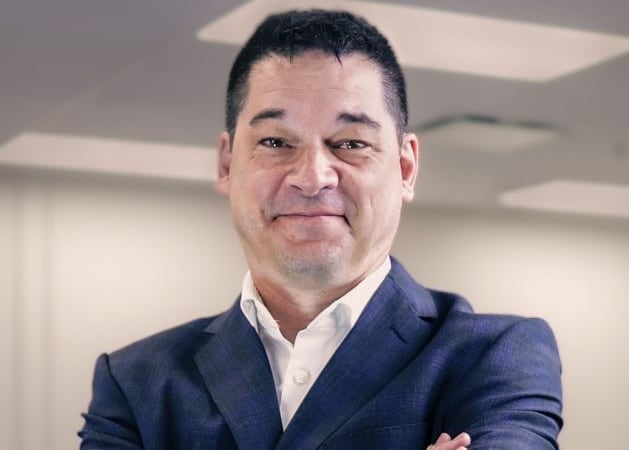
‘Be brave enough’
Two years into his five-year plan, Picard says he still struggles with the high costs of living in an expensive city like Toronto, but he’s doing much better these days.
He’s living within his means, and is even managing to save a small bit for a rainy day. His mental well-being has also improved, he said.
“I’m not scared to pick up the phone,” he said. “When someone’s calling me, it’s one of my loved ones, one of my friends.”
His advice to other people struggling with debt would be to reach out and ask for help.
“I was thinking about it for almost 10 years and I’ve only done it two years ago. If I had done it back then I would be far out of debt,” he said.
“Be brave enough to take the first step.”
Read the full article here