




When one former Keyport, NJ, resident started keeping tabs of all the cancer diagnoses on and around his childhood street, the numbers were “freaking snowballing.”
In recent interviews with NJ.com, Rusty Morris, 46, recounted how he’d collected the names of so many neighbors that he eventually created a map, marking the houses with red X’s for the sick.
His parents’ house had an X, for his father’s prostate cancer. A house down the street had two X’s, for his uncle and his uncle’s wife.
In total, Morris placed 28 X’s just on First Street, where he grew up, and 41 throughout the borough of Keyport.
Speaking to the outlet about the map, Dr. Alexis Mraz, associate professor of The College of New Jersey’s Department of Public Health, said it looked like a “crazy high percentage [of cancer patients].”
“That looks insane,” she said.
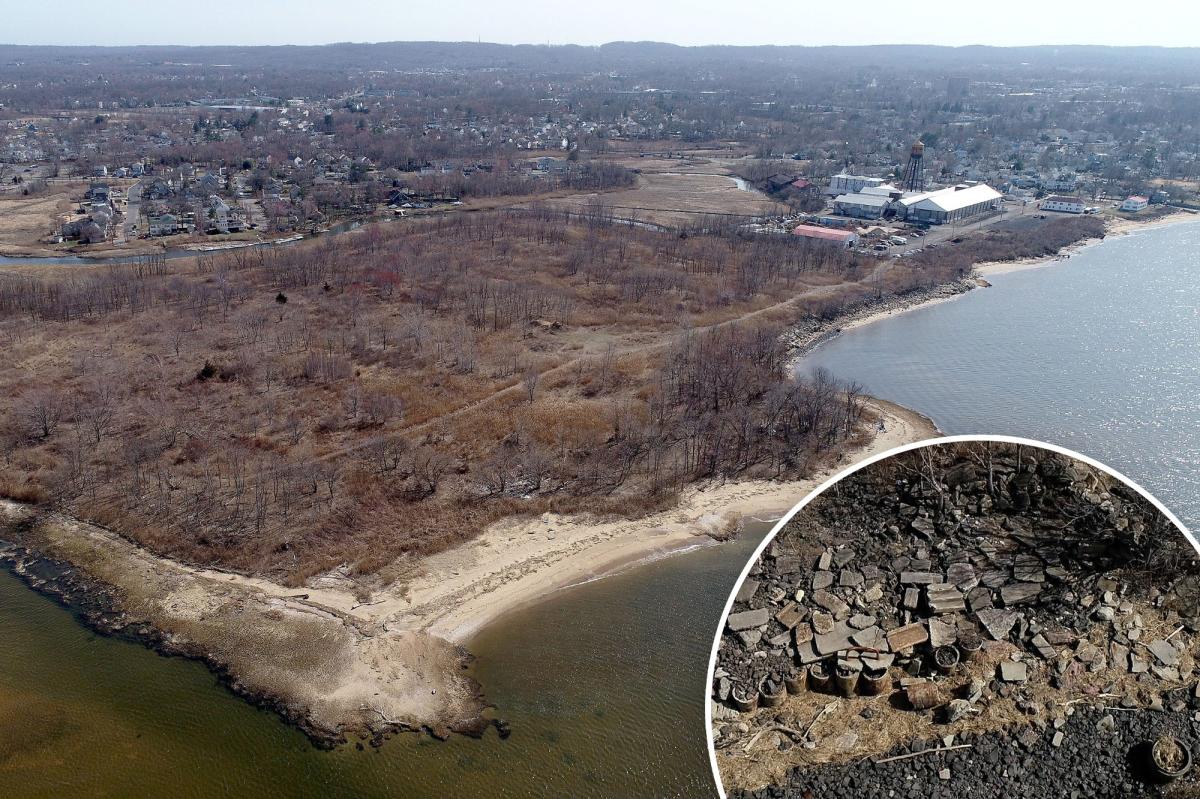
While doctors, local civil servants, state and federal officials, and residents can’t say definitively what’s behind the cancer cases and whether or not they’re connected, many point to the nearby dump that was closed in 1979 — and that’s has been oozing carcinogenic chemicals into the surrounding air, water and soil for at least 50 years, per local reports and multiple environment assessments.
Because of potential toxic exposures, it’s very possible that Morris’s map is an undercount.
“There are likely more cancer cases,” Mraz said. “I think it’s definitely worth looking into.”
NJ.com reporters cite multiple medical experts from around the country who agree that the site needs more — and urgent — study, and that there’s mounting evidence of a potential “cancer cluster.”
The 50-acre plot that eventually became a landfill started in the early 20th century as a small aircraft hub, and bears this legacy in its current name: Aeromarine Industrial Park. In 1962, it transitioned into a dumping site, until it was shut down.
But in the decades since, the company that owns the property has been cited several times — to the tune of almost $900,000 from New Jersey’s Department of Environmental Protection as recently as last year — for allegedly failing to seal it off properly.
The American Cancer Society defines cancer clusters as “patterns of cancer cases” in “people who live or work in the same area,” and estimates there are nearly 1,000 in the country. The official designation of a cancer cluster typically triggers a robust public health response aimed at curbing future diagnoses.
But Keyport hasn’t achieved that gruesome milestone yet, despite decades of intermittent studies and reports — like the most recent one conducted in 2010 by an outside environmental consulting firm — concluding Aeromarine was replete with at least five carcinogens tied to lung, breast, bladder, pancreatic, prostate and kidney cancers, as well as leukemia and lymphoma.
The Aeromarine site is a “legacy landfill,” per the state’s Department of Environmental Protection, because it dates back before the 1980s, when more comprehensive environmental protections were put in place.
Craig Benson, an emeritus professor of engineering at the University of Wisconsin-Madison and the University of Virginia, told NJ.com that legal waste disposal back then was “a Wild Wild West.”
“Everything just went in a hole in the ground. There were no rules. Hazardous waste went right in with everything else.”
In a statement to the investigative reporters at NJ.com, the state’s Department of Environmental Protection said it was “committed to ensuring proper closure of the landfill to protect the environment and public health.”
The department added that it “has begun initial discussions to determine next steps” for the site, which could involve more public health assessments.
In the meantime, Rusty Morris keeps adding X’s to his map, including a friend who survived ovarian cancer at 36, and her father, who never smoked but died at 77 of lung cancer.
Dr. Scarlett Gomez, a professor in the Department of Epidemiology and Biostatistics at the University of California in San Francisco, told NJ.com that it shouldn’t matter if the Keyport site has been officially classified a cancer cluster or not — it should just be cleaned up.
“Why do we need to wait to see if it’s going to cause disease down the road?”
Read the full article here