




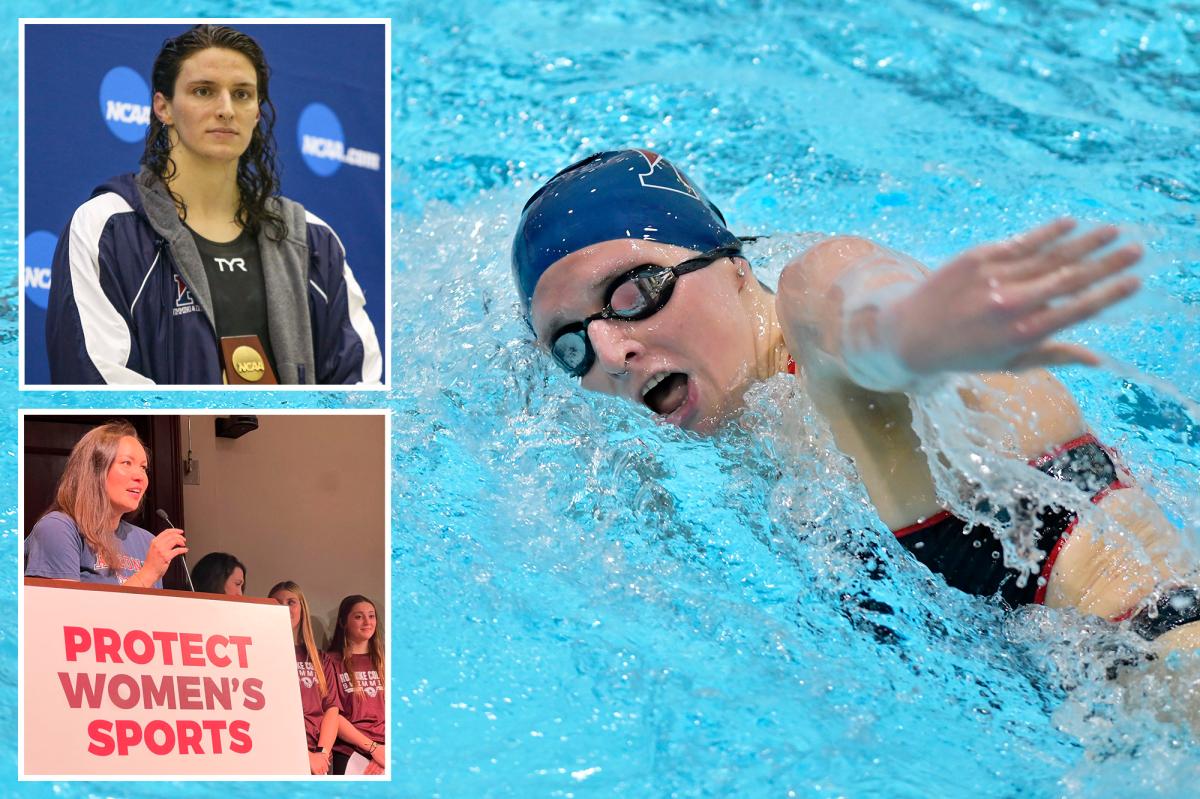
Following the International Olympic Committee’s decision to ban transgender athletes from competing in the LA28 Olympics and future events, NCAA athletes in the United States say it is long overdue for the National Collegiate Athletic Association to change its policy.
“I absolutely call upon the NCAA to follow suit,” former NCAA athlete Kim Jones told the California Post. “Women and girls’ sports need to be protected at every level. I’m just very hopeful that this [IOC decision] will have a trickle-down effect to protect women and girls at all ages and levels.”
Jones is the co-founder of the Independent Council on Women’s Sports, an advocacy group and network of athletes, coaches, and supporters who oppose the inclusion of transgender women in women’s sports and aim “to defend fair competition, safety, and opportunities based on biological sex.”
“We all deserve this,” the retired Stanford All-American said, adding that if she were in the shoes of current female college athletes, she “would be incredibly frustrated.”
The NCAA bars transgender women — student-athletes assigned male at birth — from competing in women’s sports, but allows them to practice with women’s teams and receive other benefits applicable to student-athletes. Men’s sports remain open to all athletes regardless of gender identity.
However, some college athletes — both former and current — say that in light of the IOC’s broad ban on transgender women athletes, they want their governing body to go further.
“An organization is finally standing up to say that women matter — their hopes and dreams, their ability to push themselves and pursue excellence on a safe and level playing field — it matters. Now is the time for the NCAA to stand up and say the same,” Kaylie Ray, an NCAA volleyball player, told the Post.
The IOC announced Thursday a new policy limiting participation in the female category to protect “fairness, safety and integrity,” noting the rule is not retroactive and does not apply to grassroots or recreational sports. The policy also clarifies eligibility for athletes with differences in sex development (DSD) and comes as no transgender women competed in the 2024 Paris Olympics.
“For the young women who work endlessly to reach the Olympic level, their protection matters too. For the girls who strive to compete at the collegiate level, their opportunities cannot be taken by men anymore,” Ray added, expressing hope that the NCAA changes its policy.
While the NCAA’s current policy restricts transgender women in some capacities, Jones said it does not go far enough.
“The NCAA policy as it stands right now is not effective by itself. It actually does not define sex,” she said. “It alludes to protecting women on the basis of birth certificates. That still grants men access to women’s teams, to women’s scholarships, and to being part of those environments — training, coaching, everything.”
The NCAA did not respond to the Post’s request for comment. Multiple plaintiffs in the past, including collegiate swimmer Riley Gaines, sued them over a previous policy allowing trans athletes to compete.
And athletes want more accountability.
“The NCAA has shifted oversight to individual schools, effectively avoiding responsibility,” Marshi Smith, NCAA & PAC-10 Champion swimmer, told the Post. “The women harmed by the NCAA’s breach of federal law need to see justice; there must be real consequences and a price paid.”
The decision, ahead of the 2028 Olympics and amid growing calls for change in NCAA policy, falls in line with President Donald Trump’s 2025 “Keeping Men Out of Women’s Sports” executive order.
The order decreed that any athletic organization allowing biological males to compete in female sports would have federal funding rescinded.
Under the current policy, individual schools have the autonomy to decide athletics participation on their campuses. NCAA schools must also follow local, state, and federal laws, which take precedence over NCAA rules.
“Schools like SJSU, Swarthmore, and RIT, among others, have already shown they will prioritize male athletes in women’s sports over the rights of their female athletes. Leaving enforcement to individual institutions with this track record is unacceptable,” Smith, who runs the advocacy group with Jones, said.
“Any credible sports policy requires two things: a clearly defined boundary and a reliable enforcement mechanism. The NCAA policy has neither,” she added.
Both Jones and Smith are moms of collegiate athletes and say this issue is personal.
“I know exactly how it feels. My daughter had to compete against a male athlete,” Jones, whose children are all collegiate swimmers, said. “It’s an experience no woman should have to go through.”
She was referring to Lia Thomas, the transgender swimmer from the University of Pennsylvania whose NCAA women’s swimming in 2021–22 sparked national debate over trans inclusion in sports.
The moms said they partially co-founded their organization after these experiences with their daughters, and following this recent decision, they want more change from the NCAA.
In the meantime, LA28 — the organizing committee for the Olympics — said the Games will go on as planned and follow the rules set by the IOC.
“The Games will run under the governance and guidelines of the International Olympic Committee and the International Paralympic Committee, which determine eligibility criteria for all athletes alongside National Olympic Committees, National Paralympic Committees, and each sport’s International Federation,” LA28 spokesperson Jacie Prieto Lopez told the Post. “We remain focused on creating a safe and welcoming environment for athletes and fans from around the world.”
Read the full article here