




Listen to this article
Estimated 2 minutes
The audio version of this article is generated by AI-based technology. Mispronunciations can occur. We are working with our partners to continually review and improve the results.
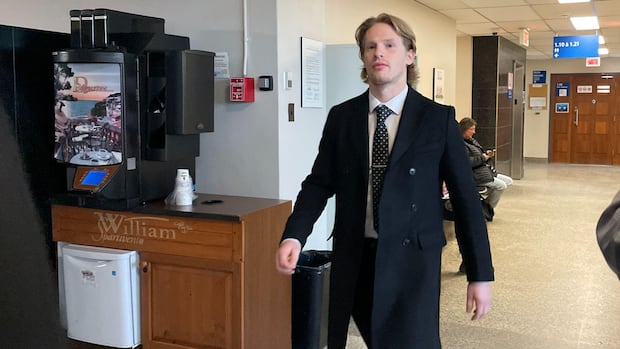
A former Quebec junior hockey player sentenced to prison last year for sexual assault will get a new trial.
Quebec’s Court of Appeal overturned Noah Corson’s guilty verdict on Thursday. He was orginally sentenced to two years less a day in prison for sexual assault of a minor under the age of 16.
He played for the Drummondville Voltigeurs and is the son of former Montreal Canadiens centre Shayne Corson.
Corson was 18 at the time of his 2016 encounter with a 15-year-old girl, whose identity is subject to a publication ban and around whom the case is centred.
The Court of Appeal found that Quebec court Judge Paul Dunnigan erred in his analysis of a piece of evidence that was favourable to Corson’s case.
Corson appealed his 2024 guilty verdict and claimed the judge made factual errors in the analysis of the evidence.
Decision on age-related defence flawed: appeal court
In 2024, the Crown and the defence had agreed that Corson had taken part in a group sexual activity involving two other hockey players at the complainant’s residence. However, the debate in court centred on whether or not the victim had consented to the activity, and if Corson had verified her age.
While Corson assured the court that he was convinced the victim was at least 18, the Crown argued he proved to be “reckless” or “wilfully blind.”
In his verdict in 2024, Judge Dunnigan said the accused had not taken all the reasonable steps he should have to ascertain the complainant’s age. In the circumstances, the judge did not need to rule on the issue of consent.
In his appeal, Corson argued that the judge failed to take into account that he was under the assumption, upon visiting the girl, that she lived in a student apartment with her friend. On Thursday, the Court of Appeal found the judge’s decision on the age-related defence was flawed.
Contacted by Radio-Canada, Crown prosecutor Marc-André Roy said he wished to review the Court of Appeal’s decision and meet with the complainant before granting an interview.
Read the full article here