




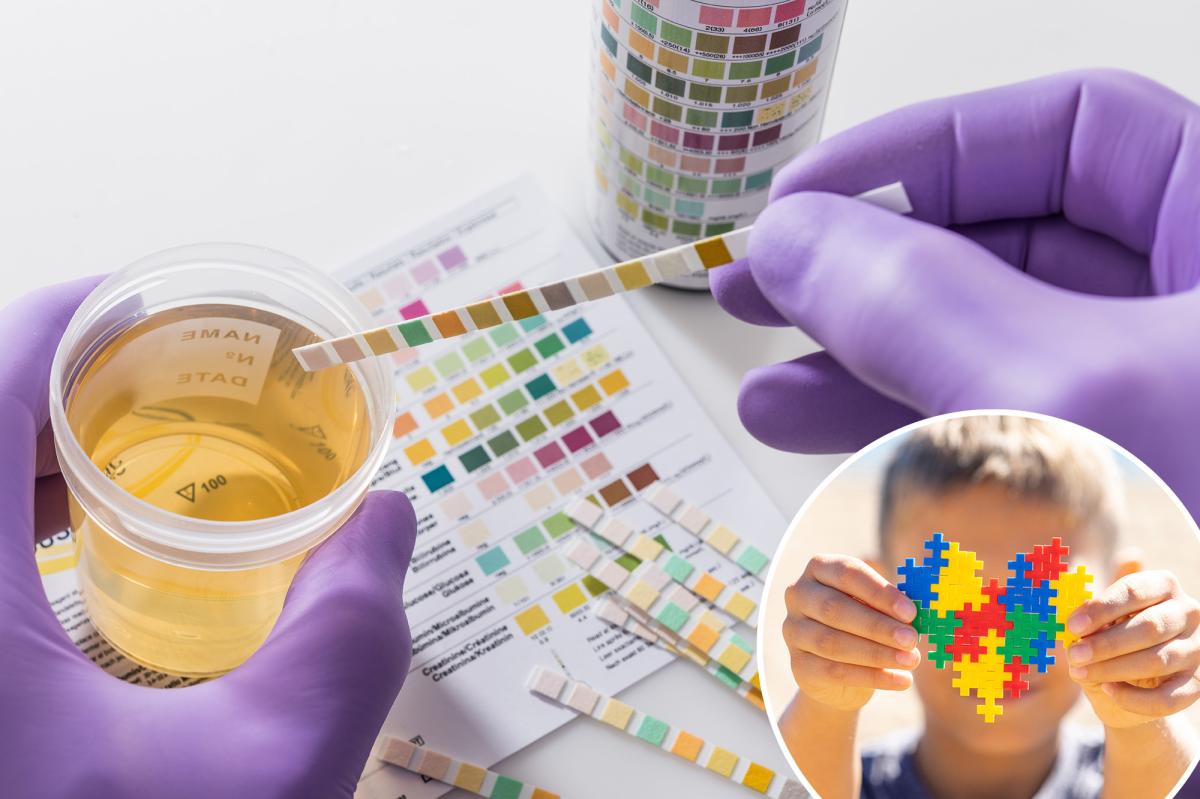
A new autism diagnostic tool could enable earlier detection — and it’s as simple as going to the bathroom.
The breakthrough screening developed by researchers at Arizona State University evaluates urine for certain compounds that may identify children with autism.
And with autism diagnoses skyrocketing 175% between 2011 and 2022, spotting the developmental disorder sooner, rather than later, could mean better treatment options.
Autism affects how people learn, behave, communicate and interact with others, with one-third of the population also having an intellectual disability.
The study, published Tuesday in the journal Molecular Psychiatry, used urine samples from children ages 2 to 11 to screen for 17 microbial metabolites, or molecules produced by microorganisms in the gut.
A classification tool called the Microbially-Derived Metabolite (MDM) System assigned a score for the number of metabolites in a child’s urine that exceeded the typical range.
Fifty-two of the children had been diagnosed with autism spectrum disorder, while 47 didn’t have it.
Nearly all the kids with autism had at least one metabolite level that exceeded the highest observed in the group without the disorder.
Those with autism had about three elevated metabolites, with some levels measuring up to 1,000 times higher.
Findings showed consistently elevated levels of certain metabolites in the children with autism, including ones that come from amino acids involved in key neurotransmitters.
“What’s really striking about the bacteria is that they make metabolites that are basically altered versions of serotonin and dopamine,” corresponding study author James Adams said in a news release.
Both these neurotransmitters affect mood, cognition and memory, which could “explain many of the symptoms and co-occurring symptoms in children with autism — their social communication, anxiety, depression and attention,” Adams added.
The findings are consistent with over 40 studies that showed higher gut microbiome metabolites in children with autism.
Throughout trials, the test showed 90% accuracy in identifying children with autism, without misidentifying any.
Further testing is underway to check the tool’s accuracy on a larger sample size.
While current tests depend on observing behavior, often with long wait times for results, this new screening could mean earlier identification, earlier treatment and better developmental outcomes.
The researchers also hope the new tool will erase stigmas surrounding the disorder.
“Sometimes diagnostic hesitancy happens because parents feel like they’re not good enough parents and they’re being judged,” first author of the study, Christina Flynn, said in a news release.
“But that’s not the case because if we can detect it in urine, it’s a biology-based condition,” she added. “Hopefully that will prevent any hesitancy on parents’ parts to seek treatment and seek it as early as possible.”
The researchers noted that these metabolites don’t cause autism and proposed a new subtype called ASD-associated with microbially-derived metabolites, or ASD-MDM, which encompasses about 90% of autism cases.
Read the full article here