


Good morning from Brussels. I’m Mared Gwyn.
While you were sleeping: Down under in Canberra, European Commission chief Ursula von der Leyen and Australian Prime Minister Anthony Albanese clinched a free trade deal designed to bolster the two blocs’ economies at a time of increased geopolitical and trading volatility.
It comes on the heels of a string of similar other EU pacts with the South American Mercosur bloc and India. Our trade reporter Peggy Corlin has been following events in Canberra from Brussels overnight and has all the details in our top story below.
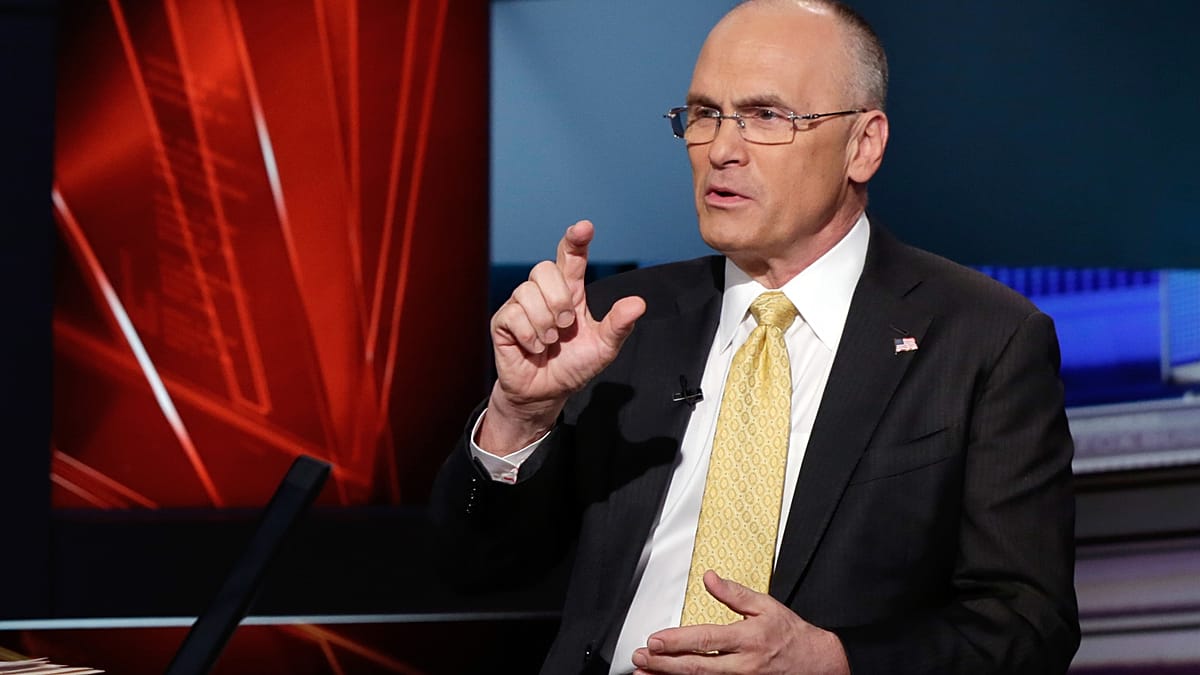
In other trade news, speaking live on Europe Today earlier, US President Donald Trump’s ambassador to the EU, Andrew Puzder, expressed optimism that the EU will implement its trade deal with the US, which has been stalled by the European Parliament amid trans-Atlantic rifts over Greenland and tariffs.
“All the signs seem to be good. You can’t take anything for granted and I don’t want to pre-judge the result,” Puzder told Europe Today. “It really would be economic malpractice not to pass this, it’s a great deal for the European Union and for the United States.”
A key vote on the implementation of the deal struck between Trump and von der Leyen last summer is due to take place in the European Parliament on Thursday.
“We signed this agreement in August of last year, and every day since then the US has been in compliance with everything in that agreement. We are yet to have a day when the Europeans are in compliance with that agreement, because they have a process to go through,” Puzder said. Catch the interview on today’s episode of Europe Today.
Meanwhile, Trump claimed on Monday that Washington and Tehran had held “very good and productive conversations” in recent days on striking a deal on the “complete and total resolution” of hostilities, vowing a five-day truce on attacks on energy sites.
He later claimed there were “major points of agreement” between both sides on a possible deal, sparking a major market rally and sending oil and gas prices tumbling. Brent crude, the global oil benchmark, plunged around 13%.
Iran’s parliament speaker Mohammad Bagher Ghalibaf has dismissed the claims, saying “no negotiations have been held” and accusing Washington of spreading “fake news” to “manipulate the financial and oil markets.”
Axios reported however that Ghalibaf had been in touch with Jared Kushner and Steve Witkoff in recent days, with both US envoys along with US Vice-President JD Vance poised to travel for direct talks with Iranian counterparts as early as this week.
Islamabad is positioning itself as a key mediator and venue for direct talks. Army chief Asim Munir reportedly spoke to Trump on Saturday, while prime minister Shehbaz Sharif vowed support in bringing peace to the region in a conversation with Iranian president Masoud Pezeshkian on Monday.
Egyptian Foreign Minister Badr Abdelatty also held a call on Sunday with Witkoff, Iranian Foreign Minister Abbas Aragchi and top diplomats from Pakistan, Turkey and Qatar.
After a call with President Trump last night, Israeli Prime Minister Benjamin Netanyahu said he believed a negotiated settlement with Iran could “protect Israel’s interests” but vowed to continue striking targets in both Iran and Lebanon.
Asked about whether a settlement would be good for Israel, former Israelí Prime Minister Naftali Bennett told Europe Today earlier that it would “depend” on the achievements of Israel’s objectives of dismantling Iran’s nuclear and missile programme, as well as its proxy groups such as Hezbollah.
“We have to see what the deal is. If it achieves those goals, that’s wonderful,” Bennett said, without ruling out the possibility of Israel continuing to fight alone without the US should Trump back out.
Naftali also blasted the response of some European nations to the US and Israel’s war on Iran, describing them as “cowardly.”
“Had we not acted, all of Europe would have been under a terrible nuclear missile menace. So we are fighting your war, and we expect not to be criticised, but we expect your backing. That would be the decent thing to do,” Naftali said. Catch the full interview on our flagship morning show.
European Union and Australia clinch trade deal
The European Union and Australia have clinched a free-trade deal, liberalising flows of goods while keeping quotas on sensitive EU farm products and leaving Australia’s luxury car tax largely intact, our trade reporter Peggy Corlin reports.
The deal marks another win for Brussels as it races to diversify trade ties and lock in strategic partners amid rising global tensions. It’s expected to save the EU €1 billion a year in duties, the Commission said, with exports projected to climb as much as 33% over the next decade.
Agriculture proved a flashpoint, with EU farmers already pushing back against the Mercosur trade agreement. On the toughest issues — beef and sheep, which sank talks in 2023 — Australia agreed to quotas of 30,600 and 25,000 tonnes a year, respectively.
A safeguard mechanism will allow the EU to shield sensitive sectors if a surge in Australian imports harms the bloc’s market.
Beyond agriculture, the agreement opens access to Australia’s critical raw materials, including aluminium, lithium and manganese.
Brussels also failed to scrap Australia’s luxury car tax. Instead, 75% of EU electric vehicles will be exempt.
Peggy has the full story.
Hungarian FM acknowledges contact with Moscow after allegations of leaking sensitive EU information
Hungary’s Foreign Minister Péter Szijjártó has acknowledged that he regularly contacts his Russian counterpart, Sergei Lavrov, during EU Foreign Affairs Council meetings — an admission that contradicts his government’s earlier dismissal of the allegations as fake news, our correspondent Sándor Zsiros reports this morning.
The Washington Post reported at the weekend that Szijjártó had routinely been in contact with Lavrov during EU meetings in Brussels, communicating with him during breaks. The allegations are potentially explosive: EU member states are bound by the principle of sincere cooperation, and the content of such meetings is understood to be confidential.
Szijjártó confirmed the calls on Monday evening, arguing that EU decisions on energy, the automotive industry, and security directly affect Hungary’s relationships with partners outside the bloc.
“Yes, these issues must be discussed with our partners outside the European Union. I talk not only to the Russian Foreign Minister, but also to our American, Turkish, Israeli, Serbian and other partners before and after European Union Council meetings,” Szijjártó said.
“What I say may sound harsh, but diplomacy is about talking to the leaders of other countries,” he added.
The revelations come as political tensions mount ahead of Hungary’s parliamentary elections. Prime Minister Viktor Orbán’s Fidesz party faces a stiff challenge from opposition leader Péter Magyar’s Tisza Party, which is currently ahead in opinion polls.
Orbán’s government is one of the few in Europe to maintain regular ties with the Kremlin. Hungary also continues to import large volumes of fossil fuels from Russia, despite EU pressure to reduce energy dependency on Moscow.
Szijjártó has visited Moscow 16 times since Russia launched its full-scale invasion of Ukraine in February 2022. His most recent trip took place on 4 March, when he met Russian President Vladimir Putin at the Kremlin.
Meloni admits defeat as Italians reject judicial reform in major referendum
Italian Prime Minister Giorgia Meloni conceded defeat Monday in a referendum on judicial reform considered a major test of her government, but said she would not resign.
“The Italians have decided. And we respect this decision,” Meloni said in a statement on X. “This does not change our commitment to continue, with seriousness and determination, to work for the good of the nation and to honour the mandate entrusted to us.”
Voters rejected the constitutional reform, with around 55% voting no and 45% voting yes, based on nearly all the votes counted. Turnout reached nearly 59%.
The reform would have split Italy’s judiciary into separate career paths for judges and prosecutors, divided the Superior Council of the Magistracy into two bodies and created a new Disciplinary Court.
The outcome represents a major blow for Meloni, whose mandate as leader of the right-wing coalition government runs through to next year. Meloni has steered the country through its most stable political period in recent memory, but Monday’s result could now bolster the opposition’s hopes of challenging her hold on power in 2027.
Andreas Rogal has the full story.
More from our newsrooms
Children as young as 12 are getting radicalised in Europe, EU counter-terrorism chief tells Euronews. European teens are in danger of radicalisation and recruitment online, Bartjan Wegter told Euronews, saying children as young as 12 can be radicalised quickly, sometimes in the space of just weeks. Sasha Vakulina has more.
Greece train tragedy trial adjourned until April amid chaos in courtroom deemed too small. Hundreds of people turned up for the trial into the 2023 train collision that left 57 dead, leading to complaints from lawyers that the venue was “insultingly” unsuitable. Apostolos Staikos and George Dimitropoulos have the story.
We’re also keeping an eye on
- European Council President António Costa delivers a speech at the SciencesPo Paris School of International Affairs
- EU foreign policy chief Kaja Kallas visits Accra, Ghana
- A new EU centre to counter migrant smuggling to be launched at Europol’s headquarters in The Hague. The Executive Directors of Europol, Catherine de Bolle, and Frontex, Hans Leijtens,will give a press conference at 13.00 CET.
That’s it for today. Peggy Corlin and Vincenzo Genovese contributed to this newsletter. Remember to sign up to receive Europe Today in your inbox every weekday morning at 08.30.
Read the full article here