




Listen to this article
Estimated 5 minutes
The audio version of this article is generated by AI-based technology. Mispronunciations can occur. We are working with our partners to continually review and improve the results.
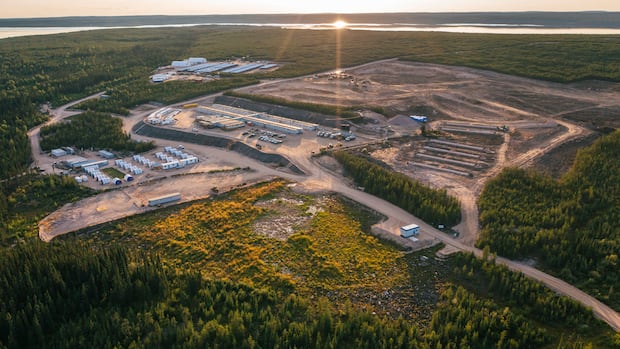
Construction has officially started on a new uranium mine in northern Saskatchewan.
NexGen Energy Ltd. is building an underground uranium mine in the southern Athabasca Basin about 130 kilometres north of La Loche. The company expects to spend $2.2 billion over the four-year construction phase of one of the world’s largest new sources of uranium.
On Thursday, the company held a groundbreaking ceremony at the mine site. Premier Scott Moe and former prime minister Stephen Harper spoke at the event, as did local leaders from Metis Nation-Saskatchewn and Desnethé-Missinippi-Churchill River MP Buckley Belanger.
Construction has started on surface infrastructure and shaft development is expected to start in 2027. The current 914-metre airstrip is being expanded to 1,780 metres.
NexGen CEO Leigh Curyer said it was a journey to get here.
He said they first arrived in 2012, having to set up everything from scratch. They dug 13 holes, and no mineralization was happening. So, they left.
“The winter of 2014, in January and on the eighth hole, the very first drill hole, actually — just over there. There had been no drilling for a 4½ kilometre radius. And on the very first hole, we hit mineralisation,” Curyer said.
“We didn’t know it at the time, but we were on top of what has become the world’s most important energy fuel project,” he said.
The mine will help meet the growing demand for electricity, Curyer said.
“The world is changing. Artificial intelligence, advanced manufacturing, electrification, and energy security are driving unprecedented demand for electricity,” he said in a statement.
“Nuclear energy has become key to meeting that demand — and with it, uranium has become one of the world’s most strategic resources.”
The company estimates the mine could produce up to 30 million pounds (over 13,000 tonnes) of uranium annually, or around 20 per cent of the current global supply.
In March, the Canadian Nuclear Safety Commission granted NexGen a licence to construct the mine and mill. The company will have to apply to the commission for a licence to operate it.
When fully operational, NexGen says the mine will create 459 full-time jobs and will have a life span of 24 years. Exploration in the area is ongoing, and promising uranium deposits nearby could be developed in the future.
The company secured endorsements from Indigenous communities that are close to or have traditional territory affected by the project. NexGen signed benefit agreements with Clearwater River Dene Nation, Birch Narrows Dene Nation, Buffalo River Dene Nation and Métis Nation—Saskatchewan.
Details of the agreements are confidential but typically include employment and training guarantees, contracts for locally-owned businesses and financial benefits.
Premier Scott Moe said this is an opportunity for people in the region.
“The opportunity for not just jobs, but careers. Lifelong careers for them and their children into the future, and ultimately for communities to grow,” he said.
Uranium mining employs more than 2,300 people in the province, and 49 per cent of people working in northern uranium mines are residents of the north, according to the Saskatchewan Mining Association.
Moe said it’s crucial for Saskatchewan to be developing resources such as this.
“Doing it in an ethical way that’s benefiting those that live in this region, but also doing it in a way that is going to be able to provide clean fuel for nuclear power for a global nuclear outbuild, of which Saskatchewan is going to partake in as well,” he said.
NexGen also partnered with Clearwater River Dene Nation and Métis Nation—Saskatchewan Local 39 to build a 59-bed hotel in La Loche. Clearwater River, the home of CRDN, is about a 10-minute drive north of La Loche, which itself is 596 kilometres northwest of Saskatoon.
Construction is underway on another new uranium mine in northern Saskatchewan. Denison Mines Corp. is building the Phoenix uranium mine and mill site in the eastern part of the Athabasca Basin.
Initial capital costs are estimated at $600 million and production could start in 2028.
The Denison mine could be the first uranium mine to use an in-situ recovery method, which pumps an acidic solution into the ore body to dissolve the uranium so it can be pumped back to the surface.
Denison plans to operate the mine for 10 years. The company estimates it has 56.7 million pounds of proven and probable uranium reserves, according to the Phoenix project website.
Read the full article here