



The past trading week saw oil prices rise by over 11%, as diplomatic efforts to bring peace to the Middle East continue to falter. It’s why many believe another price spike may be on the horizon.
At the close of trading in London on Friday, the Brent front-month futures contract ended up $10.63 or 11.16% on the week at $105.88 per barrel. Nearly mirroring a double-digit rise posted by the global proxy benchmark, U.S. benchmark – West Texas Intermediate – also rose $10.55 or 13% on the week to $94.40 per barrel.
The figures marked another volatile week in the crude market that saw oil prices seesawing throughout on the news of a possible breakthrough in arranging talks between the U.S. and Iran in Pakistan.
However, on Saturday, immediate hopes of a solution were dashed again. Iran’s foreign minister Abbas Araghchi left talks with Pakistan in the capital Islamabad, where he said he put forward his country’s position on a framework to end the war, but added that he is “yet to see if the U.S. is truly serious about diplomacy.”
Shortly thereafter, U.S. president Donald Trump said his envoys Steve Witkoff and Jared Kushner’s trip to Pakistan for talks on the war with Iran had been called off.
In a social media post on Truth Social, the president said: “I just cancelled the trip of my representatives going is Islamabad, Pakistan, to meet with the Iranians. Too much time wasted on traveling, too much work!
“Besides which, there is tremendous infighting and confusion within their ‘leadership.’ Nobody knows who is in charge, including them. Also, we have all the cards, they have none! If they want to talk, all they have to do is call!!!”
Oil Likely To Trend Higher Next Week
With another attempt at getting the U.S. and Iran to talk having failed, oil prices are likely to trend higher over the coming week. Forward Brent futures contracts towards the end of the year are currently trading around the $90 per barrel mark.
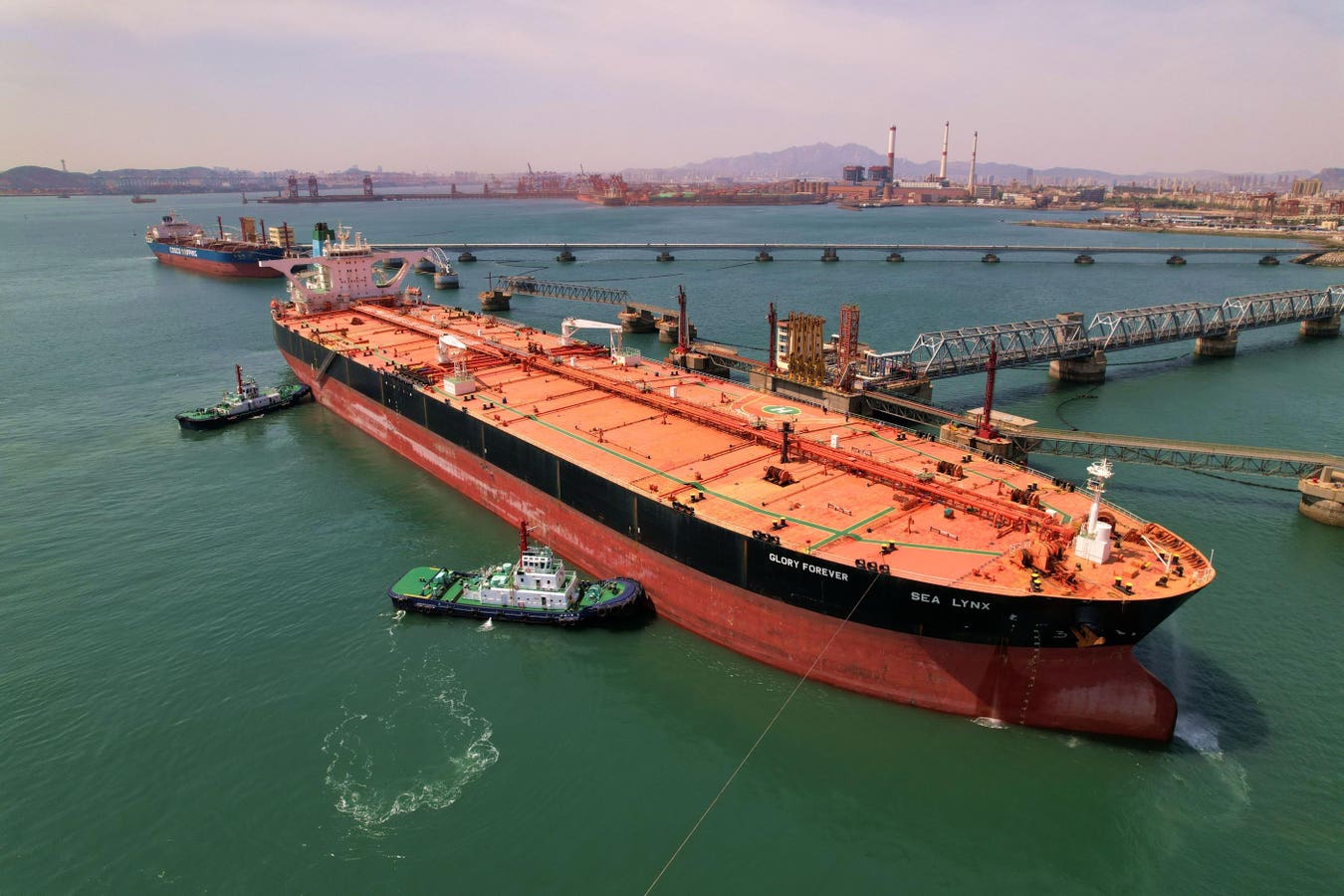
Market commentators believe much of this is based on the assumption of normalization of maritime traffic in the Strait of Hormuz. It’s currently being blockaded both by Iran and the U.S. There are conflicting signals from both sides on how the impasse would be brought to an end.
“The pricing of Brent for the rest of the year is very sensitive to when the Strait will reopen. For every week beyond May 1 that the Strait remains constrained, we estimate that the implied average price for the rest of the year should move up by roughly $5 per barrel as global inventories are eroded by some 100 million barrels per week, ” said SEB chief commodities analyst Bjarne Schieldrop.
A reopening in mid-May points to a rest-of-year price closer to $100 per barrel, he added.
JPMorgan also said in a client circular, issued on Tuesday, that oil may rise further as higher price levels have – as of yet – not forced further demand out of the system to offset outages and supply constriction from the Middle East.
It also noted that commercial inventories in OECD countries may hit “operational minimums” at some point between May 9 and May 30. The investment bank added that at such a juncture, increases in oil prices may “become exponential rather than linear.”
Disclaimer: The above commentary is meant to stimulate discussion based on the author’s opinion and analysis offered in a personal capacity. It is not solicitation, recommendation or investment advice to trade oil stocks, futures, options or products. Oil markets can be highly volatile and opinions in the sector may change instantaneously and without notice.
Read the full article here