



Listen to this article
Estimated 4 minutes
The audio version of this article is generated by AI-based technology. Mispronunciations can occur. We are working with our partners to continually review and improve the results.
Ontario is set to lose more than a third of its international student population following the federal government’s student permit cap, preliminary estimates from Statistics Canada show.
In a report published Tuesday, the agency suggested that the federal government’s student cap measures — announced in January 2024 — led to a “sharp decline” in new international students in Canada but a more moderate drop in overall enrolment.
Ontario is estimated to feel the worst of the impact, losing 92,000 full-time international students in public post-secondary institutions for the 2025-26 year.
The cap was initially meant to last two years, but the federal government recently laid out a plan to keep cutting the number of international students admitted into the country, with plans to admit 155,000 students in 2026 and 150,000 in 2027 and 2028.
Before the permit cap, the province was home to the most international students in the country, according to Statistics Canada.
The agency said it used national survey data from post-secondary institutions as well as administrative data from Immigration, Refugees and Citizenship Canada (IRCC) and the Canada Revenue Agency to calculate its estimates.
Students used as ‘scapegoat,’ says international student
Amir Moghadam, an international PhD student at the University of Toronto, said he chose to come to Canada because of its welcoming environment to students.
But with the kind of messaging coming from the federal government and the report, Moghadam said “that might not be the case anymore.”
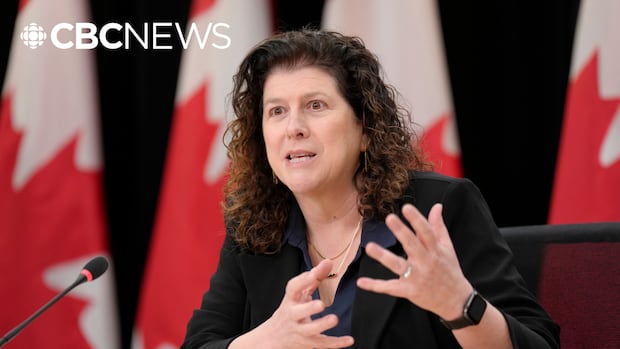
Canada’s auditor general says the federal government may have stopped too many international students from coming to Canada. Two years ago, Ottawa promised to reduce the numbers, citing pressure on housing and health care, and expressed concerns that shady post-secondary schools were exploiting students. The CBC’s Katie DeRosa has more on the consequences for B.C.
“I think everyone will agree that the number of international students in Canada got out of control,” he said, but noted they weren’t the problem.
“They were just caught in this perfect storm that they had no part in creating,” he said, referring to the rise in cost of living and underfunding in the post-secondary sector.
“International students were used as a revenue stream and when the politics reversed, they were used as a scapegoat.”
Ottawa said it implemented the cap in a bid to ease pressures on housing as well as address concerns that post-secondary schools were exploiting students.
System already ‘starved’ before study cap: union rep
Jeff Brown, professor at George Brown Polytechnic and the lead faculty union steward for the college, said the student cap changes wouldn’t have had such a “seismic effect” if the “system weren’t already starved.”
Brown said faculty and staff have been sounding the alarm for lack of funding in the post-secondary sector “for years.”
“International students bring a lot to our college community, they should be a part of it. But not to the extent that they are now a replacement for adequate funding.”
Funding for the postsecondary sector is typically managed by the province.
Bianca Giacoboni, a spokesperson for Ontario’s Ministry of Colleges and Universities, said the provincial government has “stepped up to provide the largest investment in postsecondary education in Ontario’s history” in the face of the permit cap changes.
Giacoboni said the province is bringing in an additional $6.4 billion to the postsecondary sector. That announcement was made in February alongside the government’s controversial student assistance (OSAP) cuts.
“As we always have, we will continue to work alongside all of our institutions to ensure they can keep delivering the world-class education Ontario is known for,” Giacoboni said in an emailed statement.
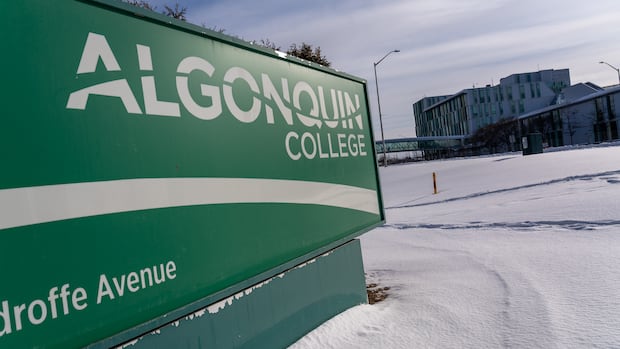
Algonquin College in Ottawa says programs that cater to domestic students aren’t “financially viable.” CBC’s Kate Porter looks at how the current system came to rely on international students as many colleges say they’ve been underfunded for decades.
Rob Kristofferson, president of the Ontario Confederation of University Faculty Associations, said he was not surprised “at all” by the preliminary findings.
“I think it’s a bit more than what we expected … our reputation internationally has tanked as a provider of international education,” he said.
Kristofferson said universities turned to international students to bridge gaps in funding, given that international students could pay as much as six times more than a domestic student for tuition.
“We need robust public funding to get our university system up to [the] level it needs to be, and then we need to think hard about how to re-attract international students and provide them with the world-class education that Ontario universities provide.”
Read the full article here