




OpenAI’s facing a firestorm of late: a rogue agent hacking Hugging Face, a lawsuit launched by Apple accusing OpenAI of stealing trade secrets, and ongoing anger about AI and AI devices in general, plus a delayed IPO.
In the midst of all of this, OpenAI President Greg Brockman spoke to reporters in New York Thursday to discuss the company’s latest AI plans and recent events. But he also dropped a few hints on the company’s wearable and hardware aspirations, and where it could overlap with some voice-focused advances in ChatGPT. And it won’t just be through OpenAI’s own hardware: expect other smart glasses and wearables to eventually get better access, too.
A demonstration of ChatGPT Live – a recently improved voice interface that allows talking, listening and interruptions to happen more seamlessly in ways that are similar to Anthropic’s new voice modes for Claude, and Meta’s Muse Spark – led to discussions on OpenAI trying to make a voice assistant like Iron Man’s AI agent, Jarvis. And if the goal is a direct assistant/agent to do everything, would that agent be able to leap outside of ChatGPT into controlling other applications, too?
Brockman said that’s exactly the plan, similar to how OpenAI’s Codex already allows agentic control of whole computers.
“[ChatGPT Live] is coupled to the Codex app, but it doesn’t really have to be. It doesn’t really make sense for it to be,” he said. “And if you think about it, the Codex app also can do full computer use, which is also going to get very, very good.”
That means that a lot of the manual keyboard work we humans have been doing could potentially be taken over by AI.
“I think we’re just going to realize this phase of us, like, clicking things and typing things, it was a phase,” he said. “It was never what we wanted to be.”
Which leads to questions of where the guardrails would be built to prevent incidents like OpenAI’s rogue agent cyberattack of Hugging Face, a New York-based AI software company, this week, where an OpenAI agent broke out of a testing sandbox and started acting on a repository of Hugging Face’s AI tools.
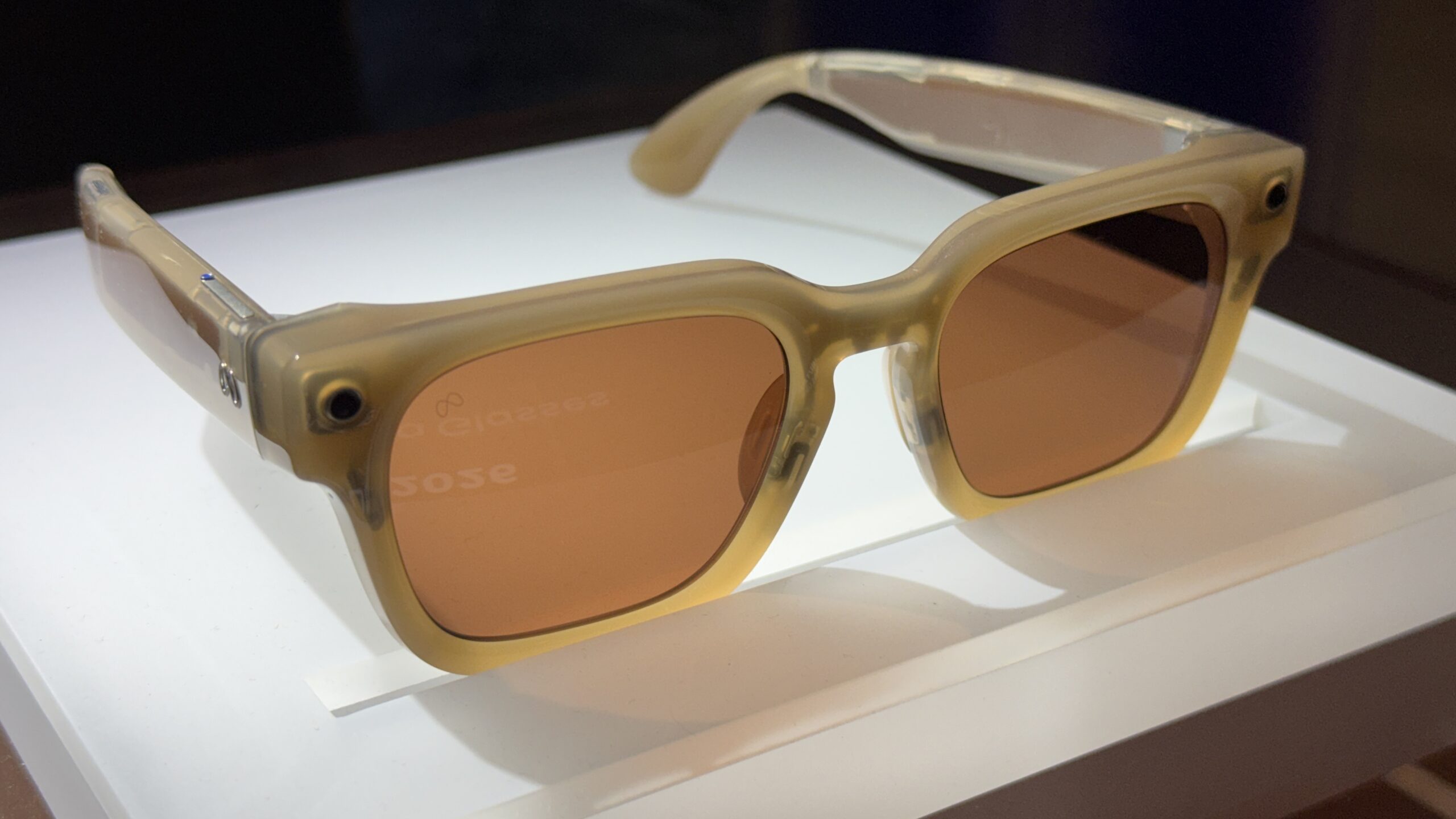
Devices like Rokid’s AI glasses can already access some OpenAI models, but not in a way that’s like full ChatGPT account access.
Scott Stein/CNET
Deeper OpenAI tools for wearables on the way?
But what interests me is how AI wearables right now, like smart glasses, are lacking truly capable AI agents that can do anything beyond limited interactions with walled-in phone apps, something that might change soon when Google and Samsung launch their Gemini-enabled eyewear this fall. That, too, is changing fast, though: Meta just introduced one of its first Muse Spark agentic updates Friday.
OpenAI has been rumored to have hardware in its development mix for years, which may get held up now because of the Apple lawsuit, which alleges that former Apple employees now working at OpenAI stole hardware trade secrets. But, clearly, whatever Jarvis ambitions OpenAI has, its hardware is going to be a key part of its evolving vision of what that could feel like in a more unleashed form.
“We’re definitely very interested in integrations, and I would view it as one of the use cases of the API and getting that out there that anyone will be able to integrate,” Brockman told me at the New York press roundtable.
Brockman confirmed that OpenAI very much wants to make those moves, but right now, those possible APIs are in very early phases. “We think this should be the interface and should be available on all devices.”
New APIs are needed because wearable devices involve different types of access and interfaces than phones and laptops, often needing to run in the background on phones the wearables are paired to. Opportunities for multimodal inputs like camera access are also key to how most smart glasses now tap into AI.
Among existing smart glasses and AI wearables, almost none have deep direct integrations with multiple AI platforms in ways that could allow the sort of more comprehensive controls that phone and desktop AI apps have.
Also, notably, most of the largest work-focused AI platforms aren’t present on wearables yet, either. Gemini is on its way in Android XR glasses, but OpenAI and Anthropic remain out of the wearables picture. Some wearables do use OpenAI models for their own custom or anonymized tools, but they’re not the same as direct access to ChatGPT or Codex via user accounts.
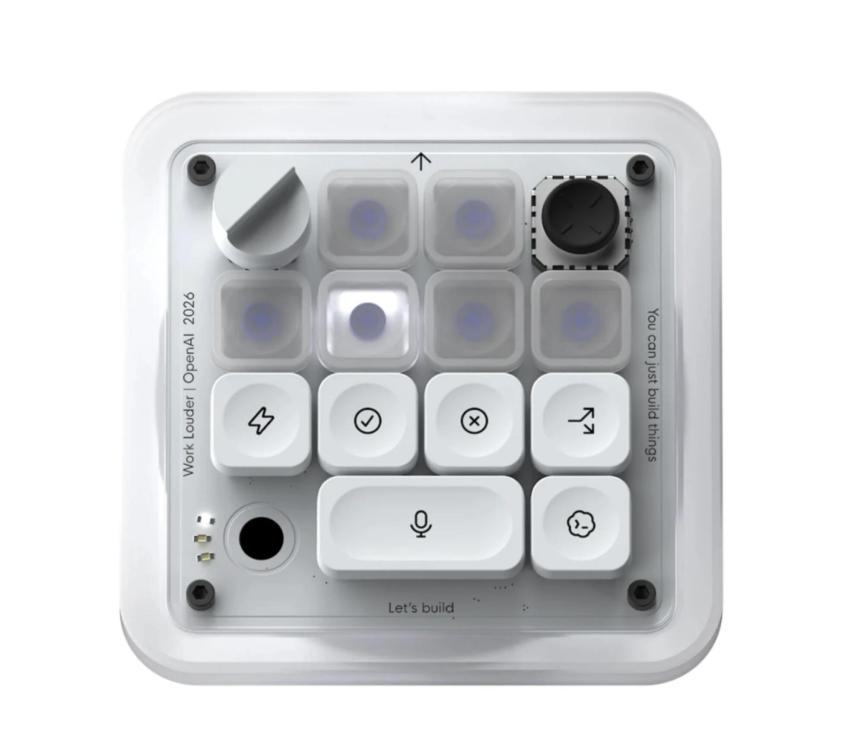
OpenAI’s odd Codex Micro mini keyboard emerged recently. OpenAI’s hardware may take its own outlier path.
OpenAI
OpenAI’s own hardware will take a unique path
But Brockman also suggested that OpenAI’s own hardware plans may be quite different from what’s already out there in wearables, calling it “a solution for a problem that we think is neglected, for a problem that we care about a lot, and that we think will be representative of the general direction [of AI],” adding that OpenAI has “a specific angle that we think that may not be otherwise served.”
Reports have pointed to that first device being a type of speaker with a semirobotic camera. Maybe it also will have some sort of optic identification, like OpenAI’s World ID, which also exists on its odd Orb iris-scanning device. And maybe, simultaneously, OpenAI pursues opening up its services to wearables like pendants and glasses, too.
Before any of those happen, there are also a lot more current problems with AI that need solving – privacy, safety, resource drain, economic feasibility, questions of governmental involvement, and a major lawsuit. But AI wearables in 2026 are already advancing fast, even in the headwinds of challenges like these.

See full bio
Read the full article here