




NEWYou can now listen to Fox News articles!
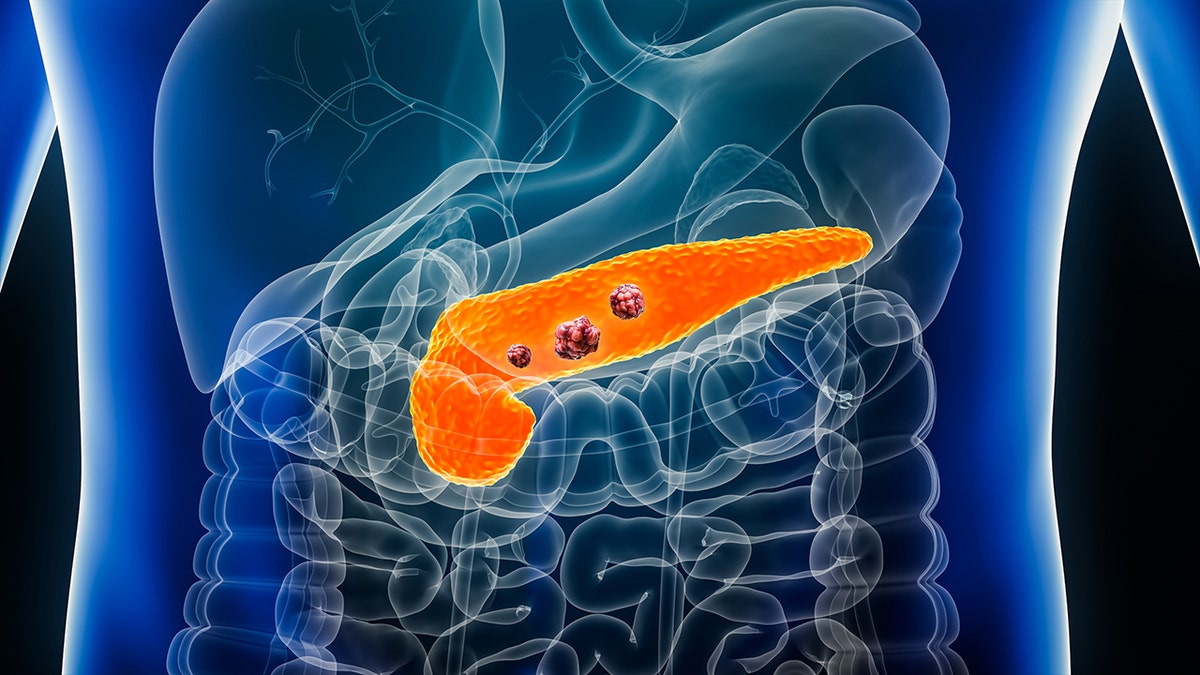
A new vaccine for the prevention of pancreatic cancer has shown promise in an early study at Johns Hopkins School of Medicine in Baltimore, Maryland.
A phase 1 trial published in Cancer Discovery, a journal of the American Association for Cancer Research, tested an experimental vaccine called mKRAS-VAX in 20 people, according to a press release.
Participants had an inherited risk of pancreatic ductal adenocarcinoma (PDAC), the most common and aggressive form of pancreatic cancer, along with an abnormality detected in imaging, typically a pancreatic cyst. These individuals had not been diagnosed with pancreatic cancer.
NEW PANCREATIC CANCER PILL NEARLY DOUBLES SURVIVAL TIME IN BREAKTHROUGH TRIAL
Four injections were administered to participants during weeks one, three and five, along with a booster at week 13.
The vaccine targeted six common mutations of KRAS. Changes in this gene drive more than 90% of PDACs.
The vaccine triggered a mutant KRAS-targeted immune response in 18 of the 20 participants (90%). On average, immune activity increased about 18-fold, although responses varied. Half of participants responded to all six KRAS mutations included in the vaccine.
Researchers also found the vaccine generated two types of T cells — one to attack abnormal cells and another to provide longer-term immune memory.
TEST YOURSELF WITH OUR LATEST LIFESTYLE QUIZ
The vaccine appeared to be safe, with participants experiencing only injection-site reactions and temporary flu-like symptoms.
While the phase 1 trial was designed primarily to evaluate safety rather than effectiveness, after about 16.5 months of follow-up, no participants had developed pancreatic cancer. At the same time, 37.5% of vaccinated participants experienced shrinkage or disappearance of the pancreatic cysts that had put them at increased risk for the disease.
Study co-author Neeha Zaidi, MD, associate professor of oncology at the Sidney Kimmel Comprehensive Cancer Center at Johns Hopkins University, commented that the long-lasting response of this vaccine is “particularly noteworthy when assessing for possible interception of cancer, which requires long-lasting immunity.”
“In addition, the vaccine was safe and well-tolerated, supporting its use in larger cancer interception studies,” she said in the press release. “Overall, this study represents the first proof of concept for the use of vaccines for interception of pancreatic cancer in human patients.”
CLICK HERE TO SIGN UP FOR OUR HEALTH NEWSLETTER
Co-author Michael G. Goggins, MD, professor of pathology, medicine and oncology and the Sol Goldman Professor of Pancreatic Cancer Research at Johns Hopkins University School of Medicine, also commented on the findings.
CLICK HERE FOR MORE HEALTH STORIES
“We observed evidence of stability or regression of the pancreatic cysts in association with the induction and durability of KRAS-specific T-cell responses,” he said in the release. “However, larger studies are needed to demonstrate that this effect was in fact due to the vaccine.”
The authors noted the study was limited by its small sample size and because it was not designed to determine clinical efficacy.

Fellow senior author Elizabeth Jaffee, MD, deputy director of the Sidney Kimmel Comprehensive Cancer Center at Johns Hopkins, commented that prevention and interception “save lives and reduce the morbidity associated with cancer development and progression.”
“This is especially important for cancers whose early-onset frequency is increasing and for which we do not have effective methods for early detection,” she added in the release.
CLICK HERE TO DOWNLOAD THE FOX NEWS APP
Jaffee noted that this research highlights the need for more funding to support developing strategies for preventing cancer in high-risk individuals.
“More studies are needed to find the best vaccine approaches, the best targets and the ideal timing for vaccination,” she said.
Read the full article here