





NEWYou can now listen to Fox News articles!
Taking a GLP-1 medication for weight loss may improve male fertility, according to experts.
Research presented this week at ENDO 2026, the Endocrine Society’s annual meeting in Chicago, explored how obesity is strongly linked to fertility problems in men.
Excess weight can contribute to dysregulation of the hypothalamic-pituitary-gonadal (HPG) axis — the hormone system that regulates testosterone production — and functional hypogonadism, a condition in which testosterone levels are abnormally low because of disrupted hormone signaling. These changes can also impair semen quality.
WEIGHT-LOSS MEDICATIONS COULD IMPACT SEXUAL HEALTH IN UNEXPECTED WAYS
The researchers evaluated how GLP-1 weight-loss drugs impact reproductive hormones and metabolic outcomes, analyzing data of men between the ages of 18 and 65 who were taking one of the medications, according to a press release.
The systematic review of five randomized controlled trials focused on measuring testosterone, brain hormones involved in testosterone and sperm production, and a protein that carries sex hormones in the blood. Semen quality, weight and BMI, cholesterol and blood sugar were also measured.
The results suggested that GLP-1 medications do not suppress male hormones. Men with obesity and low testosterone linked to obesity may experience improved testosterone, sperm quality and metabolic health, especially during weight loss.
CLICK HERE TO DOWNLOAD THE FOX NEWS APP
In one four-week study, dulaglutide showed no significant changes in reproductive hormones or sexual function.
In a separate 16-week trial, liraglutide improved hormones in obese men with functional hypogonadism, meaning low testosterone was likely related to obesity. The review found that liraglutide was better for health outcomes than hormone replacement therapy.
CLICK HERE FOR MORE HEALTH STORIES
Another liraglutide study reported improved sperm concentration and count.
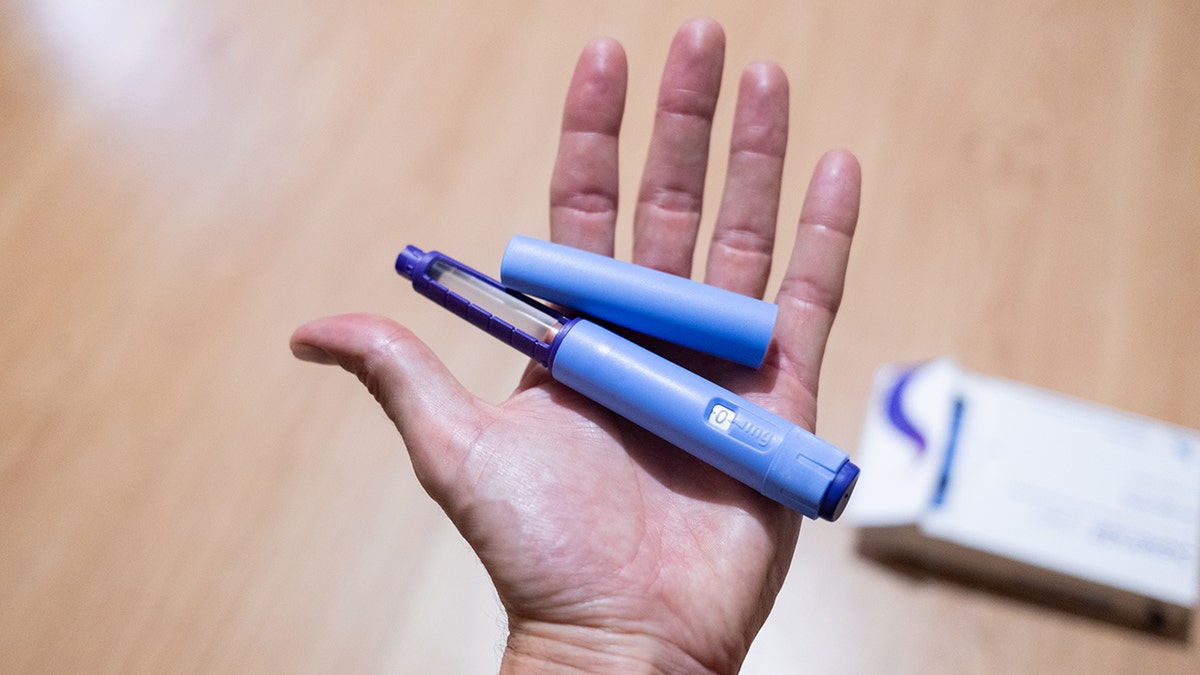
A 24-week trial of semaglutide, known commercially as Ozempic and Wegovy, saw improvement in sperm shape and bad cholesterol, while preserving total testosterone.
As only five trials were included, the small evidence base suggests more research is necessary to prove further association.
CLICK HERE TO SIGN UP FOR OUR HEALTH NEWSLETTER
In an abstract of the research, the authors summed up that GLP-1s “do not appear to acutely suppress the male HPG axis and may improve reproductive hormones and semen parameters in obese hypogonadal men, largely within the context of weight loss.”
“However, evidence remains limited and heterogeneous, underscoring the need for larger RCTs explicitly powered to assess male reproductive outcomes,” they wrote.

Dr. Anthony Puopolo, men’s health expert and lead medical provider for RexMD, reflected on these findings in an interview with Fox News Digital.
“This provides early evidence that GLP-1 medications taken by obese men with hypogonadism/low testosterone (low T) improves testosterone levels,” he said.
TEST YOURSELF WITH OUR LATEST LIFESTYLE QUIZ
While more research is necessary, Pupolo, who was not involved in the study, shared his optimism about how GLP-1s can play a role in improving male fertility.
“If this finding continues to gain evidence, GLP-1s might be a better option for low T than testosterone replacement therapy (TRT) in obese men – as GLP-1 medications preserve fertility, whereas TRT tends to be harmful to male reproductive/sperm function,” he added.
Read the full article here