




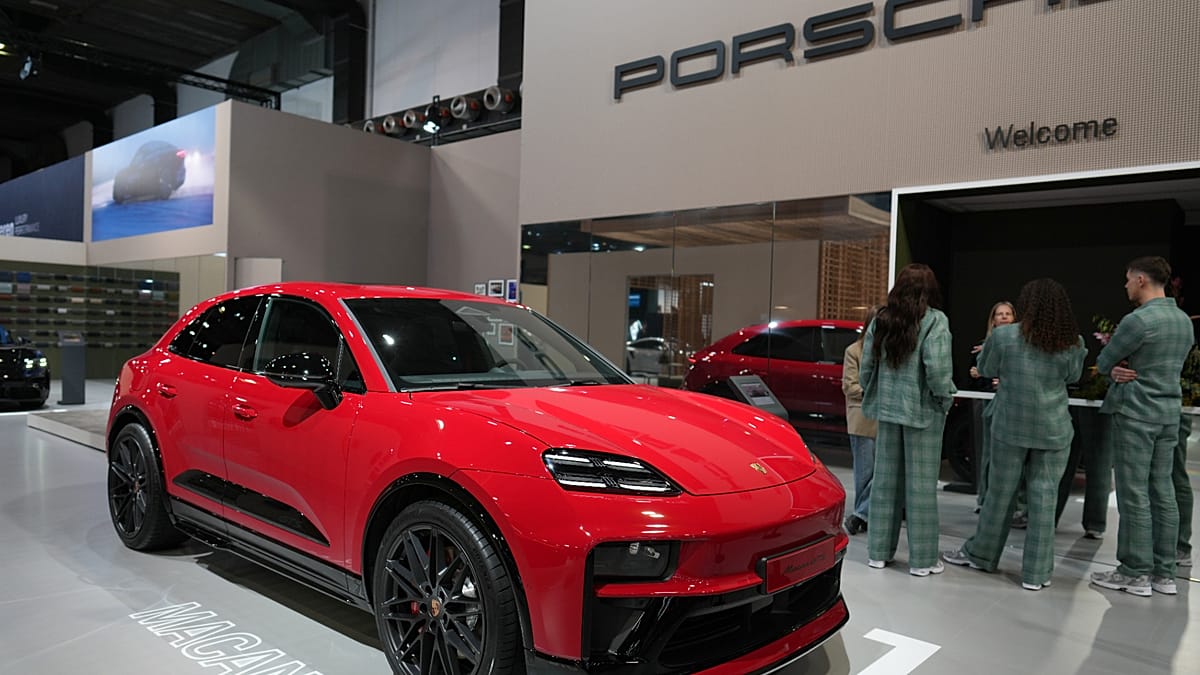
Porsche AG booked two large one-time accounting charges in 2025 that, on paper, reduced its operating profit by 98% — from €5.3 billion to just €90 million, according to Volkswagen Group’s earnings report for the full-year.
ADVERTISEMENT

ADVERTISEMENT
The charges do not mean Porsche AG lost that money in the conventional sense. They are accounting entries, required under standard reporting rules, that reflect the cost of a major change in strategy.
The first, worth €2.7 billion, is a goodwill impairment. Goodwill is the value attributed to Porsche’s brand, future earning potential and market position as carried on Volkswagen’s balance sheet.
When a company revises its long-term earnings expectations downward, accounting rules require it to write down that goodwill to reflect the lower projected value.
No cash changes hands, and it is a correction to a number on the balance sheet.
The second, worth €2.0 billion, is a product realignment charge. Porsche AG had been developing a new all-electric vehicle platform for the next decade.
It has now abandoned that plan, pivoting back towards combustion engines and plug-in hybrids.
Why does it matter?
Scrapping a major development programme that has already consumed years of investment requires companies to recognise those sunk costs immediately, in a single charge, rather than quietly absorbing them over time.
Porsche AG was, until very recently, the most profitable car company in the world by margin — not just within Volkswagen Group, but globally.
Its operating margin in 2024 was 14.5%. That is extraordinarily high for a car manufacturer. Most mass-market carmakers operate on margins of 3-6%.
That profitability was the engine of Volkswagen Group. VW is a sprawling, complicated conglomerate with a lot of underperforming brands, with Seat, Škoda, Cupra, even VW itself producing thin margins.
Porsche AG and Audi were the two brands that subsidised the rest. When Porsche’s margin collapsed from 14.5% to 0.3% in a single year, the group lost its most important profit centre almost overnight.
The deeper issue is what it signals. Porsche AG bet heavily on electric vehicles since it was supposed to be the prestige EV brand that justified VW Group’s enormous electrification investment, and that bet has not paid off.
European EVs face profitability challenges
The Taycan, Porsche AG’s flagship EV, has sold well below expectations.
China, which was meant to be the growth market for luxury EVs, has instead become a market where domestic brands are beating European ones on technology and price.
Moreover, US tariffs have made the American market more expensive to serve.
Thus, Porsche AG is now publicly reversing course — extending combustion engines it had planned to phase out and shelving EV platforms it had spent years developing.
That reversal is expensive in the short term, hence the charges.
But it also raises a harder question, that if Porsche AG, with its margins and brand power, could not make the EV transition work, what does that say about the rest of the European car industry?
That retreat has had tangible consequences beyond the accounting.
Even setting the charges aside, the underlying business was already losing momentum: vehicle sales fell 15% year-on-year and revenue dropped 12% to €32.2 billion.
The damage has rippled up to the Volkswagen Group level.
Volkswagen net profit fell 44% to €6.9 billion in 2025, and the automaker has announced plans to cut 50,000 jobs in Germany by 2030.
Porsche AG itself faces around 3,900 job reductions, including temporary staff.
Read the full article here