



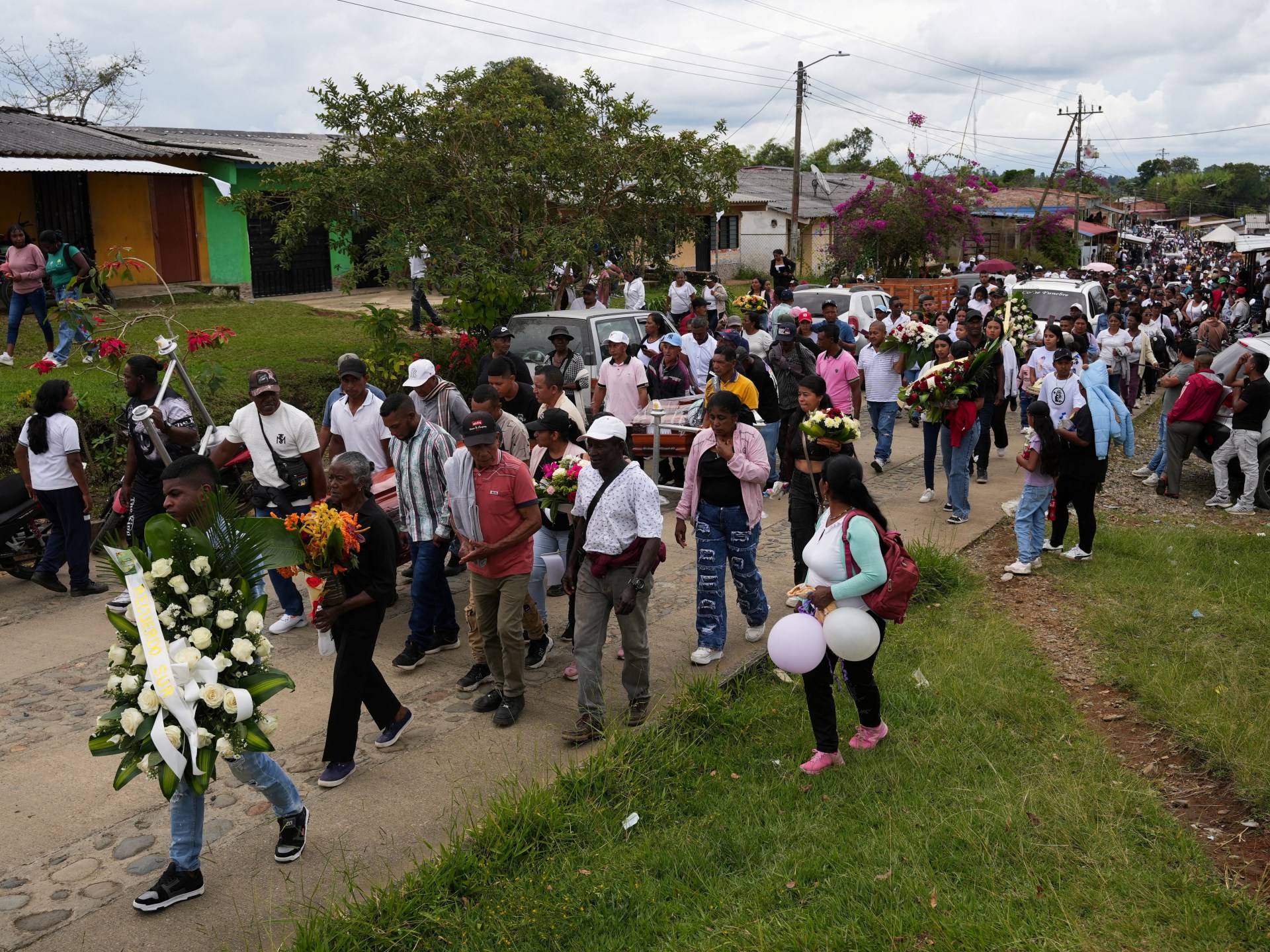
The International Committee of the Red Cross (ICRC) has documented an uptick in displacement, disappearances and explosive injuries as a result of Colombia’s six-decade-long internal conflict.
In an annual report released on Tuesday, the ICRC found that 2025 saw the “worst humanitarian consequences” in the last decade of the conflict.
Since 1964, Colombia has been enmeshed in a multilateral conflict that has pitted criminal groups, left-wing rebels, right-wing and government forces against each other.
A turning point came in 2016, when the Revolutionary Armed Forces of Colombia (FARC), the country’s largest left-wing rebel group, agreed to a ceasefire agreement and disarmed.
But the ICRC indicated that the conflict has become more fragmented since that time, with severe repercussions for civilians.
“The humanitarian situation in 2025 is the result of a progressive deterioration that the ICRC has warned about since 2018,” said Olivier Dubois, the ICRC’s chief of mission in Colombia. “Civilians are experiencing increasingly serious consequences as a result.”
The number of people displaced by conflict, for instance, has doubled in the last year. The ICRC found that 235,619 people were individually displaced by fighting in 2025, with 42 percent alone in the department of Norte de Santander.
The number of civilians affected by mass displacement events also doubled to more than 87,000.
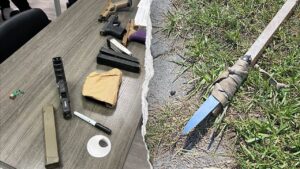
Tuesday’s report also pointed to an increasing use of explosives and drones in Colombia’s conflict. The number of people killed by explosive devices increased by more than a third in 2025, compared with the previous year.
Approximately 965 people were killed or injured by explosive devices over the last year.
The ICRC explained that the fear of injury or death has led many families to remain indoors, restricting access to education, crops and vital services.
The number of people in small communities who underwent lockdowns amid fighting by armed groups rose by nearly 100 percent in 2025.
“This deterioration was reflected both in visible and immediate events and in deeper, more long-lasting effects that altered civilians’ living conditions,” the ICRC said.
“The weakening of the social fabric, prolonged restrictions on access to essential goods and services, and changes in livelihoods have had lasting effects on communities.”
Colombia has seen the dynamics of its conflict evolve dramatically over the past decade. Following the ceasefire in 2016, several dissident groups splintered away from the FARC, refusing to accept the deal with the government.
Those dissident groups, as well as rival criminal and armed groups, have continued to jostle for control over territory and lucrative illicit industries abandoned by the FARC.
Left-wing leader Gustavo Petro, a former rebel fighter, won the presidency in 2022 with a promise to break from Colombia’s militarised approach to the conflict.
Those tactics had been blamed for worsening the conflict and perpetuating rights abuses, and Colombia’s Truth Commission had called for the tactics to be reformed.
Upon taking office, Petro said he would pursue negotiated settlements with armed groups, a strategy he dubbed the “Total Peace” plan.
But right-wing critics have denounced the strategy as too lax, and the negotiations have faced numerous setbacks amid violent attacks across the country.
Security is expected to play an important role in the upcoming May 31 elections.
While the left-wing frontrunner Ivan Cepeda has embraced “Total Peace”, his right-wing rivals, including Abelardo de la Espriella, have promised to end the programme and pursue more hardline tactics.
“Anyone who goes out to cause disturbances and attack me, the people, or the security forces will face an iron fist,” de la Espriella said.
Read the full article here