




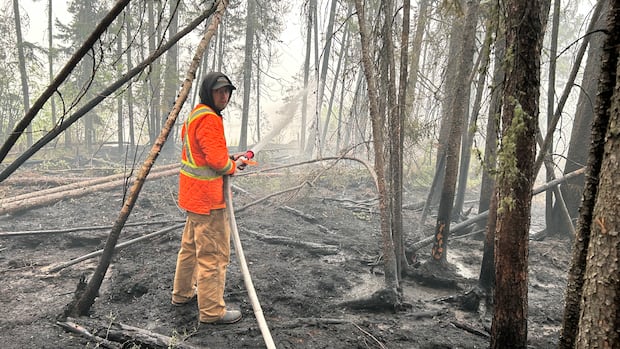
When Denis Renaud looks across the water from his home in northern Saskatchewan, he can see an island of trees that look untouched by fire.
It’s an oasis, a slice of preserved beauty in a landscape decimated by last summer’s fires, as is his home in Wadin Bay, 25 kilometres north of La Ronge.
An aerial photo of the area in summer shows the blue expanse of Wadin Bay surrounded by scorched earth, but this area and roughly 80 cottages were preserved through the efforts of several locals who decided to defy evacuation orders last June to fight fires non-stop over the course of more than 48 hours.
“There’s definitely trauma after the event,” said Renaud, a year-round resident who is president of Wadin Bay’s cottagers association.
“But would we do it again? Yeah, we’d do it again. Why? Because this is our home. You do what you have to do. If you don’t, you could lose it.”
However, since they made that decision, Renaud said Wadin Bay has been fighting a second battle, this one to recoup expenses from fighting the fire.
Community members invested $39,000 for firefighting efforts, which they have not yet been able to recoup through applications to the Saskatchewan Public Safety Agency.
“That’s a bit of a kick in the gut here after we fought the fire on their behalf, because if they came in and fought the fire, I can guarantee it’d be a hell of a lot more than $39,000,” he said.
Many people chose to do as Wadin Bay residents did, defying evacuation orders to save their homes and communities. Renaud says those who do so in the future should know that even if they’re successful, it comes with an emotional and financial impact.
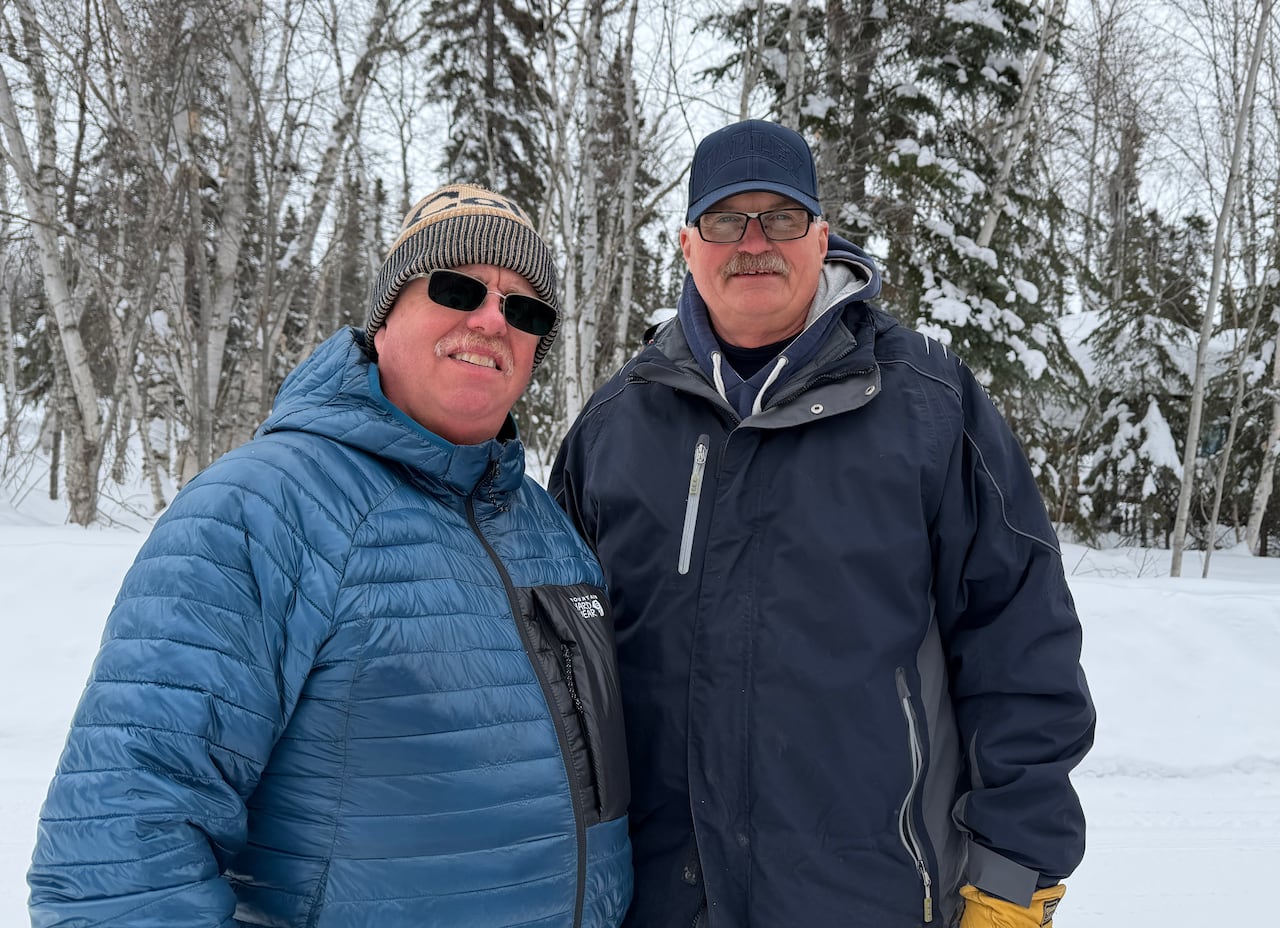
“It’s going to cost you, as far as your own safety. And financially, you might be better off just jumping in your truck and driving south and staying in a hotel,” he said.
A decision two decades in the making
Nearly 20 years before the Pisew fire tore through this area in 2025, residents in Wadin Bay had already been thinking about the potential for fire to obliterate their community.
After all, they choose to live in a forest environment where fires regularly tear through. Trees like black spruce are cheaper to replant after commercial harvesting, but residents here say they can ignite like dynamite.
After living through forest fires in 1999 and 2006, Wadin Bay resident Shaun Bergsveinson pushed for his community to take fire safety measures. Wadin Bay was recognized as Saskatchewan’s first FireSmart community in 2015.
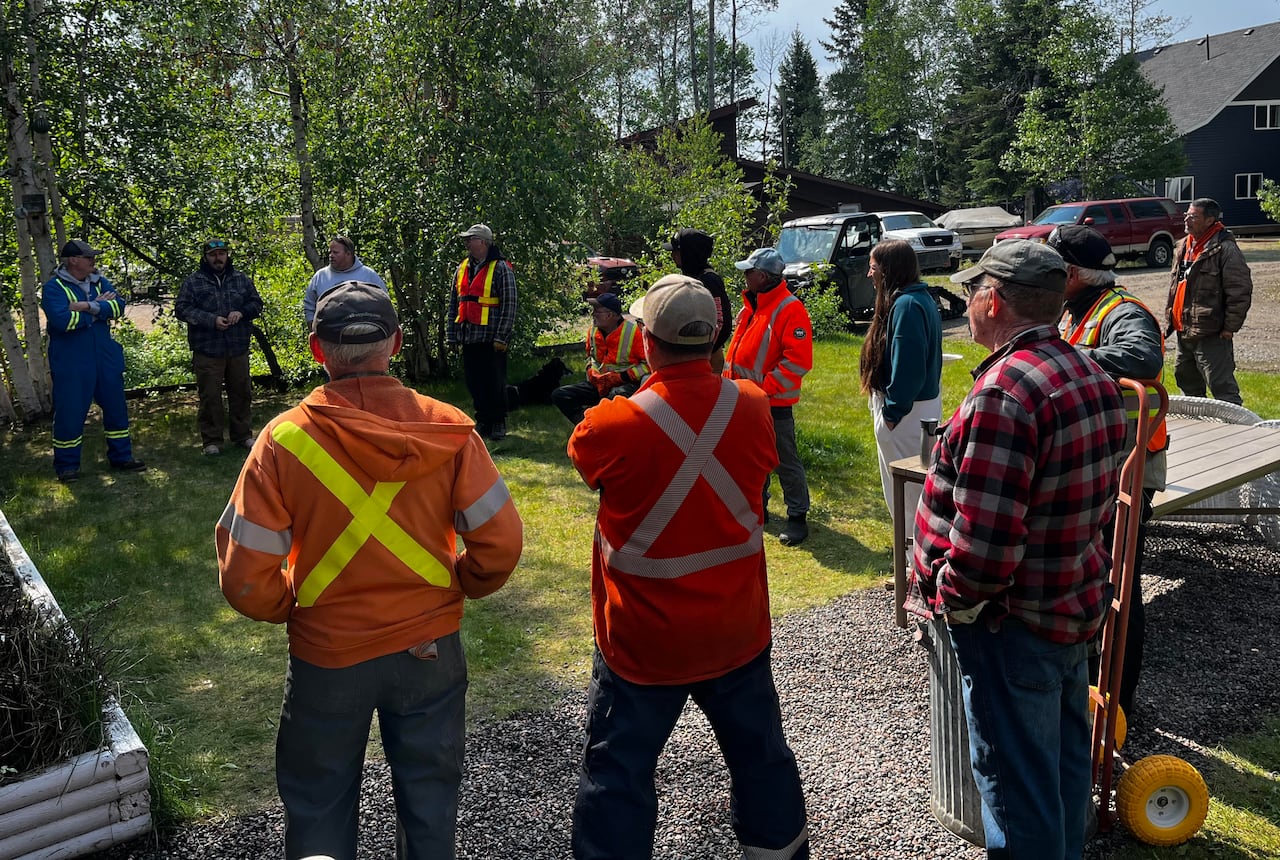
As president of FireSmart in Wadin Bay, he has overseen efforts to ensure the community cuts back on risks that would make it even more of a tinderbox.
“Together we can get upwards of 50 people everywhere, from young kids to older people, [and] we just haul debris. Everybody tries to keep their yard clean, keep sprinklers on,” he said.
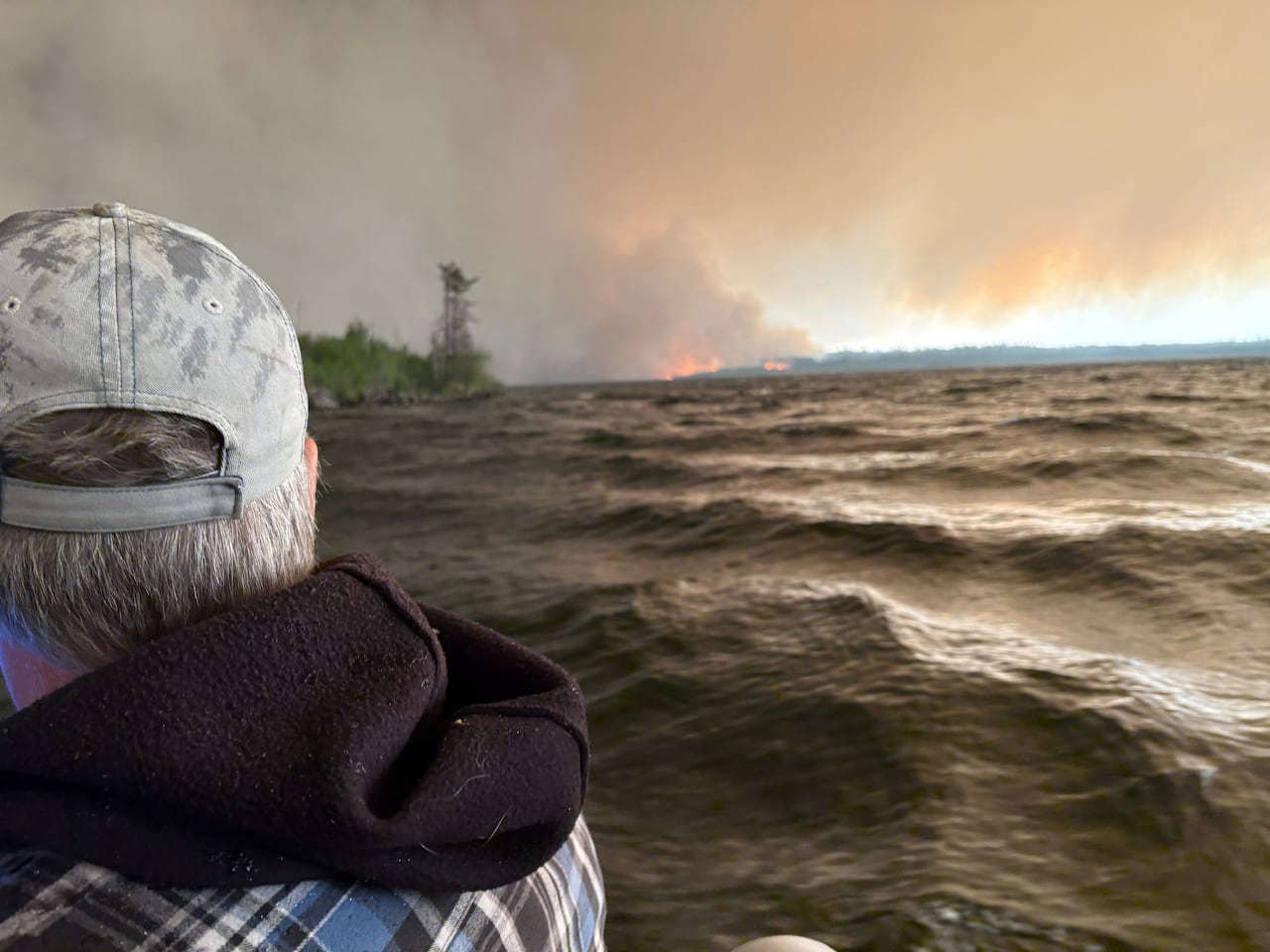
The Pisew fires began May 21, spreading rapidly. By the time the evacuation order came on June 2, residents had spent two or three days wetting buildings and trees down, hoping to create a humidity dome that would protect their cabins and homes.
When the fire encroached on the community, they rushed out onto boats until it was safe to venture back onto land.
As many residents evacuated, nearly two dozen volunteers from Wadin Bay stayed back to fight the flames.
They used trucks and packs connected to water tanks, and shovels to tamp down flames, through plumes of smoke that made it difficult to see what was in front of them.
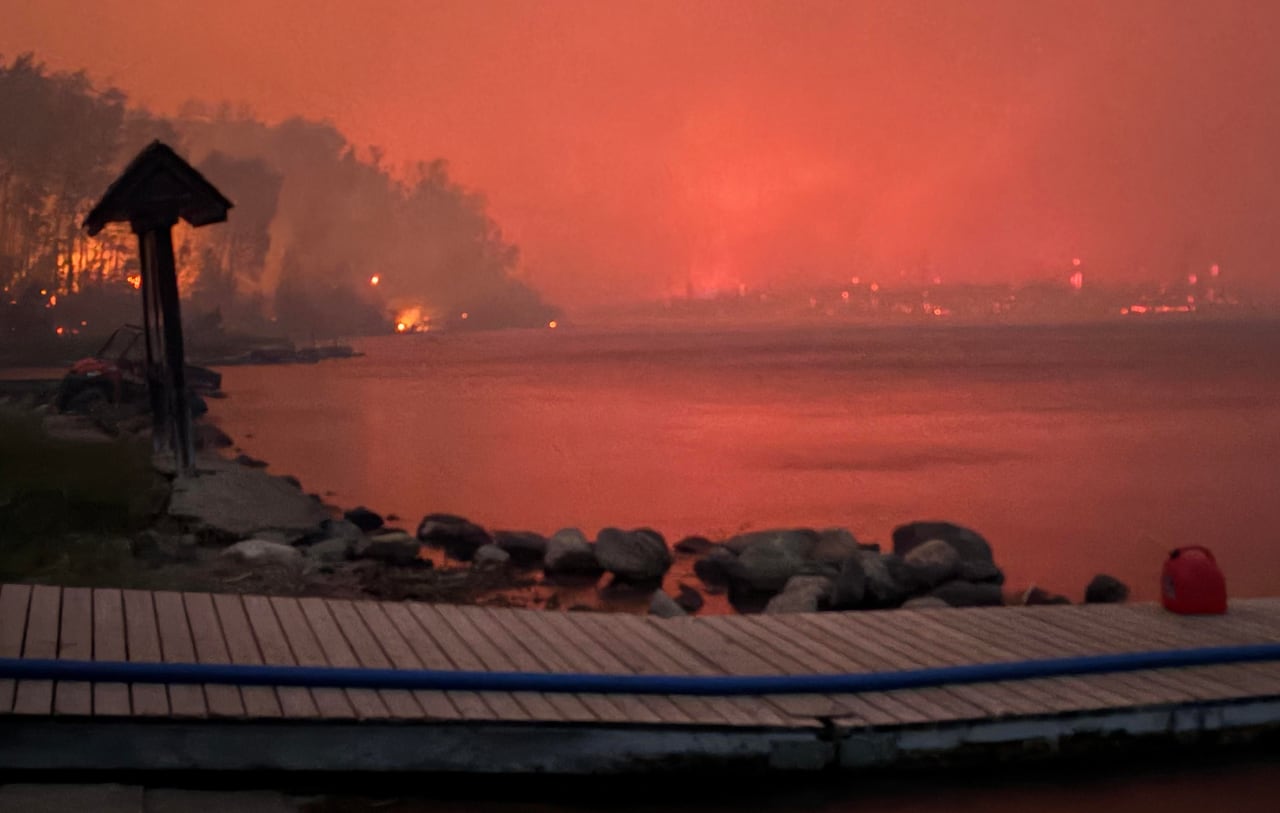
Renaud recalled fighting alongside fleeing wildlife — including one bear that stumbled past them in an attempt to escape the flames.
“Your emotions are up and down,” he said, recalling his thinking at the time. “‘Oh, we lost it all. Oh, no, we can save it. Oh, no, we’re going to lose it again.’ And we had that over and over again.”
Meanwhile, residents who evacuated had no way of knowing what was happening at home, with patchy cell communication cutting them off from their loved ones.
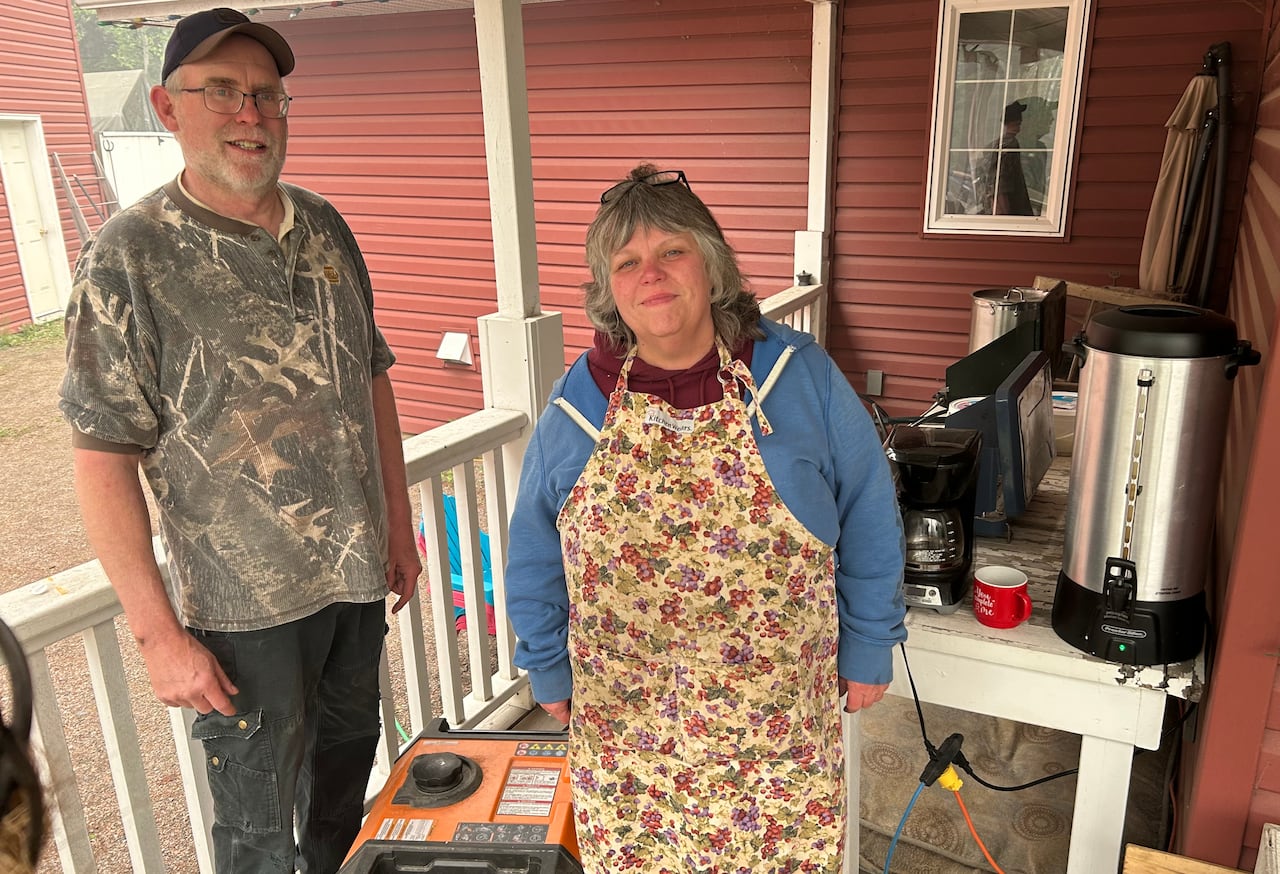
Shaun Bergsveinson’s mother Judy was among them. Judy remembers being in a state of constant anxiety about her son and grandson and others who stayed to fight the fire.
“I get emotional just even thinking about going to bed at night, wondering if they were still alive or if I still had a home,” she said, her voice cracking.
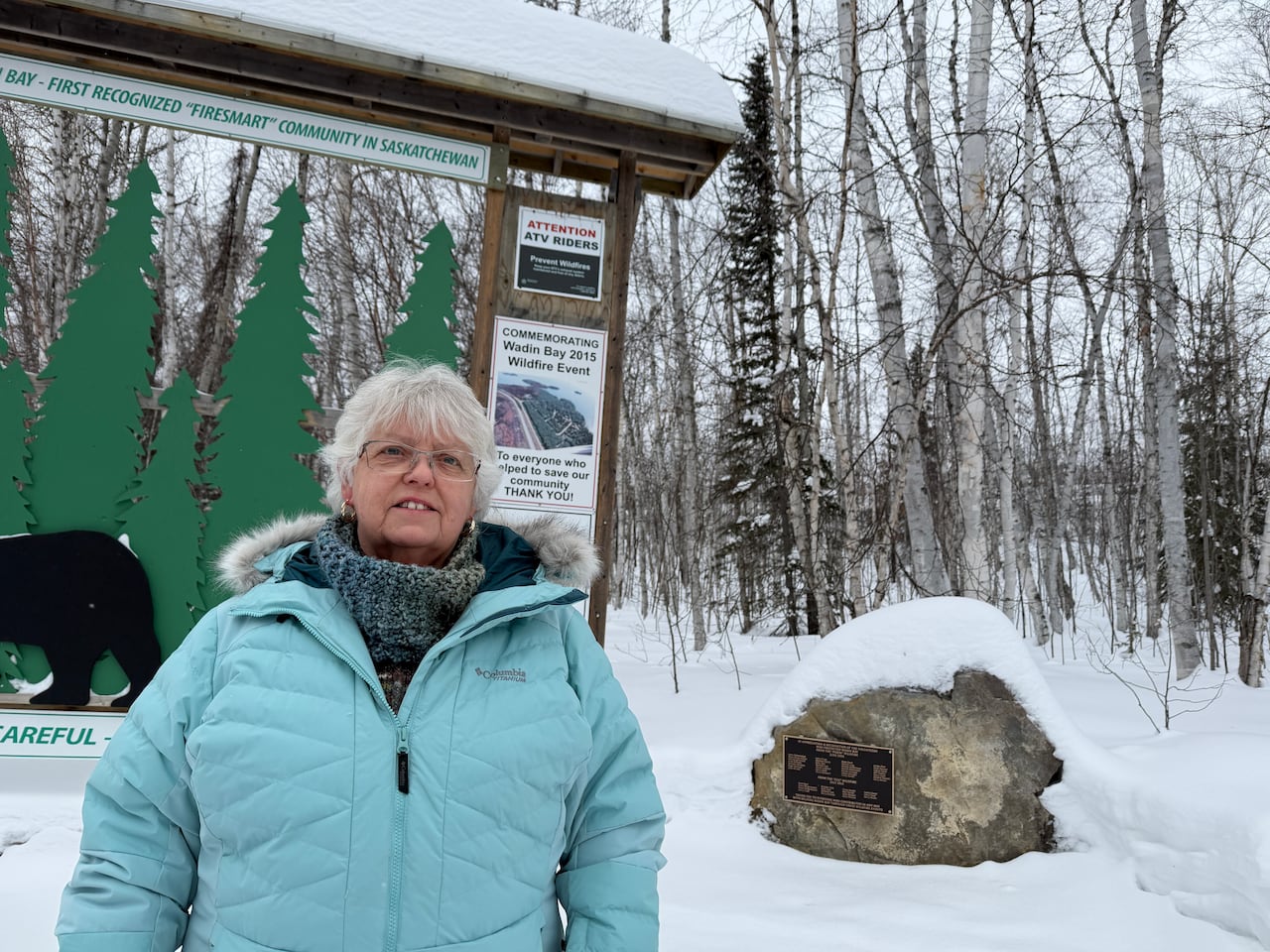
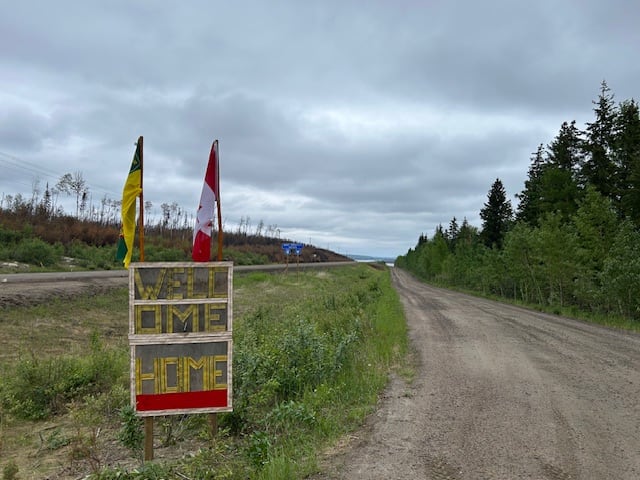
On her return, she felt overwhelmed to see signs made out of discarded and broken fire hoses, reading, “Welcome Home,” and to see her house still standing.
“I will be forever grateful to everyone that stayed and fought to save us,” she said.
Fight for compensation
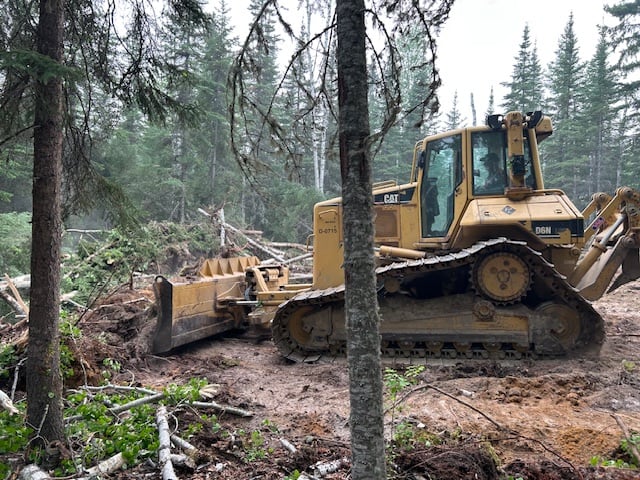
For 30 years, Wadin Bay residents have been putting aside money in a reserve fund for unexpected expenses. That fund is now depleted due to firefighting-associated costs, including equipment rentals like a bulldozer and truck-trailers for hauling water, as well as gas and food.
Wadin Bay has applied for compensation through the Provincial Disaster Assistance Program and through the Saskatchewan Public Safety Agency’s Land Ops program, but so far, those requests have been denied.
Renaud has now applied to have the provincial ombudsman look into the matter.
The Saskatchewan Public Safety Agency notes that municipalities are the first line of defence in an emergency.
“The costs incurred by a community for preparing for an emergency remain the responsibility of that community,” the agency wrote in an email.
It went on to state that people who defy evacuation orders are putting their lives at risk, as well as the lives of emergency services’ staff.
“It is essential to listen to the local authority before, during and after an incident and do not return until it is declared safe.”
A rock and a hard place
Colin Laroque is head of the soil science department at the University of Saskatchewan. He predicts the province can expect another busy fire season and says communities need to prepare now by getting sprinklers and stockpiling diesel for generators to pump water from the lakes onto their properties.
“If you don’t have it when [fire] comes, it’s going to be too late,” he said.
- Read more stories from CBC’s visit to La Ronge here
Laroque said he believes the province needs to invest millions to arm small communities to defend properties from fire, rather than giving people paltry sums of money after they lose all of their belongings.
“And there’s nothing,” he said, adding that the north does not have the population or political clout it needs to get the resources necessary to fight fires adequately.
“My opinion — it’s controversial — Regina doesn’t see a vote up there and so there will be no money,” he said.
If the province never decides to return any of the community’s $39,000, Renaud said he knows he will have to accept it.
“It’s not gonna break us. It would definitely impact our decision or ability to ever fight a fire again,” he said. “And if that’s their objective, I guess they win.”
But on a March day, thoughts of hot smoky summer days could be put aside as he enjoyed the peace and solitude of home.
He’s philosophical as he looks around. After all, this is a pocket of wilderness he and his neighbours have saved not just for themselves, but for wildlife.
He trudges out to a bird feeder and throws out a handful of seeds. Chickadees, pine grosbeaks and nuthatches descend as he leaves, filling the air with song.
“It’s just looking outside and enjoying the green space we still have. We fought for it, and we got it,” he said.
“And that means something to us.”
Read the full article here