




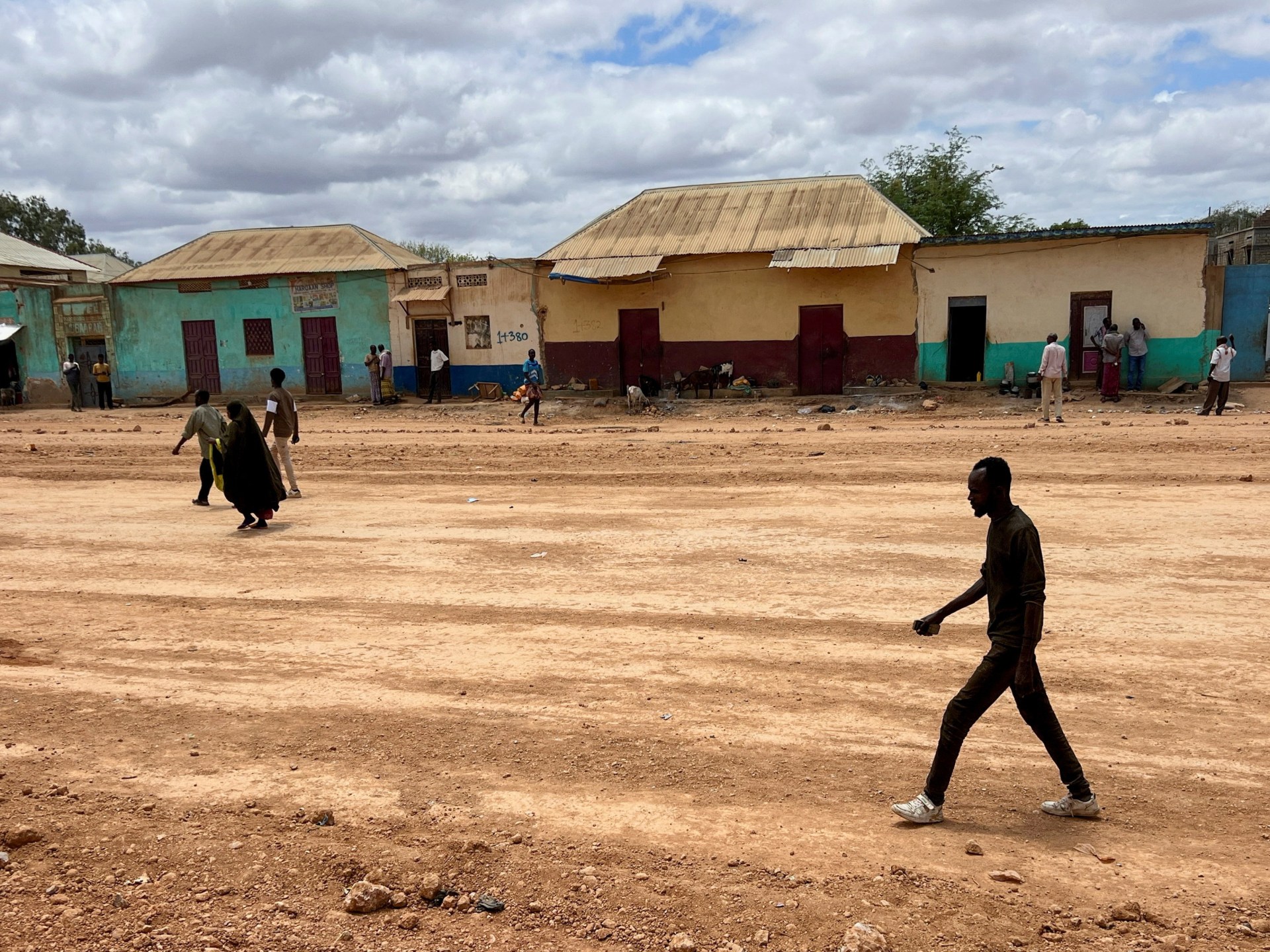
Somalia’s federal government hails Baidoa’s transition, urging peace and unity amid political changes and rising tensions.
Somalia’s national army has taken control of the biggest city in Southwest state, prompting the regional leader to resign two weeks after his administration said it was severing ties with the federal government.
The strategic city of Baidoa, the largest in Southwest state, is home to international peacekeepers and humanitarian agencies in an area affected by drought, conflict and displacement.
Recommended Stories
list of 3 itemsend of list
“I, Abdiaziz Hassan Mohamed Laftagareen, effective today, 30 March 2026, have resigned from the position of President of Southwest State,” Abdiaziz Hassan Mohamed Laftagareen said in a post on Facebook on Monday.
He had been in office for more than seven years. His resignation comes days after he was re-elected for another five-year term, an election the federal government said was illegal.
Earlier on Monday, Somalia’s federal forces entered Baidoa, which is about 245 km (150 miles) northwest of the country’s capital, Mogadishu, taking full control of the city and marking the start of a political transition.
“Federal forces have taken over Baidoa … it is now calm … but it looks like a ghost town,” local elder Adan Hussein told the Reuters news agency.
Southwest’s transition began as its finance minister, Ahmed Mohamed Hussein, was appointed acting president through a formal decree.
The central government in Mogadishu hailed the state’s transition and urged calm and unity.
“The people of the Southwest state have taken control of Baidoa, signalling demand for accountability. The Federal Government of Somalia remains committed to stability, protecting lives and property, and ensuring no persecution or retaliation,” Somali Information Minister Daud Aweis said in a statement.
Mogadishu also emphasised that no acts of retaliation will be tolerated, underscoring the commitment to protecting lives and property during “this sensitive” political transition.
Concerns about fair elections
Many residents have fled Baidoa over the past week, and some aid agencies suspended activities, fearing clashes could erupt between the army and regional forces.
The dispute with Southwest is the latest sign of strain in the Horn of Africa country’s fragile federal system, where disputes over elections and the balance of power between Mogadishu and regional administrations repeatedly open up political fault lines.
Laftagareen’s administration opposed constitutional amendments backed by the federal government.
Somalia’s Ministry of Information, Culture, and Tourism said in a message read out on national television that “the former Southwest state administration … created political conflict”. It said federal forces had been welcomed in Baidoa on Monday.
Al Jazeera’s Catherine Soi, reporting from Nairobi, Kenya, said the dispute comes ahead of a highly contentious national election due this year.
“Somalis were promised a one-man, one-vote election after decades of not exercising their rights, but there have been many logistical and security challenges,” she said.
“What’s on the table now is that voters elect MPs, who in turn, vote in the president. And that’s where much of the problem comes in, because regional leaders and some opposition groups are worried that the president could rig the election,” Soi added.
She noted that amendments backed by the federal government to the Constitution have been “very unpopular”, and there’s a lot of mistrust among leaders.
Read the full article here