




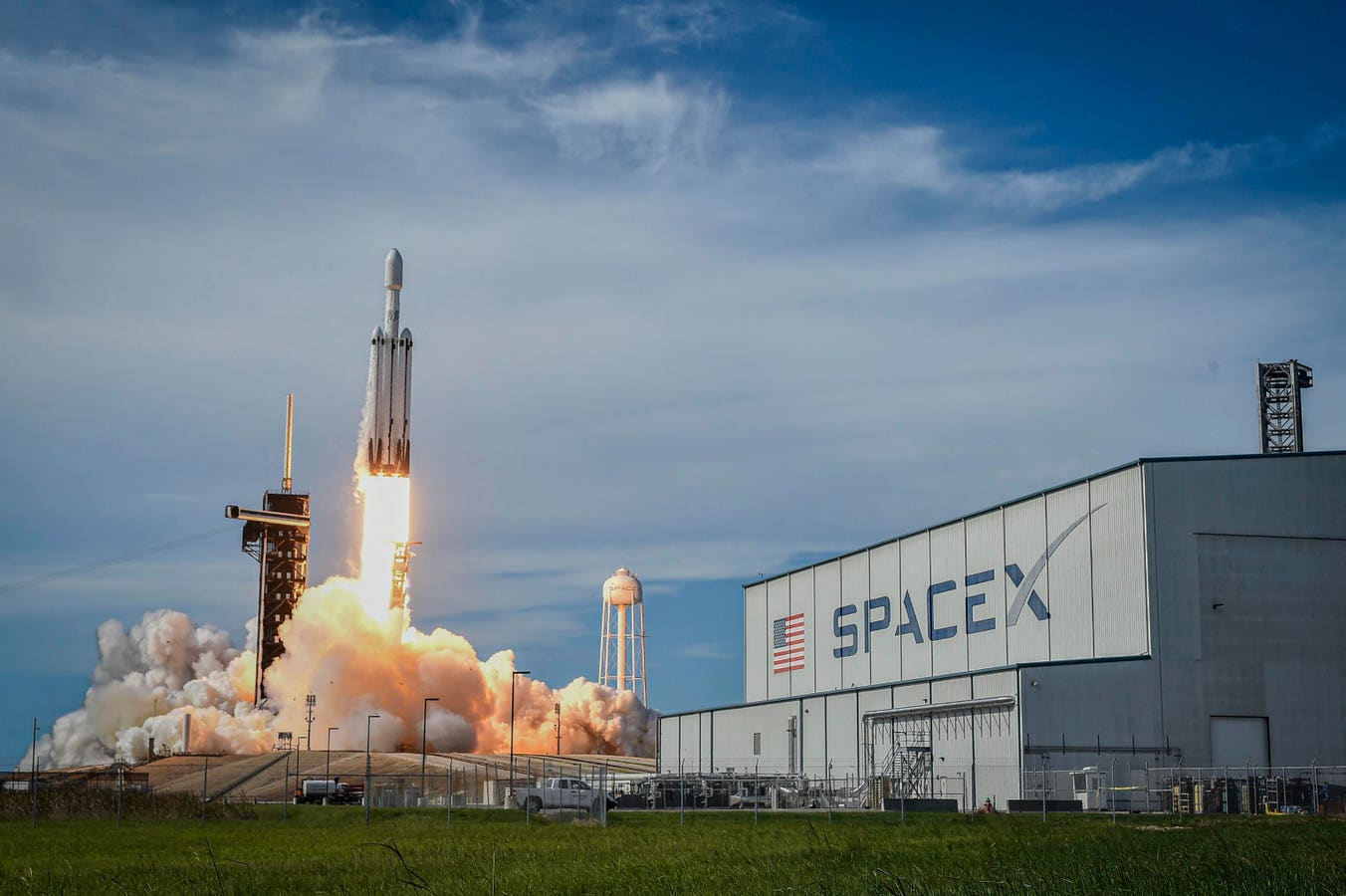
When SpaceX finally comes to market in June, it will likely be the largest IPO on record, raising as much as $75 billion. At a potential valuation of $1.75 trillion to $2 trillion, the headline number will surely dominate coverage, placing it among the largest companies in the world.
However, the size of the offering is just one aspect of the share sale that will make it unique. There are several other groundbreaking structural factors associated with IPO. Unfortunately, these adaptations benefit insiders, not retail investors.
Nasdaq Rewrites Rules For Index Inclusion
SpaceX stock is expected to be listed on the Nasdaq. To secure such a high-profile listing, While listing requirements remain unchanged, Nasdaq recently amended its index-inclusion rules to accommodate companies like SpaceX when they go public.
Traditionally, there is a seasoning period for new IPOs to allow the market to reach a trading equilibrium before a stock becomes eligible for inclusion. However, Nasdaq recently changed its index inclusion rules, effective May 1, 2026, along with the weighting methodology for companies across its indices.
Under the old rules, a new stock had to season for at least 3 months before it could join the index, and it had to have at least 10% of its shares traded publicly. Both of those requirements are now gone. Now, a stock is eligible for fast-track inclusion after just 15 trading days, with almost no float if its market capitalization places it among the top 40 holdings of the Nasdaq-100.
Why Float Matters
The float is the portion of a company’s shares available for public trading. If a company has 10 million shares outstanding but issues only 5 million at IPO, its float is 50%. By that math, a $75 billion raise at a $1.75 trillion valuation puts SpaceX’s float at roughly 4.3%, which is extremely low for an IPO.
The new rule removes the 10% minimum float requirement. If the float is below 20%, Nasdaq will now apply a 3x multiplier to the weighting calculation. For example, if SpaceX has a 4.3% float, it would be treated as having a 12.9% float for index weighting purposes.
With only a thin slice of equity available, SpaceX’s price discovery process may be driven less by fundamentals and more by supply-demand imbalances. A relatively small number of buyers and sellers will effectively determine the valuation of a multi-trillion-dollar company. The new Nasdaq rules, which make the index weight disproportionately large relative to the float, could exacerbate this imbalance as passive funds are forced to buy.
The small float will also likely lead to significant volatility in the weeks following the IPO. In a recent analysis of SpaceX’s valuation, Morningstar drew a direct comparison with Tesla to highlight the effect of a small float. “At roughly 3.3% float, where Tesla sees 10%–15% swings on milestone slips, we expect SpaceX to experience 20%–30% moves on equivalent catalysts,” Morningstar notes. Tesla had a 12-15% float when it went public in 2010.
Relaxation Of Underwriting Norms
There are reports that Musk is asking underwriters to waive the typical 180-day lock-up period that prevents company insiders and some other shareholders from selling their shares after an IPO.
According to Semafor, Musk is pushing for a much shorter lock-up, or even none at all, with insiders able to sell in gradual tranches tied to price and trading-volume thresholds. That would do away with rules designed to prevent insiders from cashing out at peak hype, which are standard protections for new public shareholders.
In practice, this means insiders get to cash out at what will probably be a record valuation for the company right when retail investors get their first opportunity to buy in. Musk is also apparently negotiating an above-average level of retail participation in the offering, directing 20% to 30% of the IPO to individual investors, compared to the more typical 5% to 10%. Allowing insiders to exit quickly to retail buyers raises eyebrows about who benefits from these underwriting changes.
Impact Of Nasdaq And Underwriting Rule Changes
There appears to be a misalignment of interests between the existing shareholders and those who will become shareholders at or after the IPO. The short lock-up period for insiders, combined with the new Nasdaq rules for index inclusion, benefits insiders at the expense of passive investors. FT Alphaville’s Robinson Wiggelsworth suggests the setup “could end up being the biggest bagholder exercise of all time.”
Still, even with the perceived misalignment, some rules probably did need to change.Taking a $200 million company public is different from $2 trillion one. SpaceX is not the only company that stayed private for a long time period as it grew. When these large entities do go public, the initial float must be small. The IPO would be too large for the market to digest.
To put the SpaceX listing into context, a $75 billion raise would be roughly 3x the previous record set by Saudi Aramco, which offered $25.6 billion of equity in December 2019. As a point of reference, the entire US IPO market raised only about $45 billion in all of 2025. SpaceX alone is requesting more than the entire market delivered last year.
The new rules mean earlier inclusion in indices, but at smaller weights due to the float-adjusted market capitalization weighting methodology. FTSE Russell and S&P Dow Jones are also considering changing their index inclusion rules to adapt to this wave of low-float, high-market-capitalization issuance.
With respect to the potential underwriting rule changes, one positive could be limiting the pent-up selling pressure that typically accompanies the expiration of a post-IPO lock-up. Shares of newly public companies often trade poorly in the weeks leading up to the expiration of insider lock-ups, as investors anticipate a wave of selling.
A protocol that staggers the lock-up window and limits how much insiders can sell at any one time could limit that disruption. A steady drip of shares into the market allows for more orderly price discovery for both sellers and the passive funds that will be required to absorb them.
Extra Caution Is Warranted
As more details emerge, the SpaceX IPO will no doubt create significant excitement and opportunity. At a potential valuation approaching 100 times revenue, lofty expectations are surely already built into the price, even for a company on a path to dominate the rapidly growing space industry.
On top of the usual investment risks associated with large-cap equities, SpaceX IPO buyers face additional concerns. The limited float can amplify price swings in both directions, and large, non-discretionary passive flows may move the market disproportionately. Finally, the lock-up situation, whether compressed, staggered, or waived entirely, represents a huge supply shock that could materially alter the tradeable share count and liquidity within months.
Investors have their homework to do.
Read the full article here